iRacing VR vs triple screens: Why the Pimax Crystal Light is the right VR headset in 2026
Sponsored Content: Exploring the pros and cons of triple screen and VR setups in iRacing, and why the Pimax Crystal Light headset might be your best choice.
The world of sim racing technology keeps evolving, and in 2026, you have more options than ever to enhance your iRacing experience.
Whether you’re considering a triple-screen setup or a VR headset, the decision ultimately comes down to your personal preference, budget, and available space.
Here’s our guide to help you choose the setup that’s right for you, and why the Pimax Crystal Light VR headset deserves a closer look.
Why VR is perfect for sim racing
VR offers a naturally immersive experience that a triple-screen setup simply can’t match.
With a wide field of view, you can see more of the racing environment, keeping opponents and braking points in your peripheral vision.
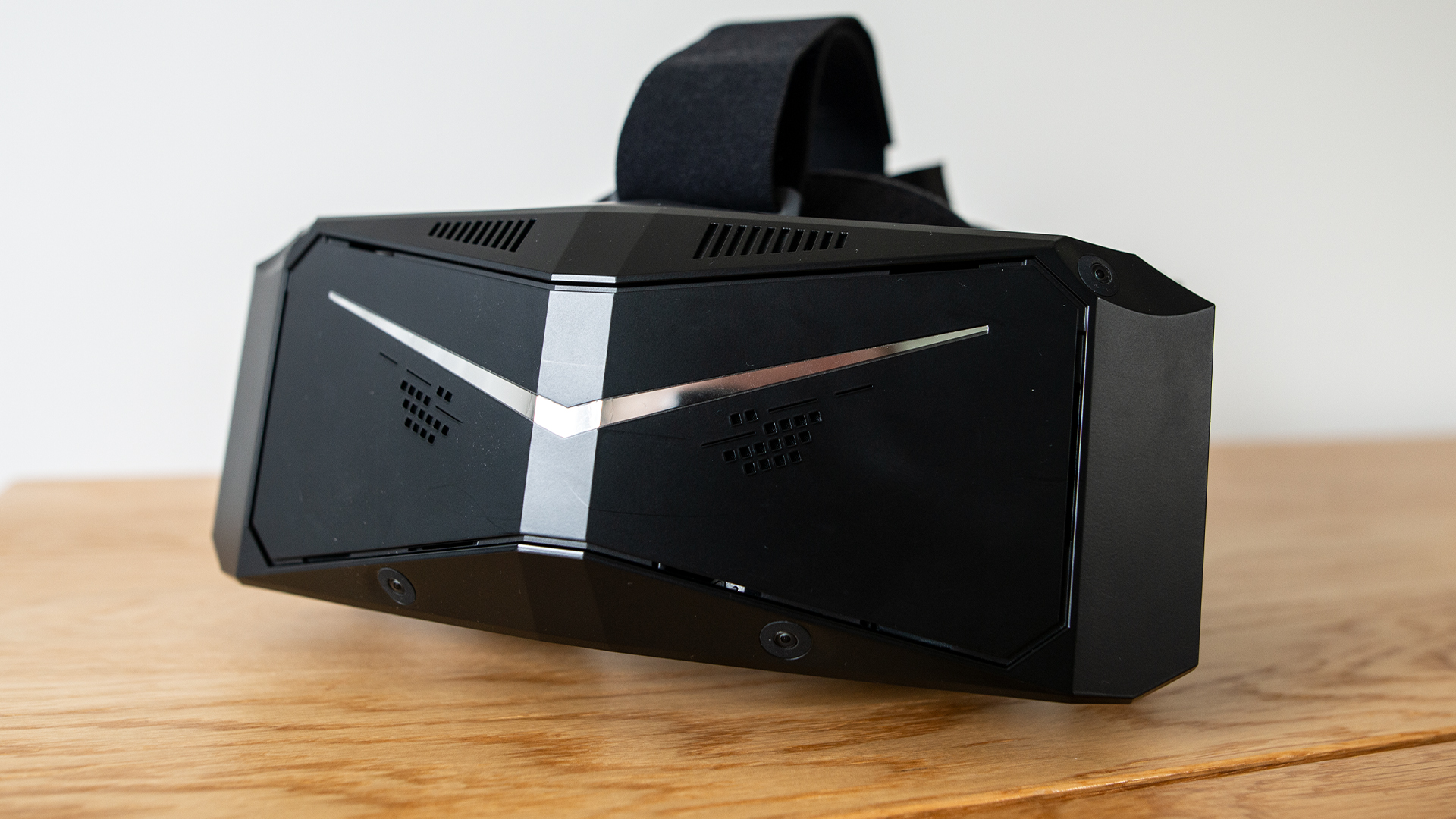
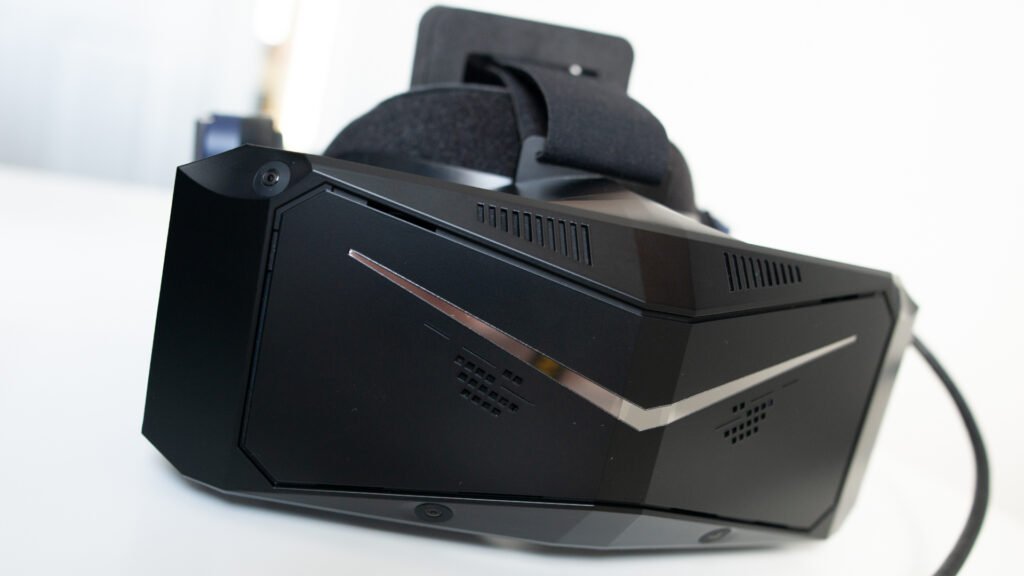
Released in 2024, the Pimax Crystal Light combines impressive graphical horsepower with sim racing-focused features, making it an excellent choice for iRacing.
In our review, we found it offered incredible visual clout at a much lower price point than competing headsets, with its wide FOV and Fixed Foveated Rendering proving advantageous for sim racing applications.
The Crystal Light’s specs include:
Dual 2880 x 2880 QLED screens
Refresh rates of 72Hz, 90Hz, and 120Hz
Built-in Fixed Foveated Rendering, which helps improve frame rates by up to 20 fps in demanding situations
Exceptional immersion in a compact headset
VR also makes driving feel more realistic: depth perception is easier, allowing you to look around corners and gauge distances more naturally. Unlike a bulky triple-screen setup, VR keeps your sim rig tidy, with fewer cables and less overall room space required.
Why triple-screens still have their place
Triple screens provide a wraparound view and the kind of full cockpit experience motorsport aficionados will appreciate. They can be customised to your needs and don’t require extra software to run, making them user-friendly.
However, triple screens:
Take up significant space
Can be costly and time-consuming to set up
Require careful calibration for optimal field of view
Use a lot of electrical energy
While visually impressive, they don’t offer the same immersive feeling as VR, though they tend to be more comfortable during extended gaming sessions.
How to choose the right VR headset in 2026
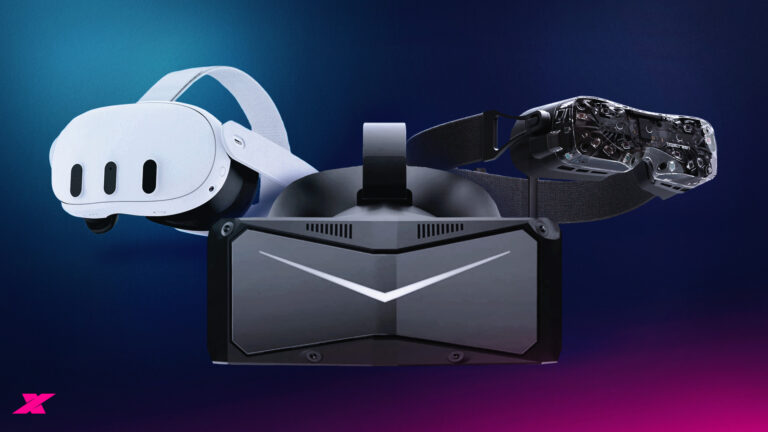
When choosing a sim racing VR headset in 2026, many casual players might immediately think of the Meta Quest 3. However, it’s worth noting that the Quest 3’s price has increased this year from $499 to $599.
While it is a solid standalone headset, its per-eye resolution is 2064 × 2208, which is a good chunk lower than the Pimax Crystal Light’s 2880 × 2880. This gives the Crystal Light a significant advantage in terms of overall clarity, making it a better overall value proposition.
The Crystal Light also features a fully wired setup, meaning that you are linked to your PC at all times, minimising the risk of disconnection mid-race.
Some of the advantages of the Crystal Light versus the Quest 3 include:
Price vs Performance: Although the Quest 3 is currently about $200 cheaper than the Crystal Light, it lacks its core advantages. A more detailed technical comparison can be found here: Pimax vs Quest 3 Technical Comparison.
High-End Specs: The Crystal Light offers higher resolution, a wider field of view (105° versus 103.8°), and has features optimised for sim racing, like Fixed Foveated Rendering.
Versatility: It is suitable not only for iRacing but also for top-tier VR games like Half-Life: Alyx and Batman: Arkham Shadow.
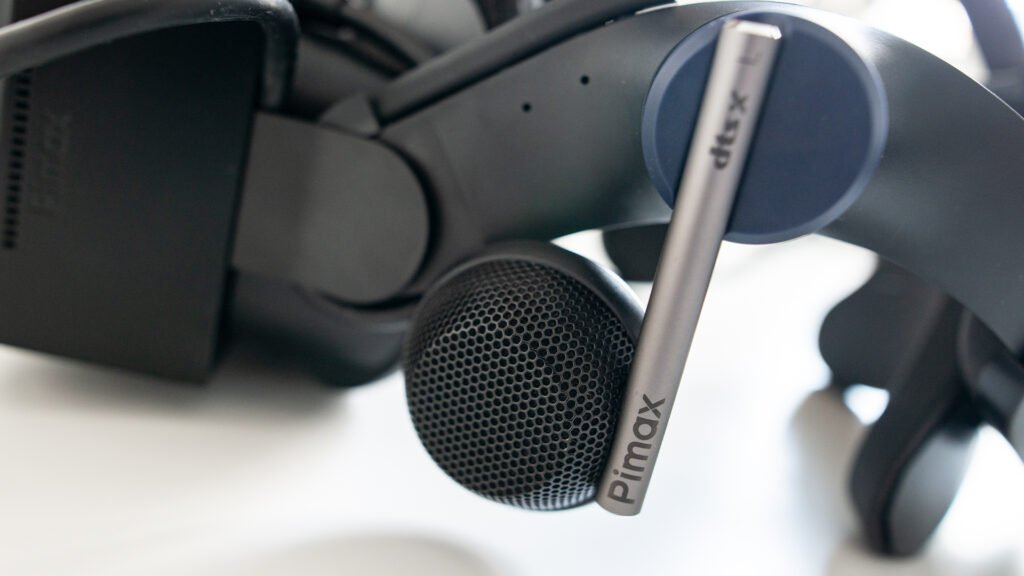
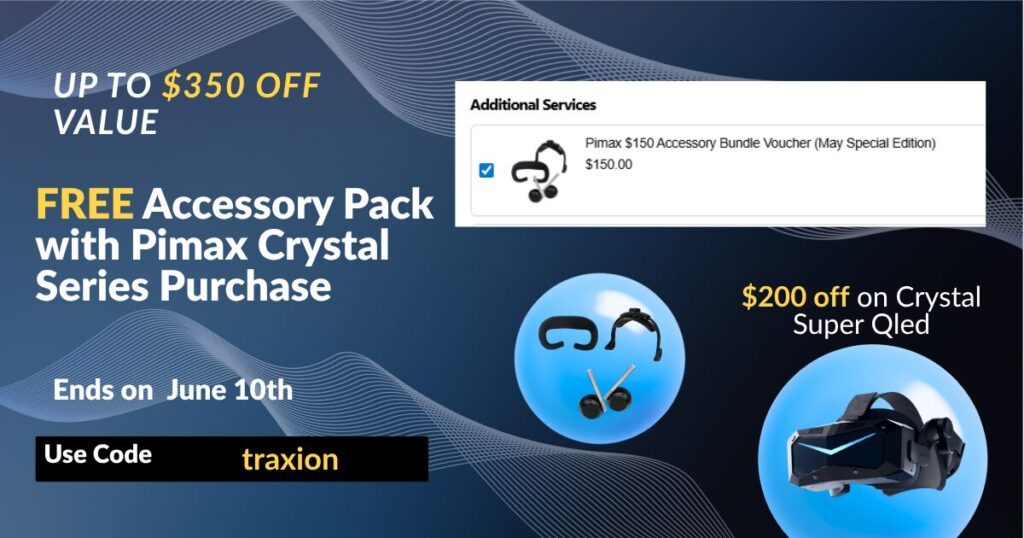
Promotions Increase Value: While the Crystal Light is about $200 more expensive than the Quest 3, using the code ‘traxion’provides a 2% discount at checkout and a free $150 accessory bundle (including Comfort Topstrap, DMAS Earphones and Ice Silk Facial Foam).
The Crystal Light’s DisplayPort connection is capable of 32.4 Gbps of bandwidth,versus the Quest 3’s 5 Gbps USB-C connection. This offers a more stable, less compressed signal and creates less latency.
Considering these benefits, the price difference is minimal, and the overall value is arguably higher.
For users switching from triple-screen setups to their first VR headset, the Pimax Crystal Light is a great choice in 2026, offering an immersive racing experience, impressive specs and excellent value.
Naturally, both triple screen and VR setups have their pros and cons, but for most iRacers in 2026, VR offers the best compromise between immersion, performance, and practicality.
Until the 10th of June 2026, use the code ‘traxion’ to get 2% off, plus a free $150 accessory bundle, including a Comfort Topstrap, uprated DMAS Earphones and the comfier Ice Silk Facial Foam.


Discussion