When it comes to selecting a virtual reality headset for iRacing, there are several key considerations.
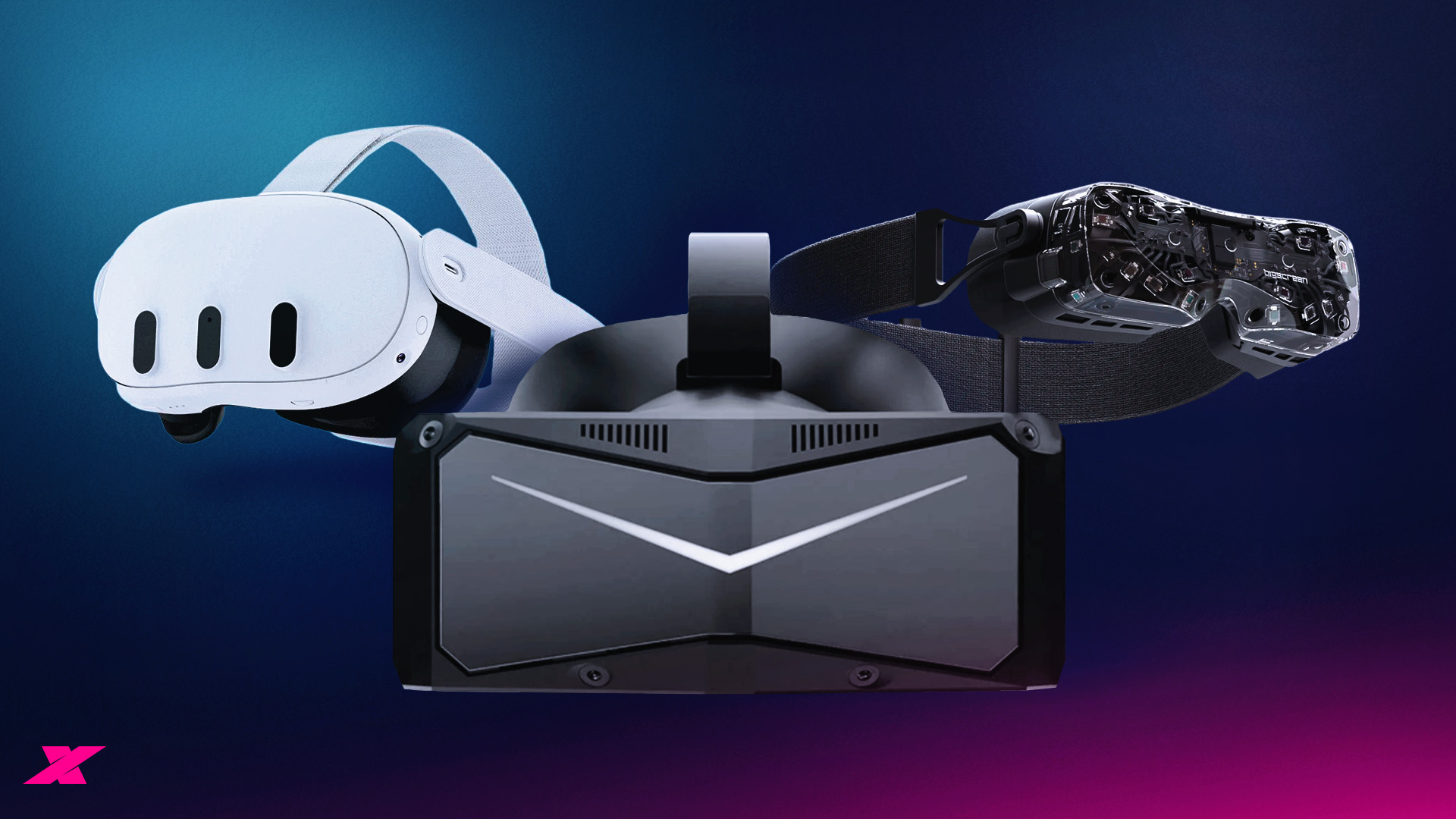
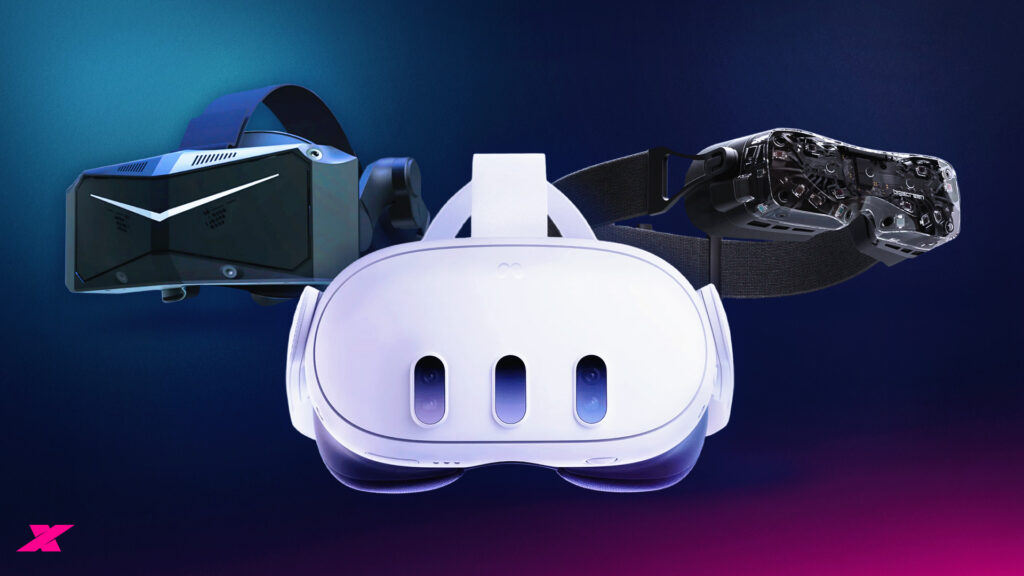
Upon researching what’s available in your price bracket, it could come down to three popular devices: The Pimax Crystal Light, the Meta Quest 3 and the Bigscreen Beyond 2.
Each has a distinct design and unique features, but for sim racing specifically, how do they compare? Here is each compared across the main specifications, and in how they perform when sim racing.
Visual clarity
One of the defining features of a VR headset is visual clarity. For many, it is the most important element.
There are several key components to ‘clarity’, but chief among them is outright resolution. The bigger the number, the more pixels on-screen, and theoretically, the sharper the picture.
Of these three devices we’re comparing here, the Pimax Crystal Light has a 2880 x 2880 resolution, which roughly equates to 8.3 Megapixels being beamed into your eyes through dual QLED screens.
The Bigscreen Beyond 2, for example, is at 2560 × 2560, and the Meta Quest 3 is lower again at 2064 × 2208.
On iRacing, for instance, the higher resolution can assist with spotting braking markers and identifiers further away, helping sim racers anticipate.
However, pure pixel count isn’t the only factor. Refresh rate is a pivotal element, too. This is especially true when iRacing in VR, as a higher Hertz rate can mean sharper visuals when moving your head. Ideal for spotting a rival in your mirrors or finding that next apex.
The Crystal Light can output 72Hz, 90 Hz and 120 Hz. In comparison, the BB2 caps out at 90 Hz, but with a 20% drop in resolution (75 Hz peak at max res). The Quest 3 can support up to 120 Hz, but the actual PCVR experience may depend on Link/Air Link settings, system performance and connection conditions.
For sim racers, a higher refresh rate not only delivers a smoother image but decreases the chances of input latency. This is critical for iRacing, considering how serious and competitive ranked multiplayer racing is, where every split second counts.
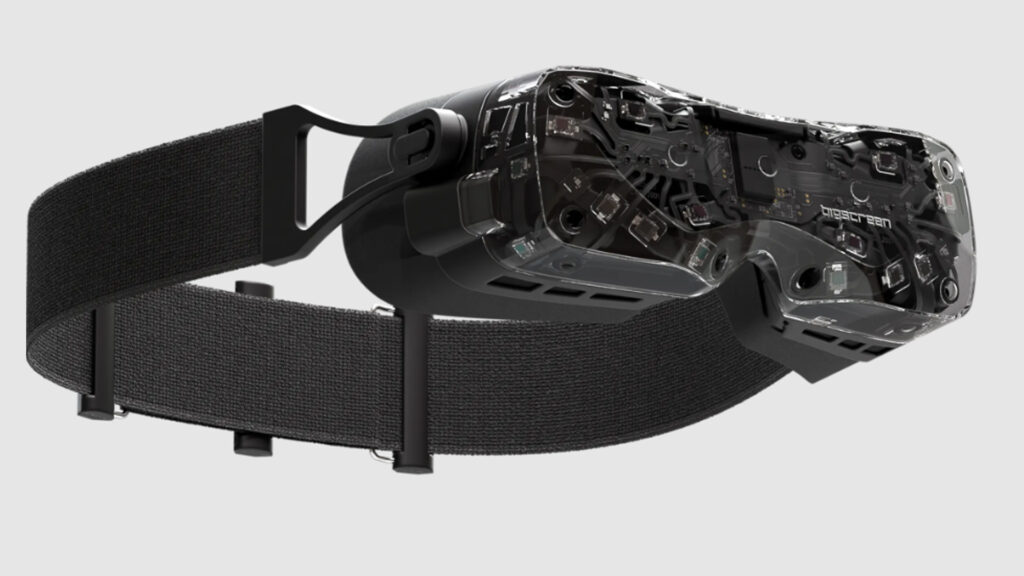
Bigscreen Beyond 2
Both the Pimax and the Bigscreen Beyond connect to your PC via native DisplayPort cables, whereas the Meta device uses either USB-C or wireless Air Link. DisplayPort provides an uncompressed feed, without encoding, straight from your graphics card, and minimises the latency that Wi-Fi and USB connections can suffer from.
Also of note, the Crystal Light uses QLED screens with Mini-LED backlighting and the BB2 Micro has a pair of Micro-OLED displays. Both offer crisper contrast and more natural blacks than the Quest 3, which is of particular note when iRacing at night.
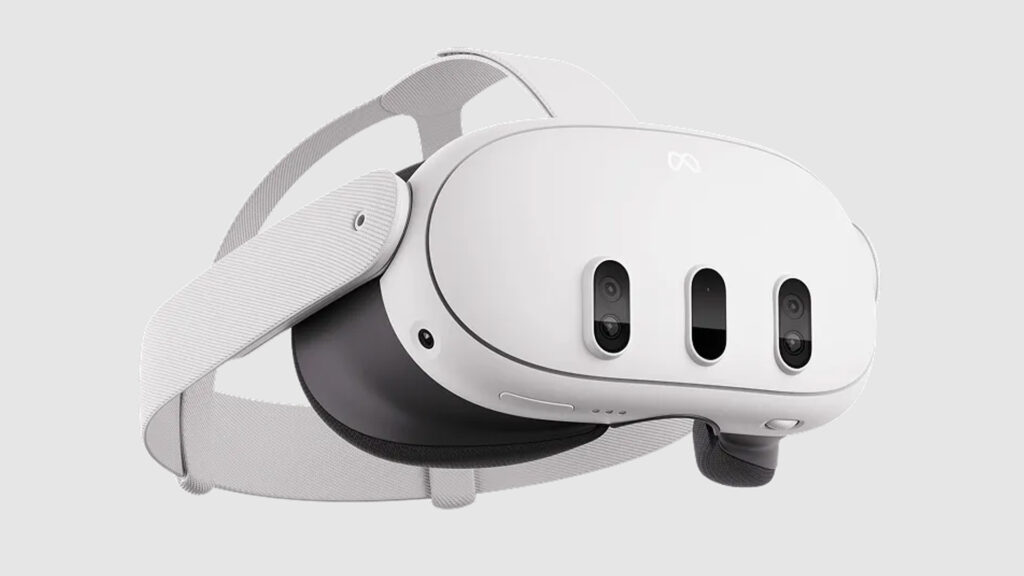
Meta Quest 3
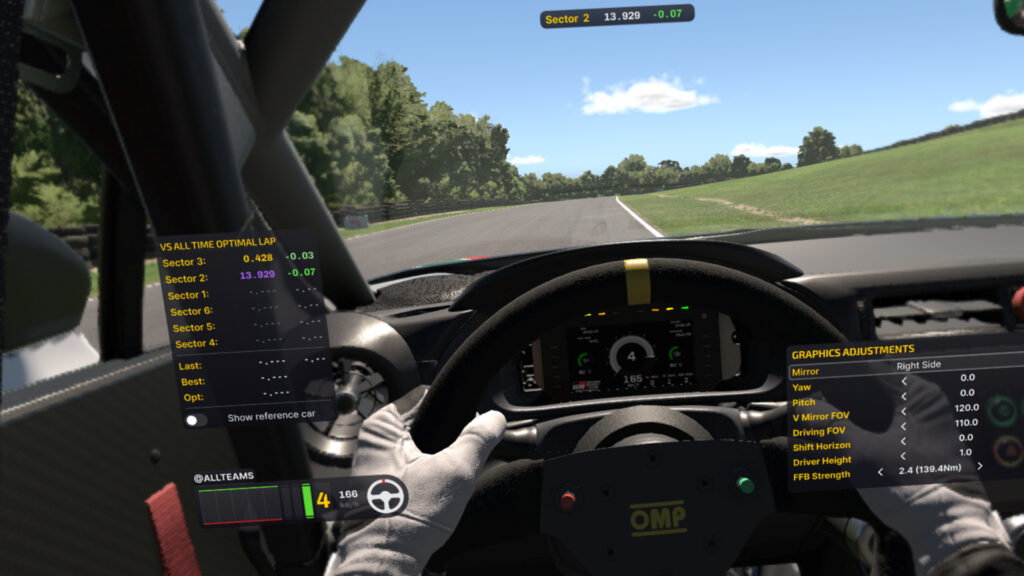
While the on-paper hardware looks impressive, one of the biggest contributors to improved graphical performance with the Crystal Light is fixed foveated rendering (FFR). Supported by iRacing, it reduces the detail of peripheral areas to improve performance, while keeping the driver’s central viewing area sharp.
In our testing, we noticed an increase in frame rate when FFR was selected, with no perceptible impact on iRacing’s overall visual quality. Up-close detail of the car dashboard, for instance, was near pixel-perfect.
Design
Most of what we’ve covered so far is directly related to the screens. Yet, there are other factors when considering the right VR headset for sim racing, such as design.
The layout, shape and size of the device can provide additional benefits. There’s no question, the Bigscreen Beyond 2 is a diminutive headset, with a light weight of between 107–115g.
This can aid cooling, increase comfort and potentially reduce fatigue. On the downside, it is believed that to receive the optimum setup, a custom 3D scan of your face is required, which in turn, adds an extra layer of complexity.
At 515g (with strap), the Meta Quest 3 is noticeably heavier than the BB2, although it’s not overly leaden and can provide a comfortable experience.
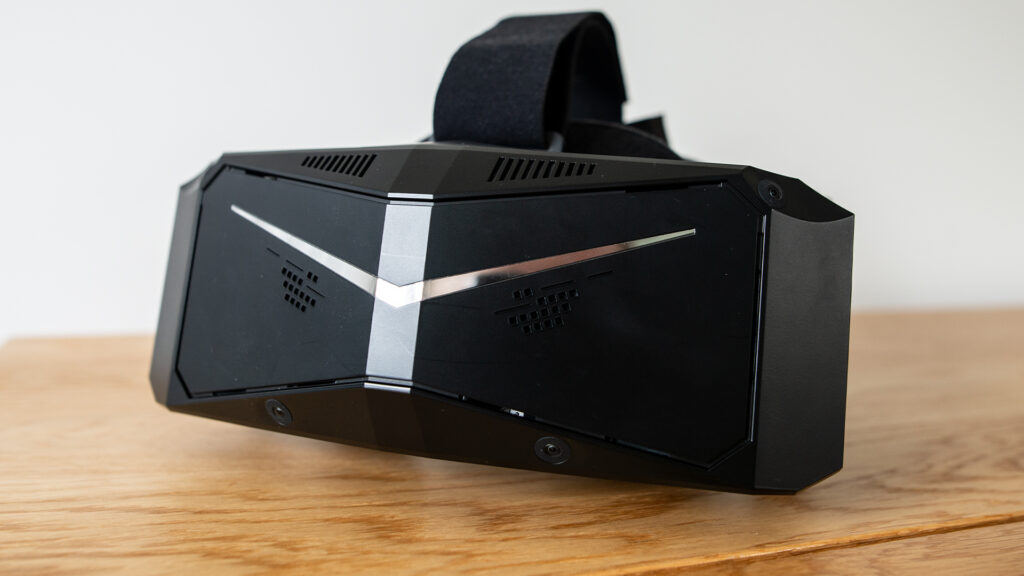
The Pimax Crystal Light, in comparison, 950g with the balanced headstrap attached. This is around 300g lighter than the original Pimax Crystal.
While it’s the bulkiest device here, in testing, we found it to be comfortable, and the extra space meant it was ideal for those who wear glasses when in VR. Even after a prolonged session, our faces remained sweat-free.
The design allows for a wide field of view, too. When racing online against fierce competition, this wider FOV delivered by the Pimax allowed for more precise side-by-side action without incident. Well, until we ran out of talent behind the wheel, anyway…
Further advantages include being able to look into the corner apex with greater confidence and seeing rear-view mirrors with great ease, once again aiding in-race technique.
Before moving on to pricing, it should be noted that the Pimax Crystal Light and Meta Quest 3 include inside-out tracking. That means, inside their respective headsets, are built-in camera facing outward. This delivers precise tracking without the requirement of an external device.
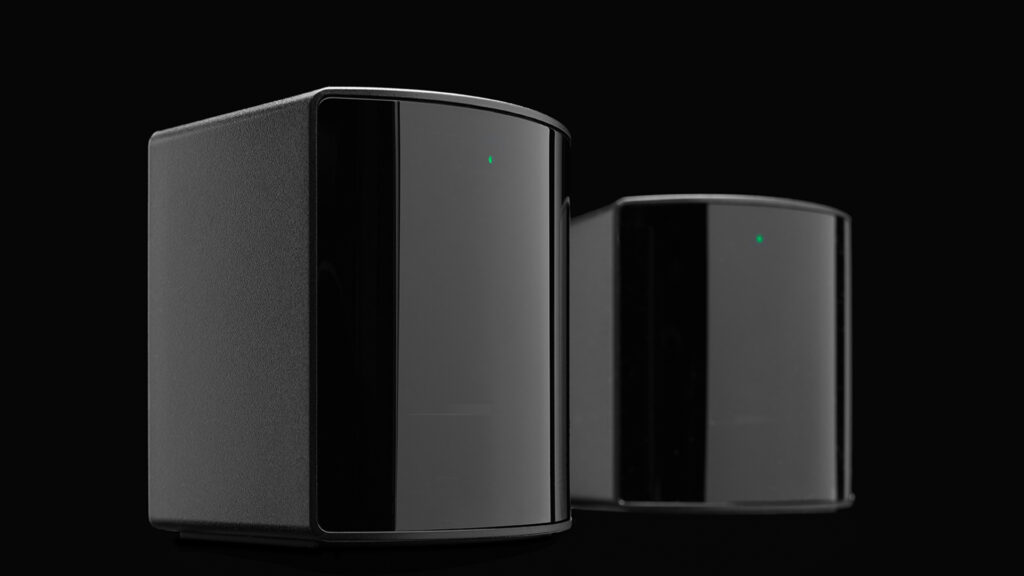
Valve Index Base Station
This is not the case for the BB2, which needs an additional SteamVR Lighthouse (Valve Index Base Station) box. So, while that doesn’t take up space on your head, it does take up space elsewhere in your room. With the Crystal Light, you then have the optional flexibility of expanding to the Lighthouse, too.
Value
Across these three units, there are varied price options, as there are multiple bundle options for each.
There is one easy comparison, however, and that’s that the Bigscreen Beyond 2 is the most expensive and the Meta Quest 3 starts from the lowest entry price.
The BB2 starts from £1,099, the Meta Quest 3 at £549.99, at the time of publication. However, the BB2 needs a Valve Index Base Station at £139.
The Pimax Crystal Light sits somewhere in between in terms of pricing, starting at £718. Packs are available with included games, and for that same £718 price, one set includes a year’s subscription to iRacing, worth $110.
When you consider all of the aforementioned features and performance, for a sim racer, the Pimax Crystal Light looks to offer the best value for money of the three.
The Meta Quest 3 offers a convenient platform. With the option of playing internal games as a standalone unit and wirelessly from your PC, it offers something the other two headsets in this comparison cannot offer.
Meanwhile, the Bigscreen Beyond is notably more expensive than the two other devices in this comparison, but is ideal for those who prioritise a low weight and compact dimensions when considering a PCVR headset.
It would appear, then, that across these criteria, the Pimax Crystal Light is a balanced option. For iRacing users who prioritise high resolution, native DisplayPort connectivity, and an immersive PCVR experience, the Crystal Light presents a very compelling option.
Nice article! However, it should be mentioned that the default refresh rate of the BSB2 is 75hz and full resolution. 90hz requires a resolution drop of 20% which is noticeable.


Discussion
Nice article! However, it should be mentioned that the default refresh rate of the BSB2 is 75hz and full resolution. 90hz requires a resolution drop of 20% which is noticeable.
Thank you, now updated 🙂