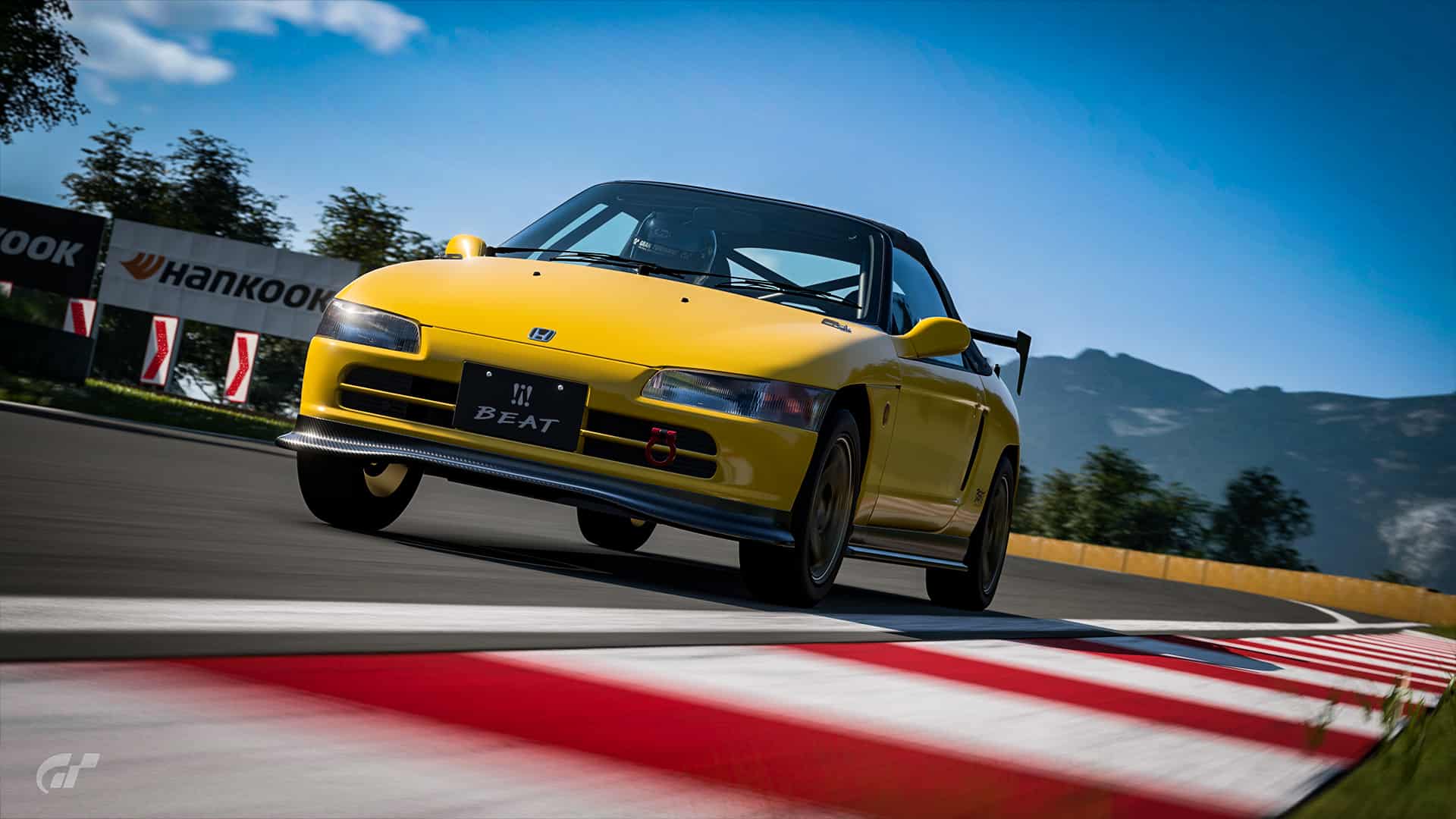
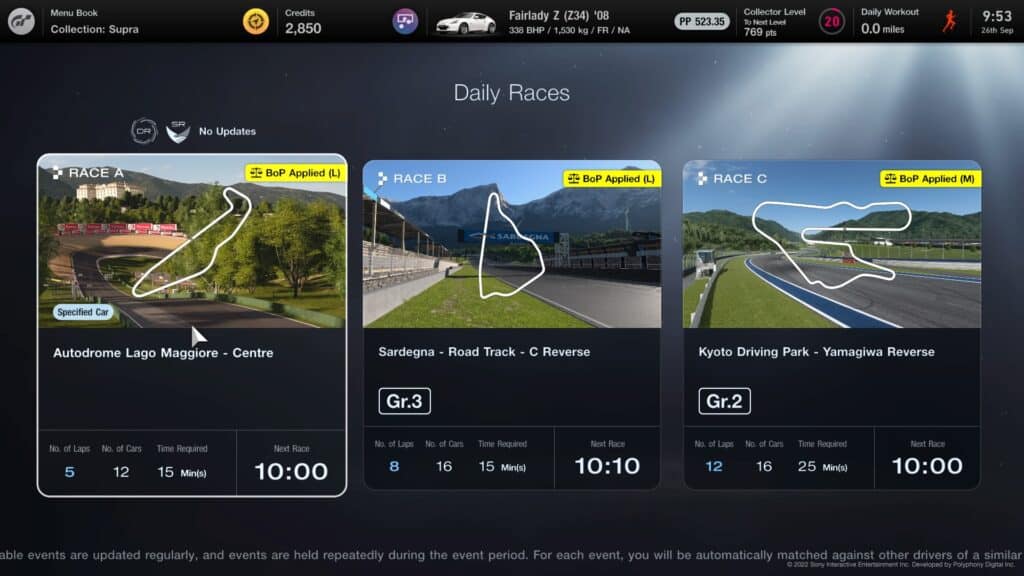
Yes, it’s the turn of Honda’s comparatively microscopic Honda Beat to provide driving thrills in the first race. But, fear not, there are also Gr.3 and Gr.2 cars to interest players with the need for speed.
This week’s track choices are much less diverse, however, featuring three of Gran Turismo’s fictional courses, including the rather over-used Autodrome Lago Maggiore environment.
As a reminder, we are now using GT7‘s new Balance of Performance (BoP) system, introduced in the v1.19 July update. BoP is now split into three categories depending on the type of track used: High-speed (H), Mid-speed (M) and Low-speed (L).
As of the 30th of May, Race A’s performance will not affect players’ Driver Rating (DR) and Sportsmanship Rating (SR). In slightly concerning news, damage has been deactivated for Race A, meaning it’s likely to be like a bumper car race…
RACE A
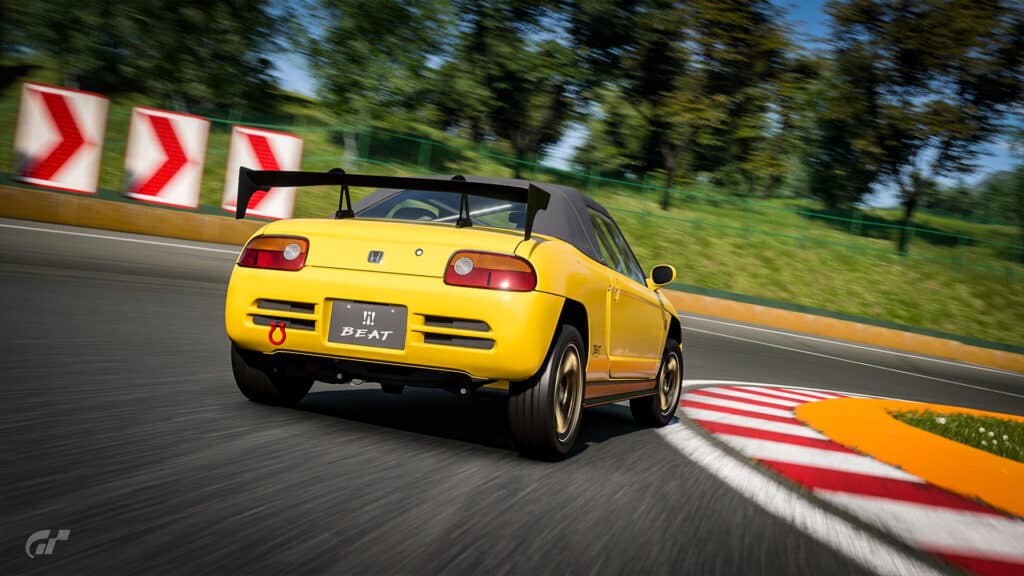
A rear wing does not come as standard on the Beat…
The Honda Beat is an example of a Japanese ‘Kei car’, a car produced to certain regulations for tax and insurance benefits. Essentially, this means Kei cars are small, lightweight and lack power.
Because many of Japan’s cities have hugely condensed populations and lack real estate, many car owners in Japan require ‘garage certificates’ to prove they have somewhere to park their cars. Kei cars don’t require one of these, hence their popularity.
The Honda Beat bucks the Kei car trend by being a rear-wheel drive sports car. Nimble, fun and weighing only 760kg, the Beat was the final car to be signed off by fabled Honda founder Soichiro Honda.
Its focus on handling over power (it only had a 650cc engine after all) makes it a driver’s car in a similar fashion to the Mazda MX-5, only three-fifths of the size…
We head to Sardegna’s snappily-titled Road Track – C Reverse layout for Race B, with the Gr.3 cars. The fictional Italian circuit features epic mountainous backdrops peppered by wind turbines. It also has several technical sections where barriers loom ominously close to the edge of the track surface.
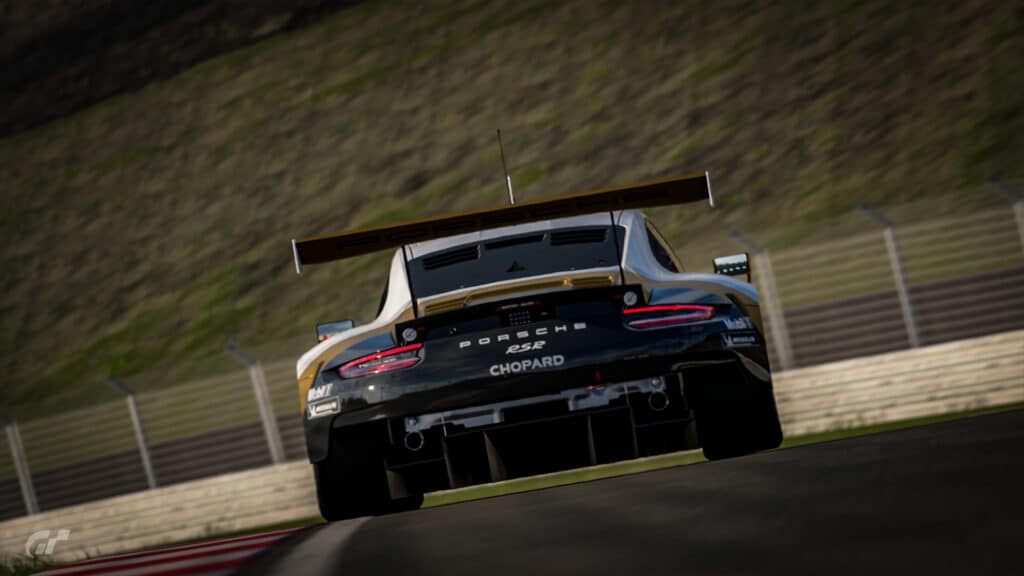
It’s therefore not an ideal location for the wide and powerful Gr.3 cars of race B, which is why our recommended car is one of the most successful and agile examples around.
The Porsche 911 RSR (991) GTE racecar won on 10 out of 15 occasions in the FIA World Endurance Championship, easily holding off competition from Ferrari and Corvette in the process. And it sounds great, too.
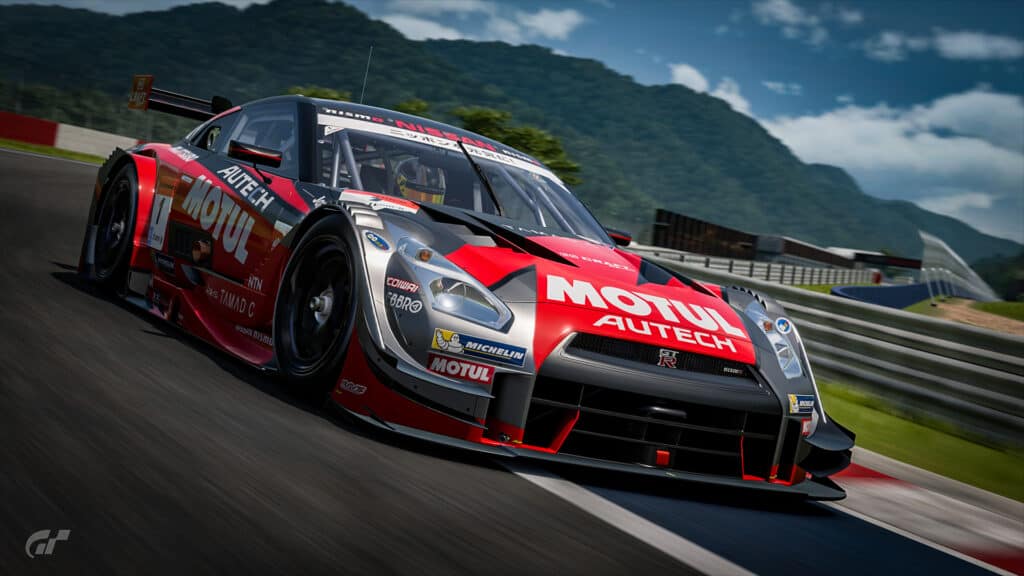
As the most successful model in the history of Japan’s Super GT series, it’s no surprise the car has translated its success over to Gran Turismo 7, but it would be nice to see its Super GT competitors receive a BoP adjustment in order to compete.
Race C takes place at Kyoto Driving Park’s Yamagiwa Reverse layout, which plays to the strengths of the high-downforce nature of Gr.2 cars. Long, sweeping corners are opportunities to carry as much speed as possible.
But with 3x tyre wear the race will be a test of keeping the soft rubber alive long enough to make it to the chequered flag. Race C uses the Mid-speed (M) BoP format.



Discussion