With additional buttons, functions and even a high-definition screen, does Moza's KS Pro represent an even better value proposition compared to its KS predecessor? Check out our review for all the details.
Moza’s latest batch of steering wheels has been a mixed bag. The circular CS Pro represents a solid step forward over its RS V2 predecessor, despite some ergonomic concerns, while the Porsche Mission R replica is stymied by its real-world limitations and a hefty price tag.
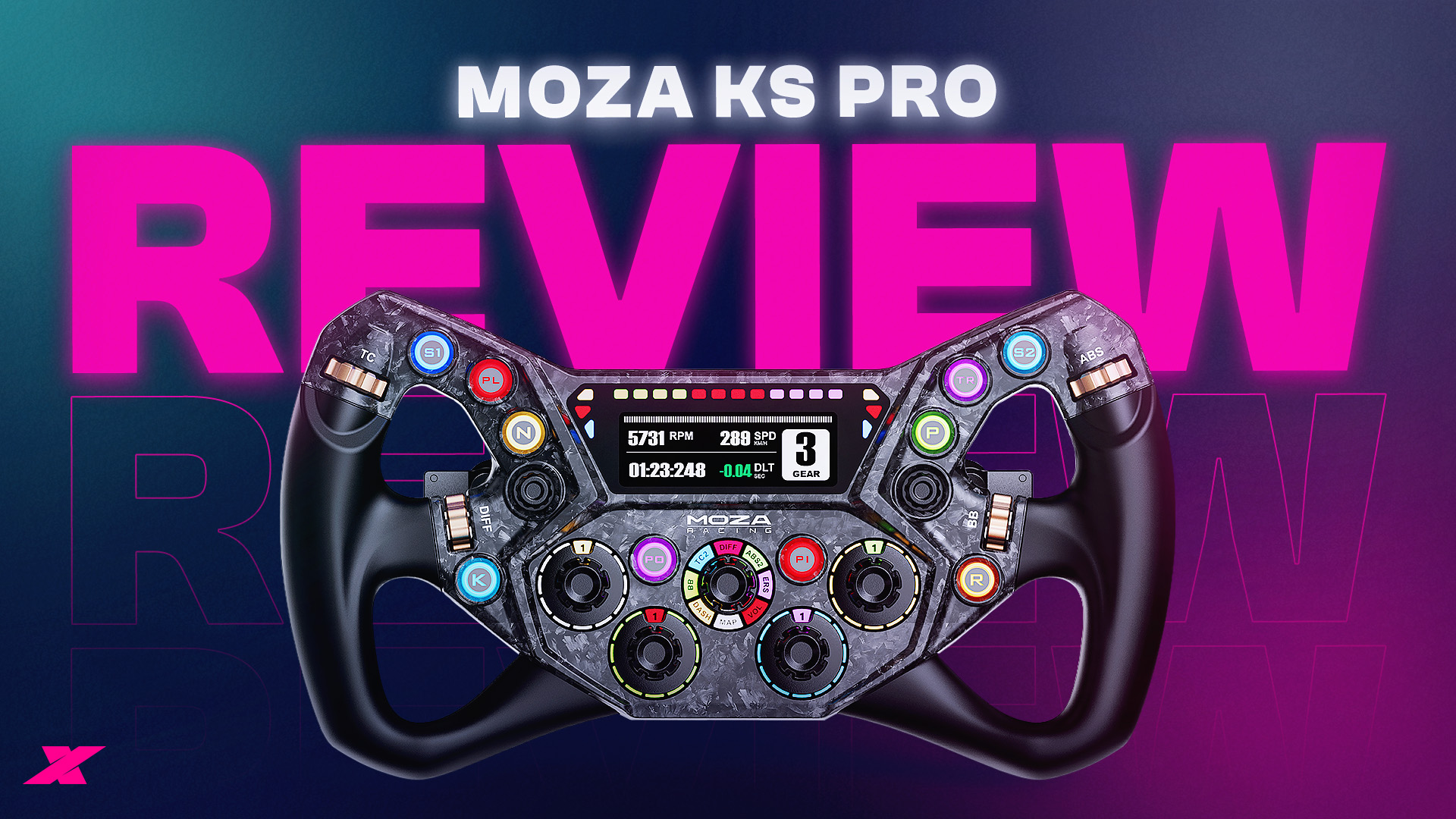
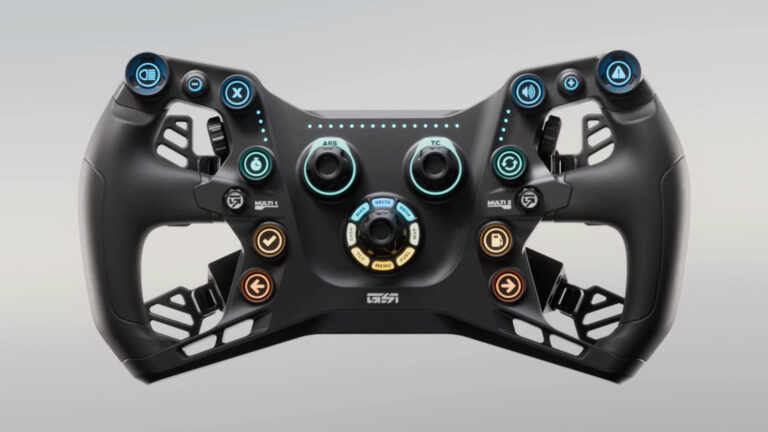
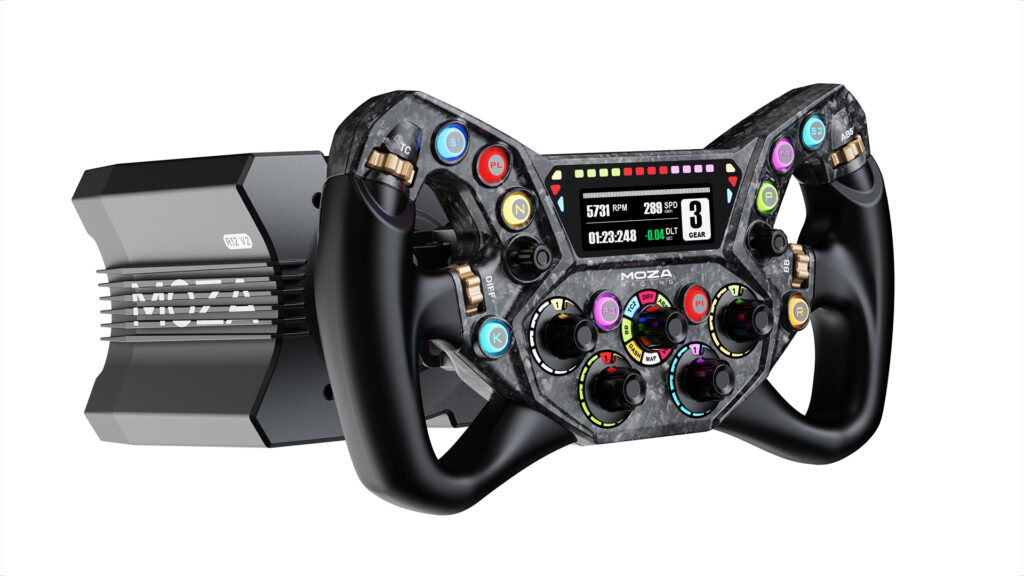
However, for many, the KS Pro Steering Wheel represents a much more balanced effort from the Chinese company, offering a plethora of mappable inputs, illuminated LED buttons, rotary encoders and a 2.99-inch high-definition screen, all for just $329 / €349 / £319.
Buttons, and lots of them
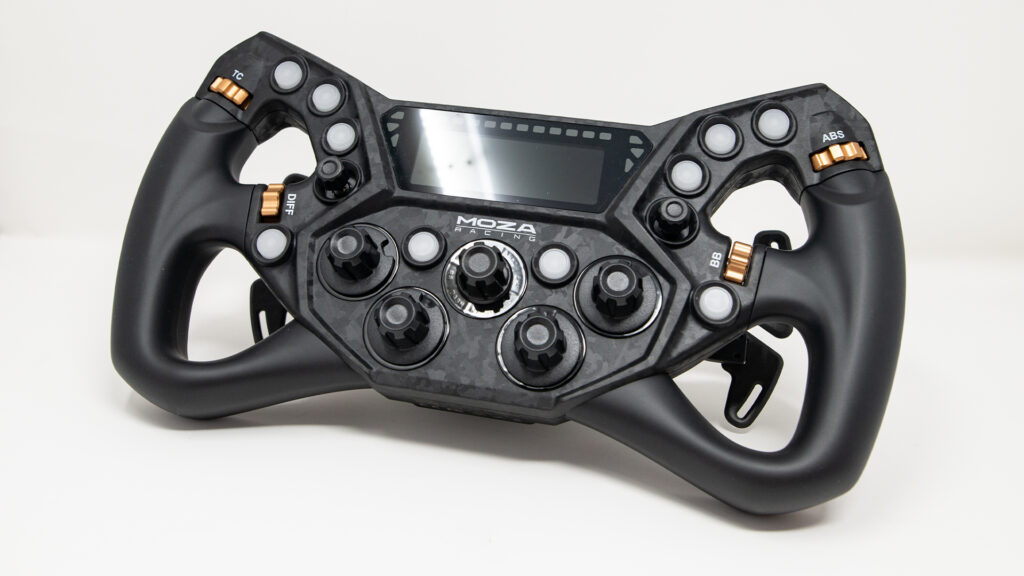
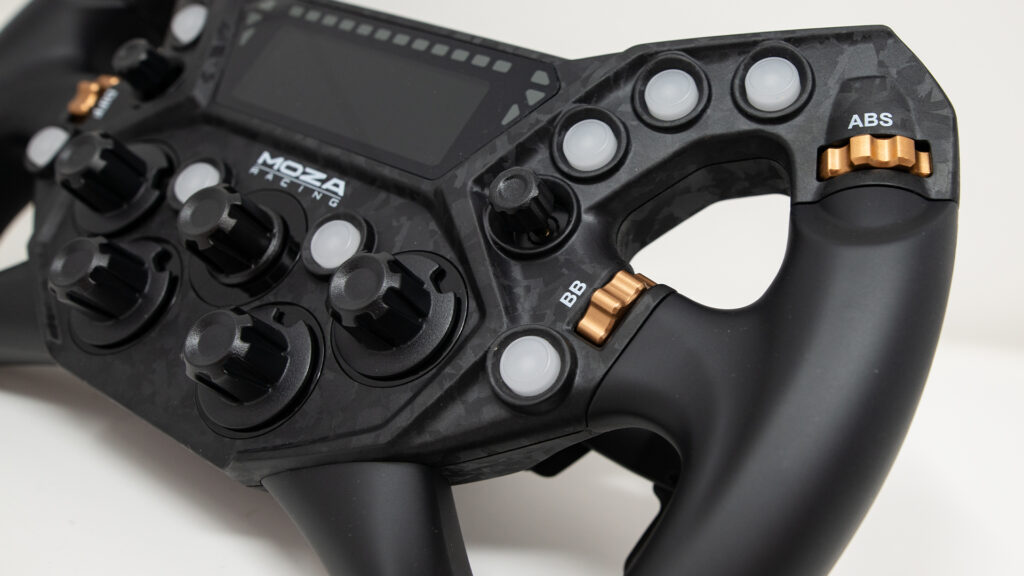
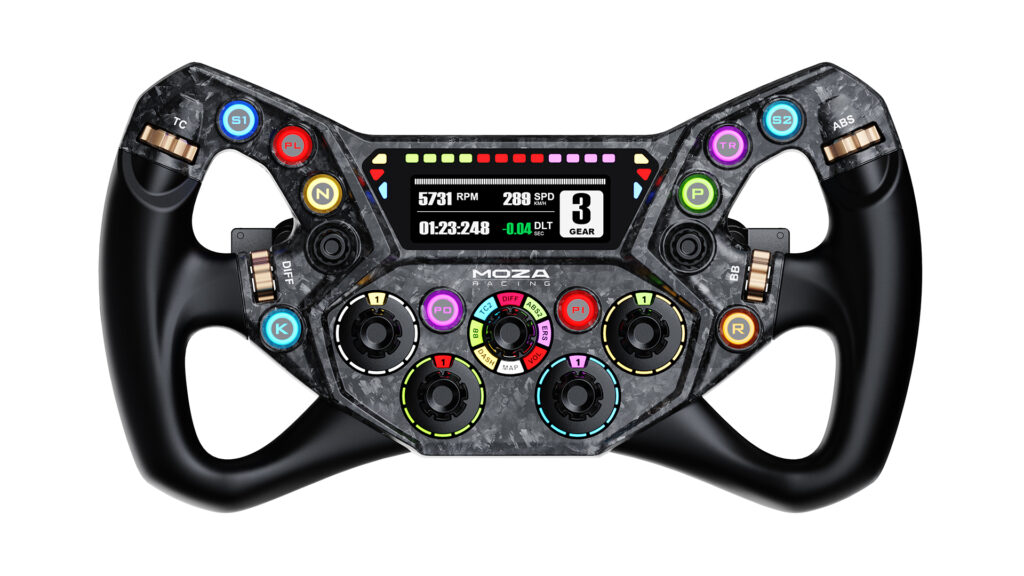
Designed to build upon the success of its KS Steering Wheel, the KS Pro provides virtual racers with two extra thumbwheels, two more rotary encoders and the aforementioned screen.
The slightly garish carbon fibre finish of the KS is no more; it has been replaced instead by a forged carbon aesthetic, which looks more purposeful and less like the horrendous interior wraps you see in a boy racer’s Golf GTI.
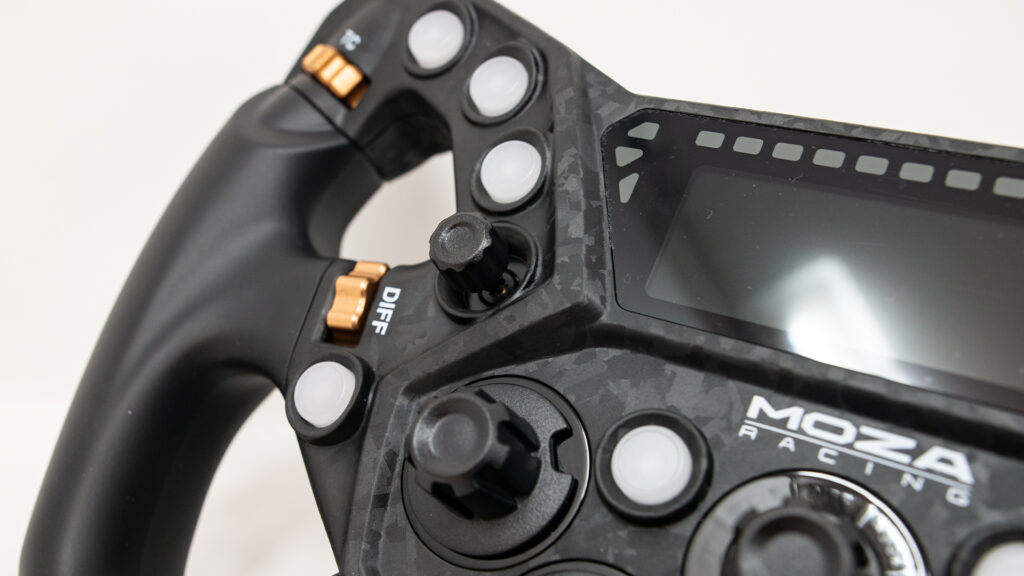
Moza claims the KS Pro is made from a carbon fibre-reinforced composite, but to me it feels quite plasticky, just like its four bronze-coloured thumbwheels. The two seven-way funky switches are also plastic and feature a lot of play in their movement, which makes me concerned about their long-term durability.
The five rotary encoders are again plastic, but feel much more precise in their action, holding fewer reliability fears as a result. Four of these are 12-position switches, while the centre rotary is an eight-position example. All are illuminated by programmable LEDs, which is a nice touch, especially if you prefer to race in the dark.
In total, that’s 12 buttons, two pairs of paddles, five rotary encoders, four thumbwheels and two seven-way funky switches. Oh, and two sheets of high-quality 3M stickers. Now, there’s a selling feature.
Ergonomics
Measuring 300mm wide, the KS Pro is ideally suited to GT and single-seater driving, with thermoplastic elastomer grips providing robust protection against sweaty palms. Their rubbery feel might provide long-lasting endurance, but I disliked their slightly greasy sensation. I hope this dissipates with more use.
Unlike the CS Pro, most of the buttons on the KS Pro are easily accessible while driving, making it a much more comfortable and intuitive experience. Its butterfly-style design is tried and tested, although it feels top-heavy given the added weight of the screen. The extra heft doesn’t translate to how it feels on the rig, but it was less comfortable than the Mission R, which benefits from being 20mm wider.
The KS Pro’s buttons feel similar to both its CS Pro and Mission R stablemates, as Moza continues to forgo its previously soft-touch controls in favour of a more robust ‘clicky’ operation. Being a fan of the softer buttons, I’m sad to see this development, but it makes complete sense given they are much easier to press in the heat of the moment, even when wearing gloves (as a side note, they remind me of Simagic’s offerings).
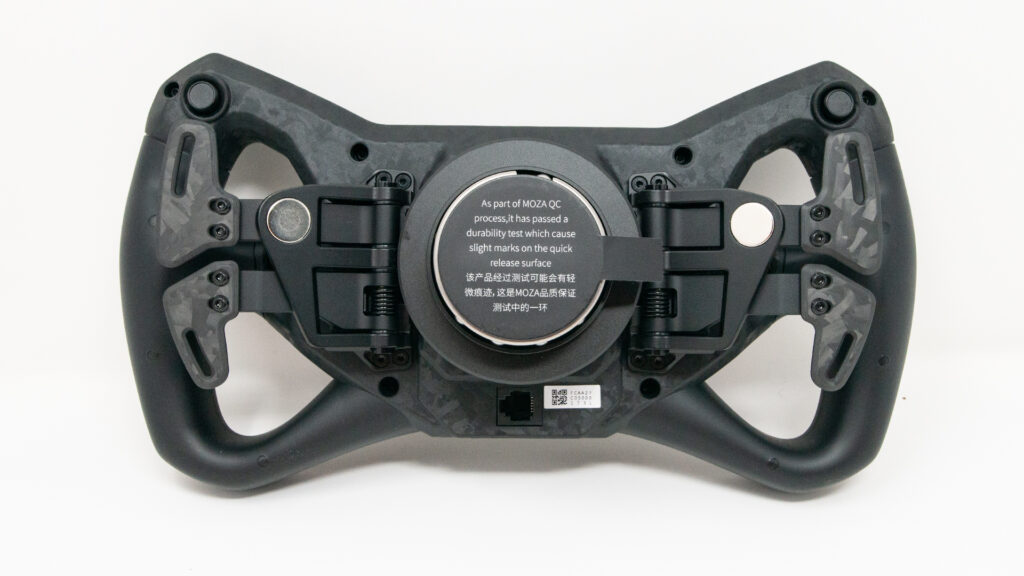
The two pairs of paddles are made from forged carbon and feature the same feel as I’ve seen on previous generations of Moza products. Put simply, they work well, with the shifters supplying a satisfying ‘thunk’ when pulled.
Dash
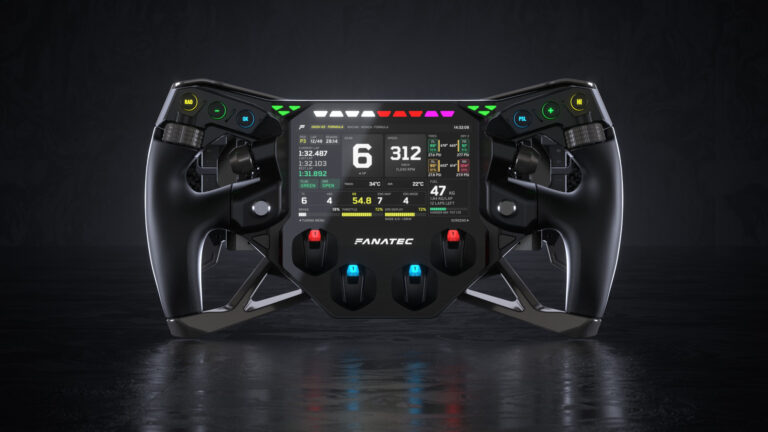
The 2.99-inch screen isn’t massive compared to other sim racing steering wheels, but it can be customised using Moza’s Pit House software to show details of your choosing, supplemented by three pairs of LED flag lights to its sides and a rev strip above.
Once again, there is no support for SimHub, which is likely to be a sore point for many sim racers, but Pit House should eventually offer plenty of community-made dashes. For me, the default options are fine as I dislike having too much clutter on a screen. Others may feel differently, however.
The KS Pro can also be used with third-party wheelbases using Moza’s Universal Hub Kit (which is around £35), which attaches to its typically robust alloy quick-release.
On-track
So, the KS Pro talks the talk in terms of specifications, but how does it fare in practice? Well, it performs exceptionally well despite its price.
As mentioned previously, the vast majority of its buttons are easily accessible on the fly, with the LED illumination offering excellent visibility across the rim’s face buttons and rotary encoders. The layout of the grips ensured I felt comfortable while driving despite a less-than-premium feel.
During prolonged periods of driving, however, I experienced some discomfort at higher force feedback levels, which I didn’t feel when using the wider Mission R wheel.
At 300mm wide, though, the KS Pro will suit the vast majority of sim racers, seeing as it’s almost an industry standard for GT and formula-style steering wheels these days. If you have larger-than-average hands, however, it may feel a tad uncomfortable.
Value for money
Is there a catch to the KS Pro’s recommended retail price of $329 / €349 / £319? Honestly, there’s very little to fault Moza on here.
It ticks all the boxes in terms of usability, despite the plastic componentry (and one can hardly grumble with this, given its price point). Although I disliked the feel of its TPE grips, most will be completely satisfied with their quality, focusing more on the genuinely helpful RGB lighting, high-def screen and raft of mappable buttons, encoders and switches.
At just over £300, Moza’s KS Pro is almost unrivalled in terms of bang-for-buck in the sim racing space.
Surely there must be a catch?
Well, there’s not. And don’t call me Shirley.
If you wish to purchase Moza products, you can help support Traxion by using our affiliate link here.
Traxion has affiliate partnerships where we may earn commissions for products or services purchased via affiliate links. These do not influence editorial content.


Discussion