It’s been on the sidelines for two years, but the official video game of the FIM Motocross World Championship is finally back.
A new game engine, new developers (ish), and renewed hopes of enjoyable off-road bike racing.
We’re not going to bury the lede here. MXGP 26 is a significant improvement over its predecessor, but is ultimately let down by some fundamental shortcomings.
The basics first, and what you have here is a motorcycle title based on the real-world MXGP championship with the 2026 riders, liveries and 19 circuits all faithfully recreated.
Good job it has all that really, what with its name being MXGP 26…
You perhaps didn’t need us to tell you that, but what you may need to know is that it’s created solely by Artefacts Studio in France and published by Nacon. It uses the now-ubiquitous Unreal Engine 5 tech stack.
This is key, as two years ago, MXGP 24 was released, and it didn’t use Unreal. Instead, it used Kylotonn’s proprietary KT Engine, used by the likes of the TT Isle of Man games and Test Drive Unlimited Solar Crown. Artefacts was involved in its creation, so too was KT.
Without a shadow of doubt, it was one of the most disappointing releases in recent years, with lacklustre visuals and vehicle dynamics that felt as if you were trying to somehow ride a cardboard horse, not a motorbike.
To its credit, then, the publisher did the right thing. It gave the entire project to the one studio, paid for a new graphics engine and left them to it.
Which is how we end up with this new release, which is, and we say this emphatically, a significant improvement over its direct predecessor. Night and day different.
However, given how woeful that was, it’s a bit like saying how other X-Men movies are better than Dark Phoenix. It’s not hard.
Let’s break down what makes it better, but not necessarily genre-leading.
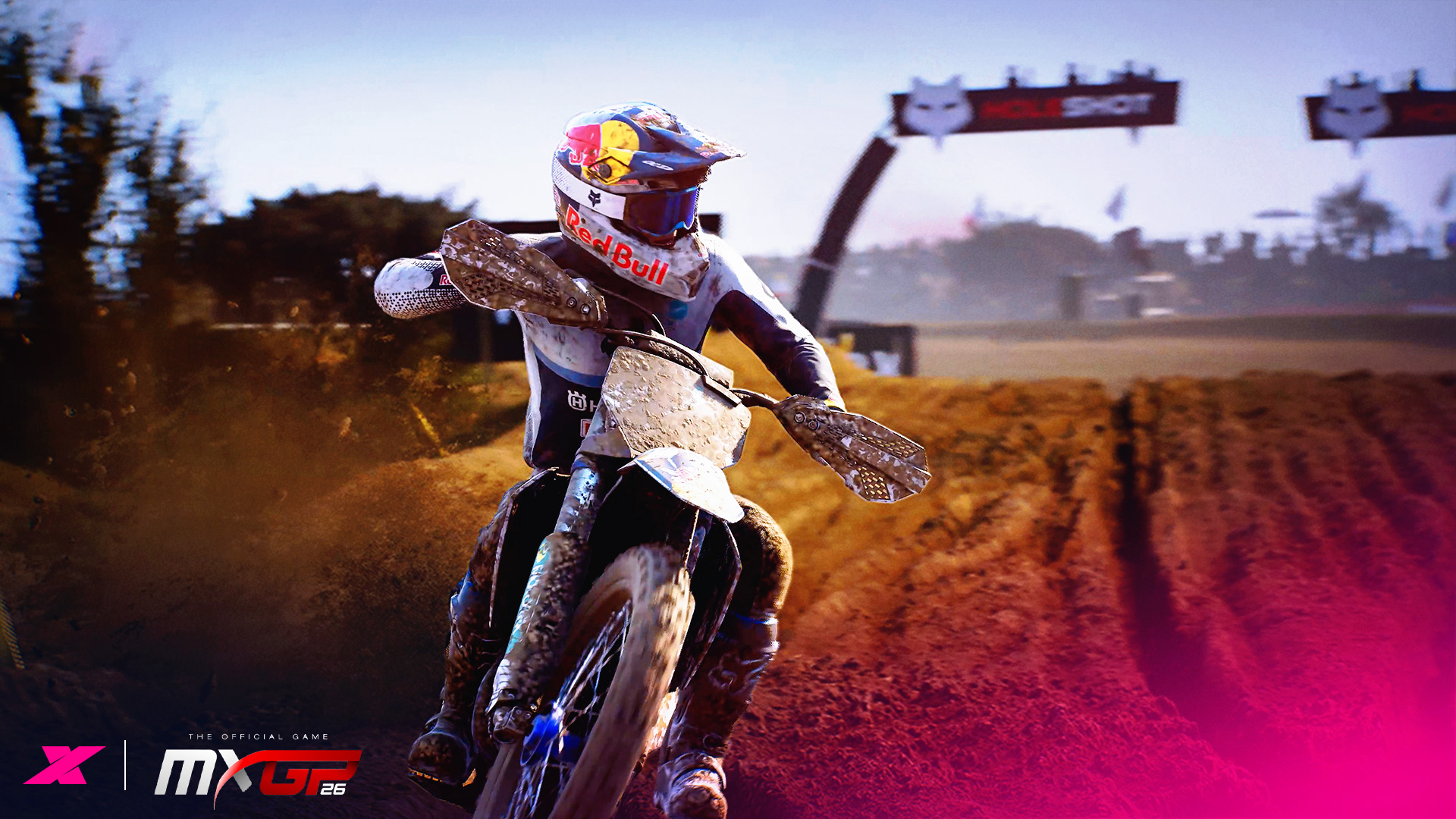
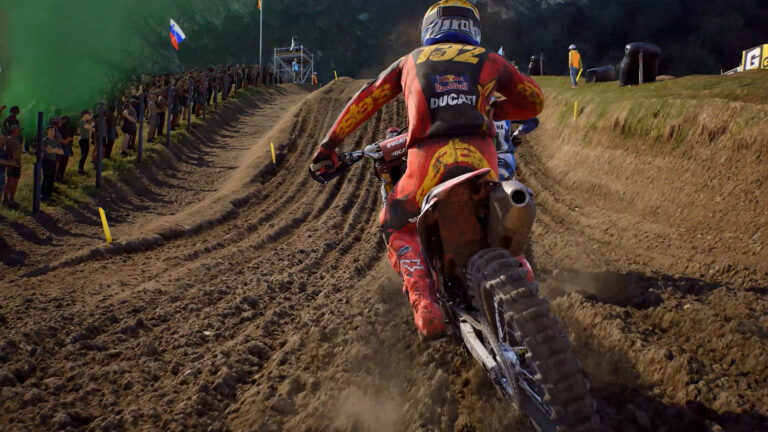
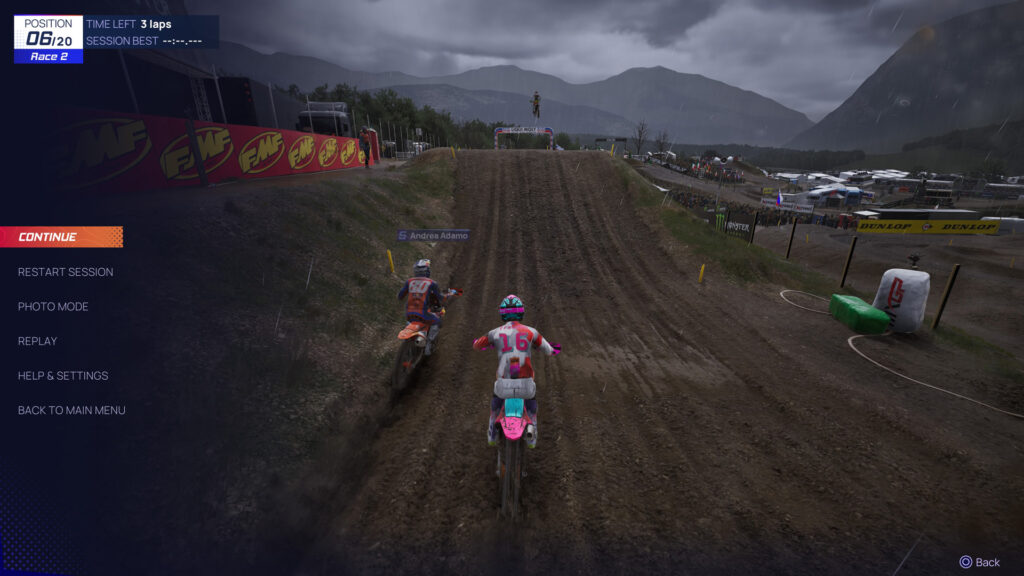
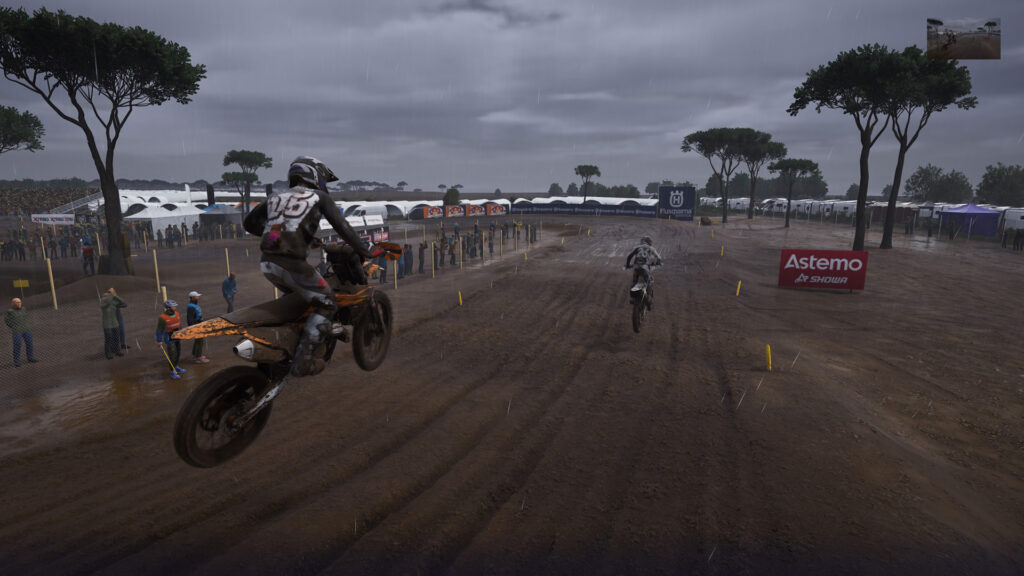
To do so, we’ll start with the visuals. There are large trackside crowds, smoke effects and detailed bikes.
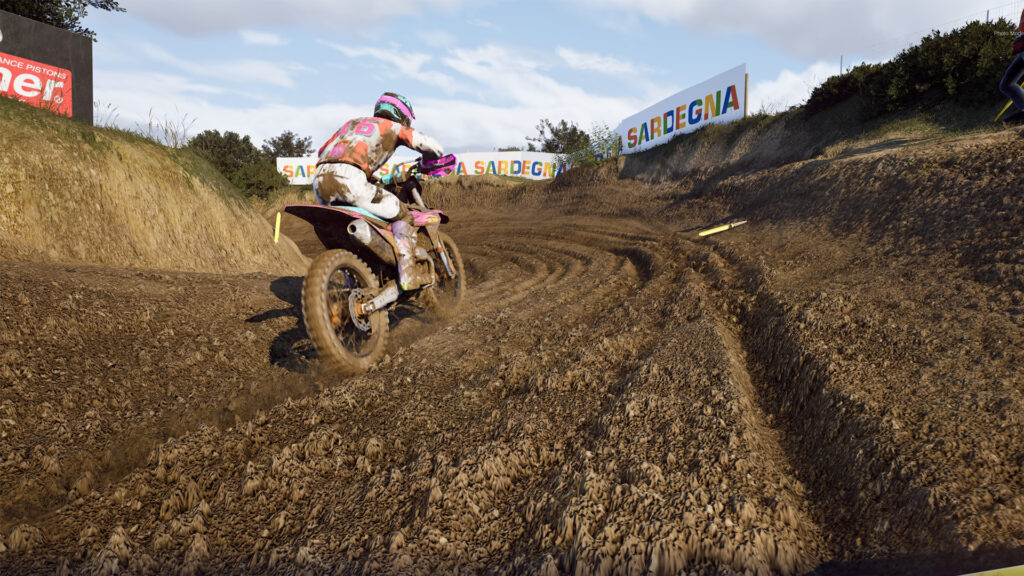
The track surface is the main standout. The mud, sand and hard pack surfaces are not only authentic-looking, but they also degrade or churn up in real-time based on your lines.
Sure, there are set berms and circuit edges, but the bits in between show noticeable lines. Riola Sardo looks particularly pretty.
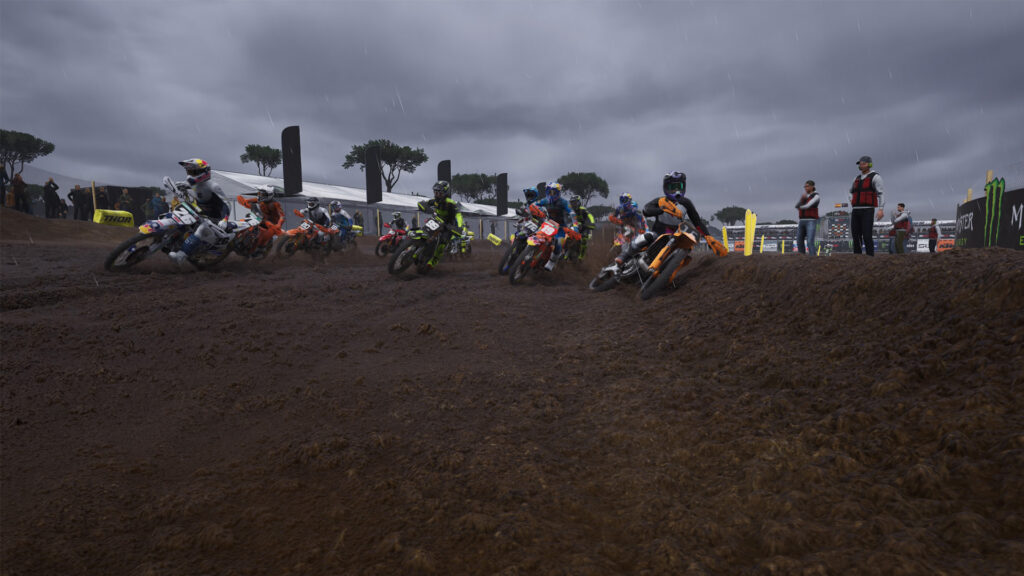
When it rains, there’s dynamic weather with naturalistic puddles. The overall aesthetic is solid, although it isn’t up there with the very best; there are still the odd pop-in effect during pre-race scenes and some of the scenery in the middle distance perhaps looked better back when Milestone had the rights.
But there are times during a replay where you are surprised by the drenched, muddy surface, especially during a downpour.
On PS5, in our testing, we reliably hit 60-frame-per-second too, with no obvious hiccups. Just smooth, pretty visuals. And it was the same experience on a high-end pc, being able to max out the quality without a single blip.
Smaller details amplify the effect, too, such as the rider’s shirt blowing in the wind and gradual dirt buildup.
You may not notice this, however, as you’ll be mostly busy trying not to fall off.
The motorcycles feel much more poised than two years ago, but not quite as smooth as past series instalments by prior developers.
There’s a neat little animation under brakes sometimes where the rear steps out and your rider catches the slide, backing it into a turn. They are also sometimes shown hopping back onto your bike following a crash.
And crash you will. Again. And again. And again.
Clip some signage, dead. Land a jump a bit on the heavy side. RIP. Hit a berm at an awkward angle. Launched into the sky.
There’s a serious feel to the physics, although they still lack cohesiveness.
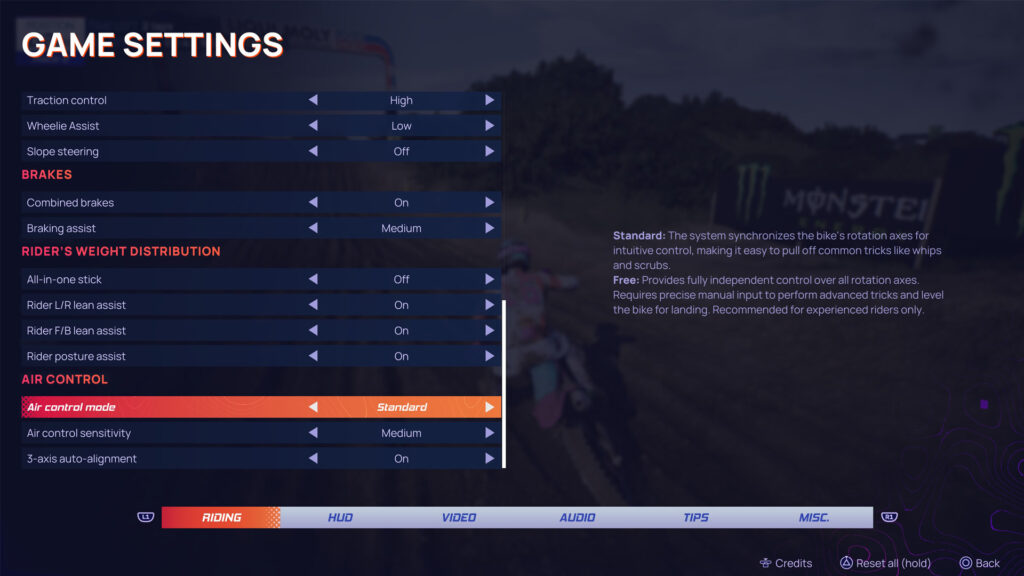
For example, in the air, we found it’s a little tricky sometimes to come out of a scrub or whip, vital tools to slow down mid-jump to lower airtime. Often, it was a little too easy to accidentally flip over your head mid-air instead of righting before landing, despite the three-axis auto alignment assist being switched on. Seasoned pros of the sport will likely get on with zero help in this regard, but it all feels assumed.
Another critique would be a lack of fluidity sometimes mid-corner, where it’s hard to course-correct with enough precision, leading to an almost understeer-like sensation where the bike feels too rigid, or you ride a berm before it flies you off at an odd angle.
Despite its official motorsport game framing, which typically leads to an authentic game that isn’t an out-and-out simulation, the physics here can be surprisingly tough. You really must learn each track.
There’s no doubt newcomers will be perturbed, however.
Where’s the sense of progression?
Next, we must discuss what you can actually do in MXGP 26. Yes, you can ride a bike around a circuit at speed, and you can do so in single grand prix events against computer-controlled rivals, or in a time attack mode against your ghost.
Here you try to beat bronze, silver, gold and diamond times, or compare to others with an online leaderboard. Setting a gold time can unlock new bike liveries.
Then there’s the career mode. And that’s where things start to fall down, as there isn’t one.
What you can do is a championship in either MX2 or the main MXGP category. But you cannot rise from MX2 to the top, manage a team, consider bike development, resources or sponsors. It’s simply running a season. When you reach the end, there’s a podium celebration before you arrive back at the main menu, with nothing carrying across into another season.
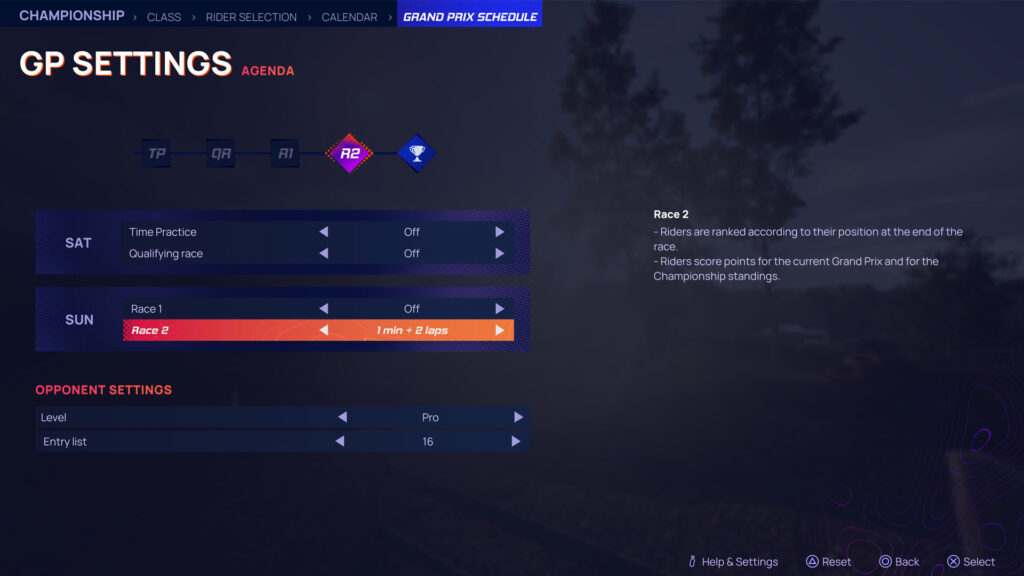
You can at least customise the calendar and race length plus format. But that’s about it.
It’s a much more basic set-up compared to direct rival Monster Energy Supercross 25, and not even close to the likes of MotoGP or EA SPORTS F1.
Like many other Supercross and Motocross games, there is a free-roam compound-style area. Dubbed the ‘Training Ground’, it’s anything but, really, as there is a distinct lack of training.
There are no tutorials or challenges here. It’s just an area. We’re not saying it needs hidden collectables, but as the game introduction simply amounts to an empty track with some of the controls on-screen, this is an ideal environment to explain how to whip or scrub, for instance, and that open goal is missed.
To its credit, there is a form of ranking and matchmaking system for public lobbies, friends can join private lobbies and AI can be used to fill in multiplayer grids. Local split-screen or cross-platform online are omitted, sadly.
So too is being able to share custom rider and bike designs. Which is a shame when you can enter a race with a bright pink bike, should you choose, thanks to a paint scheme colour picker. Customised, real-world apparel can also be unlocked, then tweaked to match.
To mask the lack of modes, there is the ‘Journey’, which combines the aforementioned Championship and Time Attack modes, plus the unlockable customisation items. This amounts to a list of tasks, completion of which fills a virtual medal list, each with a percentage for completion.
To give the creation team some kudos, at least this provides a semblance of progression, yet it doesn’t make up for a lack of more meaningful features.
This could be forgiven, to an extent. But what can’t be forgiven is the poor relative performance of your AI-controlled opponents.
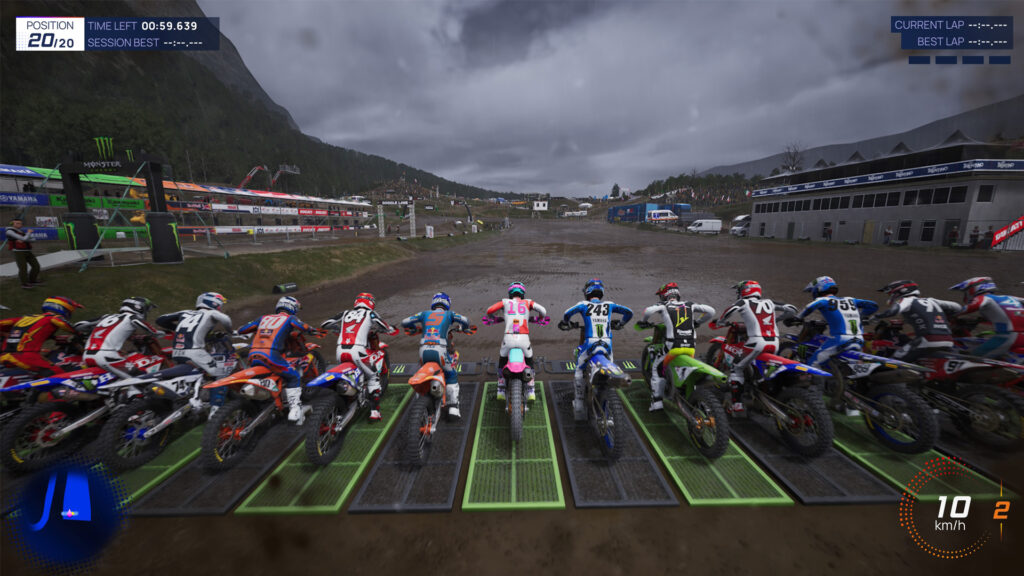
Your rivals are short-sighted, sometimes weaving or crashing at unorthodox places, especially at the start of a race. Their movement is unpredictable. They seem to struggle with the detailed track surfaces, perhaps not able to handle the dynamic lines or larger ruts.
Apart from the opening corner, the field spreads out, as if there are three pros in an open lobby with a field of amateurs. Also, you’re essentially guaranteed a holeshot each time, as you’re leagues quicker off the line.
Generally, and there are exceptions, they are slow to boot. We could win races without practice or qualifying on the pro difficulty level. Expert isn’t much more of a challenge. Trust us when we say we’re far from a Stefan Everts or an Antonio Cairoli.
We’d say we’re more like Lorenzo Albieri, and yet we can win races, despite several crashes.
A noble attempt
Which typifies MXGP 26 as a whole, really. The foundational elements are now in place. The visuals are tidy, the dynamic rain powerful, physics are on the serious side and customisation is welcome.
But the on-track action is significantly impacted by woeful single-player rivals, and there needs to be more to do. It’s like a rice cake without a topping.
It’s a significant step forward and most of the elements are there for something more wholesome in the future. Sadly, we can’t help but feel this still needs another year in development, so here’s hoping the inevitable MXGP 27 adds the necessary modes and refinement.

Discussion