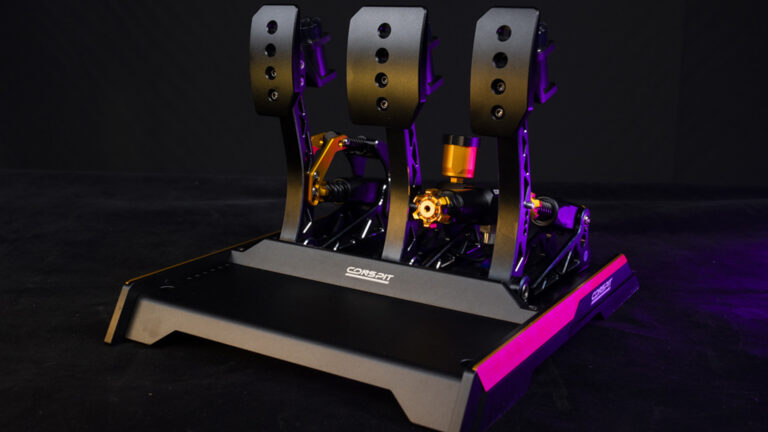
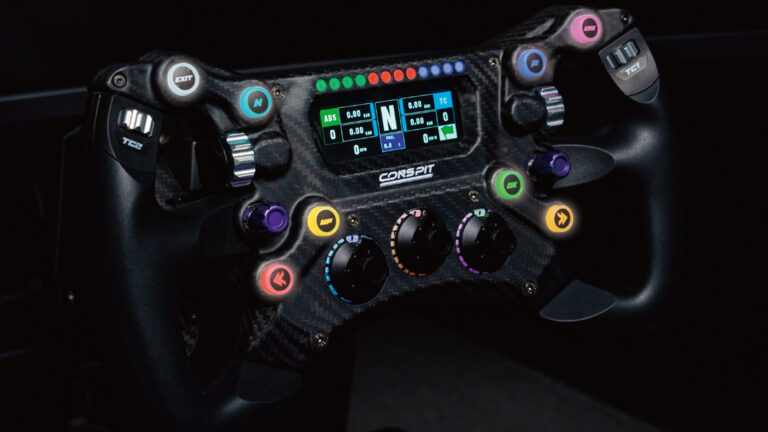
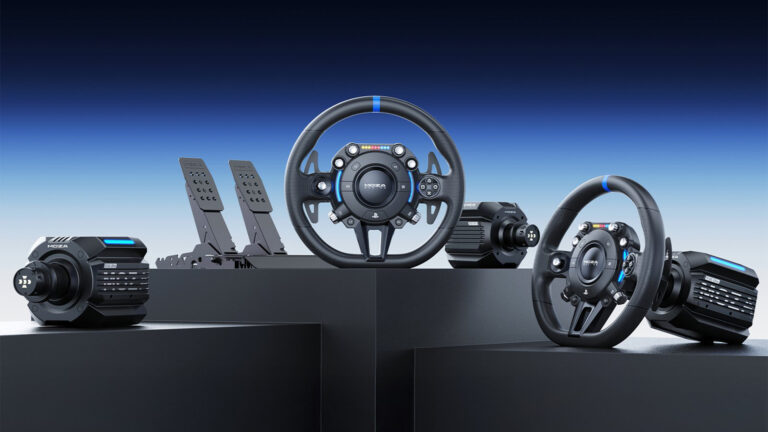
CONSPIT’s sim racing equipment includes wheel bases, wheels, pedals, dashboards and handbrakes, plus the Link software to manage the ecosystem.
There’s one obvious omission: A shifter.
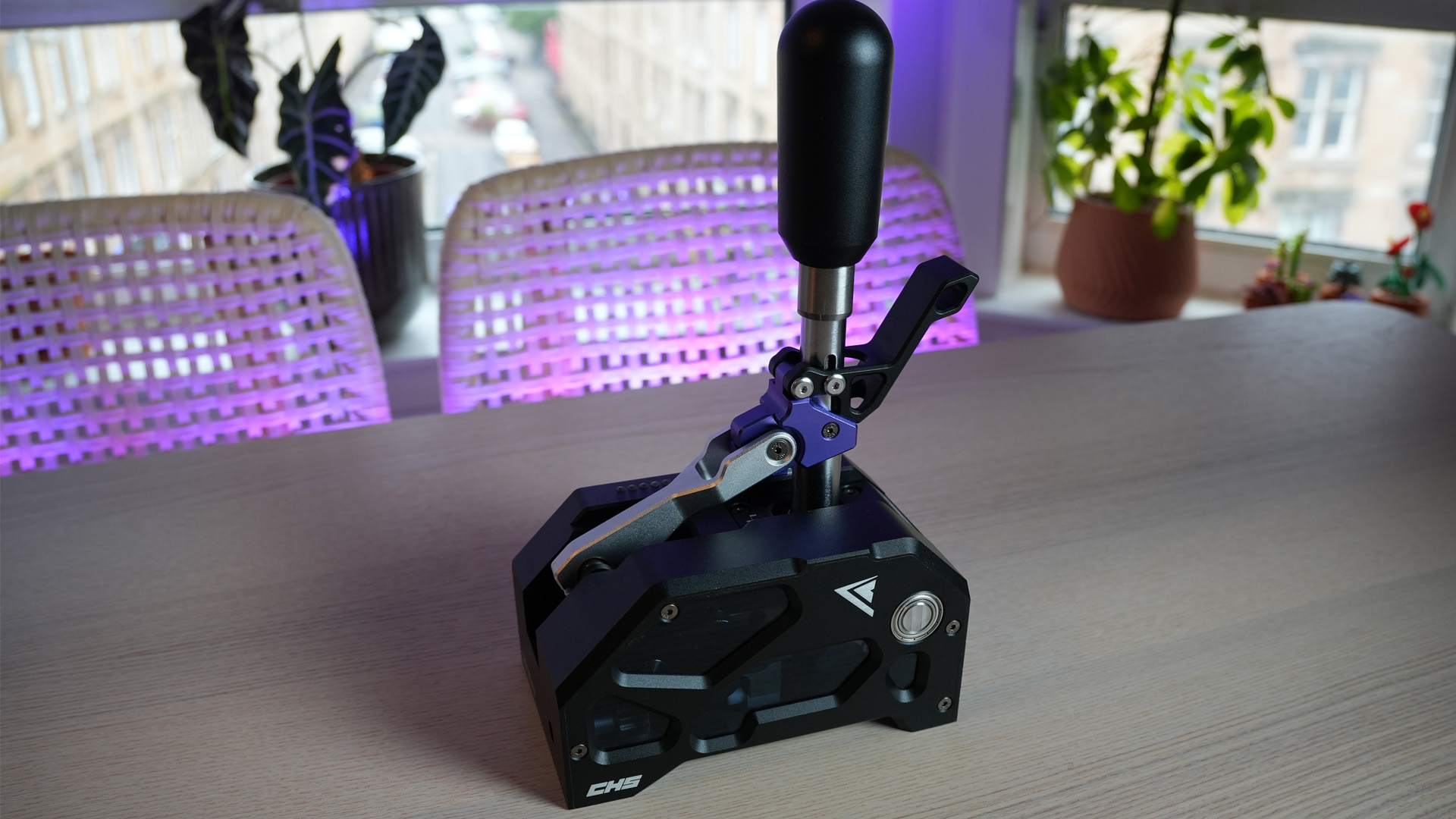
Until now, that is, with the CHS.
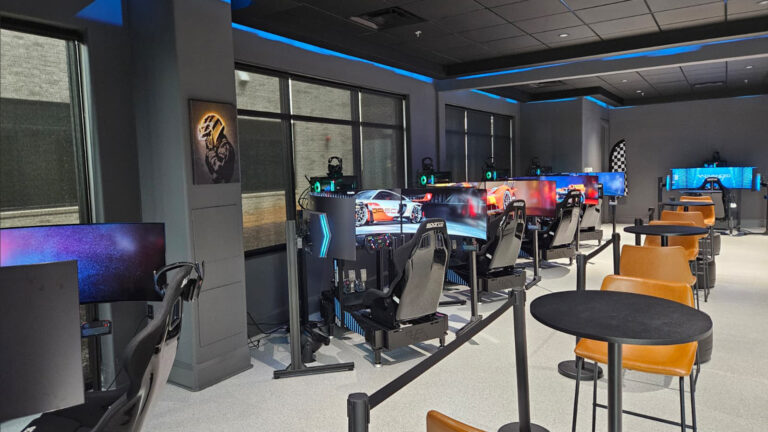
Previewed in prototype form at the SimRacing Expo Charlotte earlier this year, it marks its debut device for this area of the market.
Like when car manufacturer Toyota can sometimes enter a segment later than rivals but then, when it does arrive, it’s dependable. Or when Apple takes a step back and lets others lead the way in the early stages, before arriving with a fully formed feature.
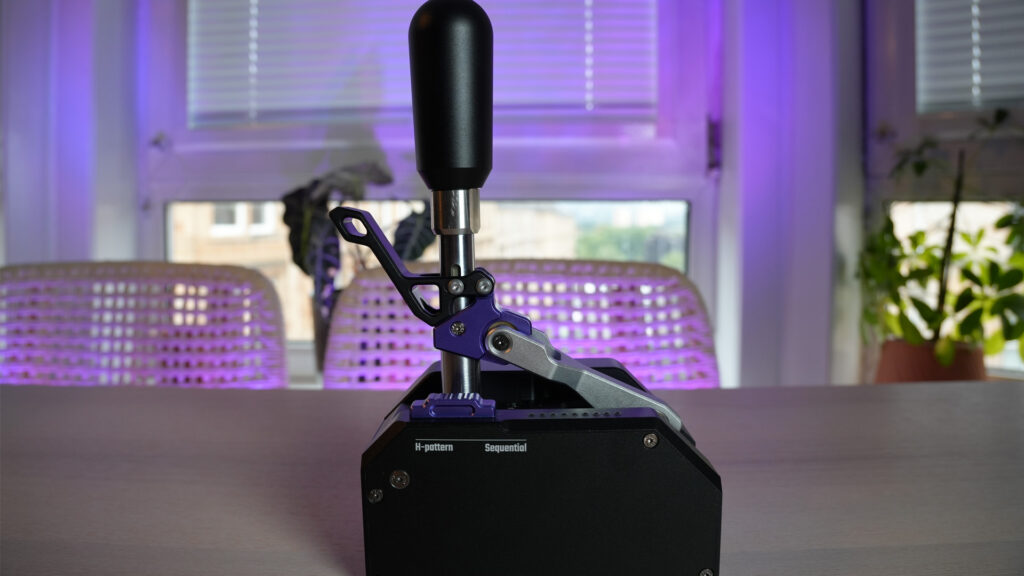
The CHS has been in development for at least 18 months. But the wait has been worth it, with CONSPIT delivering a compact, dual-mode shifter with some innovative features and durability validation based on one million mechanical action cycles.
It will be priced at $369, €369 and £329 upon launch, the latter two including VAT.
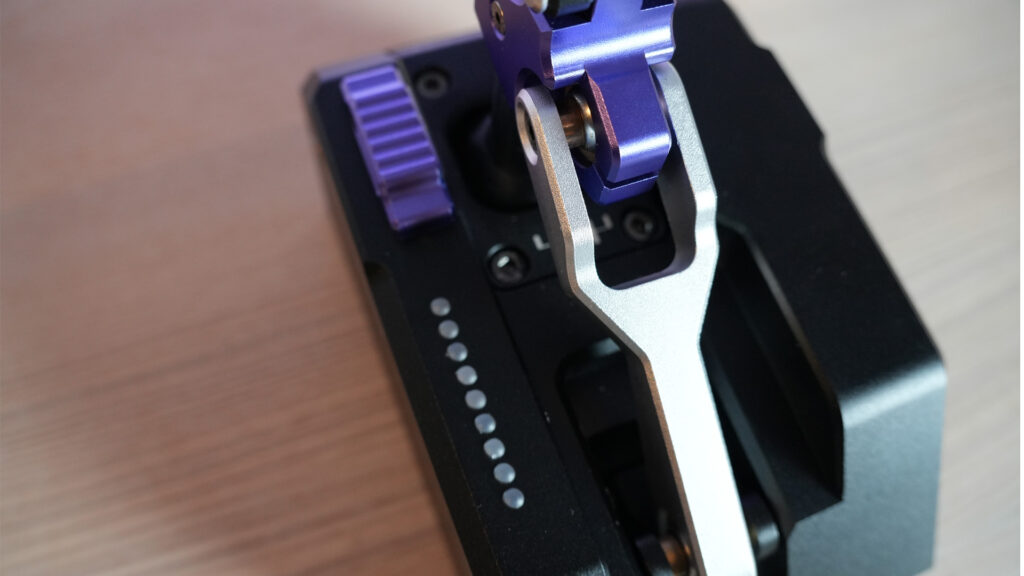
On the face of it, the CONSPIT CHS has several neat features. There are nine RGB LEDs that can be customised with the CONSPIT Link 2.0 software and even support the third-party SimHub ecosystem. These could be used as an additional rev light display, for example.
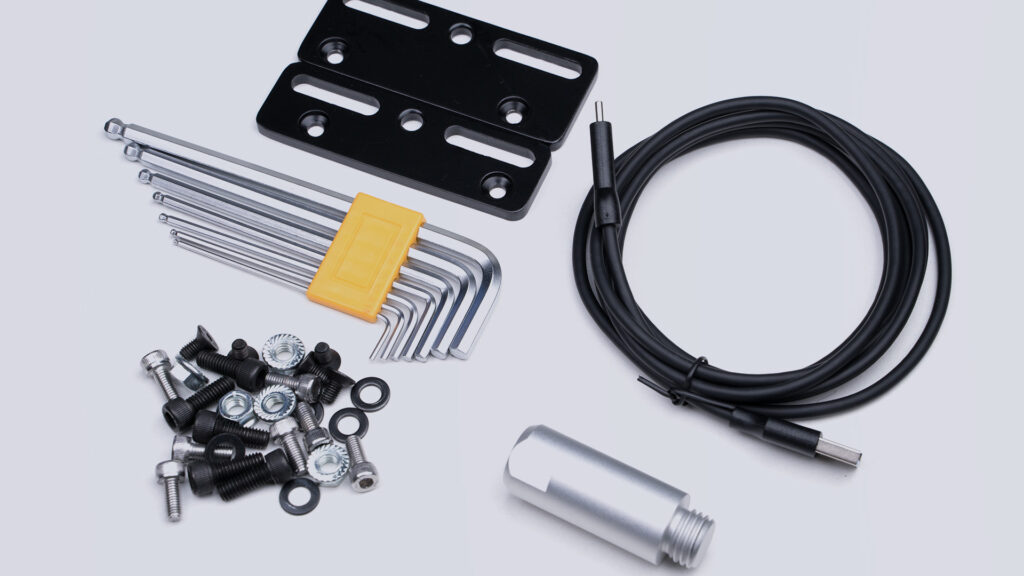
You can also adjust the force of each shift by simply turning an Allen key, with a range of between three and 10kg. A lighter feel for ease of use, or a heavier feel for a more deliberate, mechanical sensation.
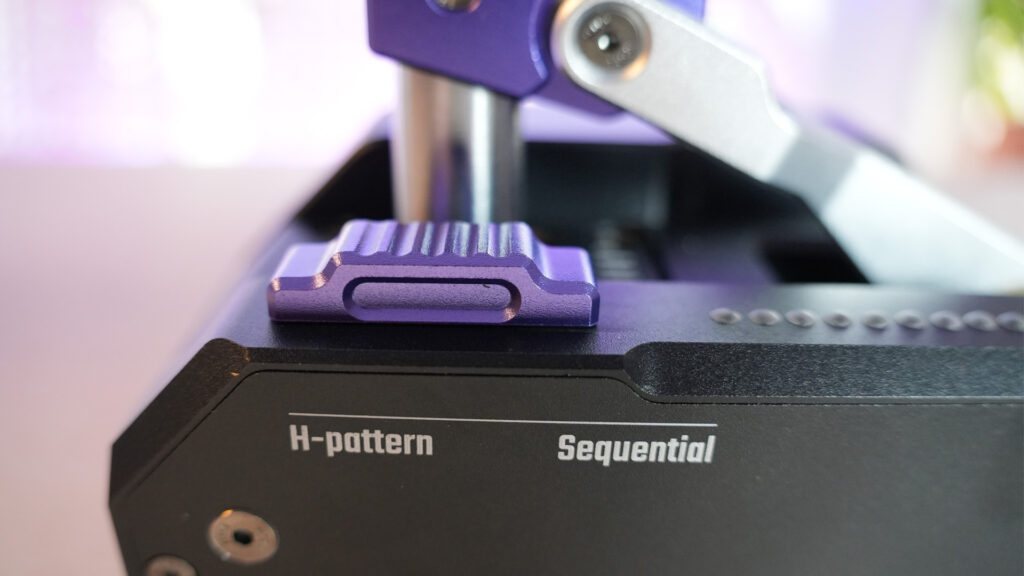
Switching between H-pattern and sequential modes is one deft flick of a switch – unlike some contemporaries; no tools or fiddly two-handed motions are required.
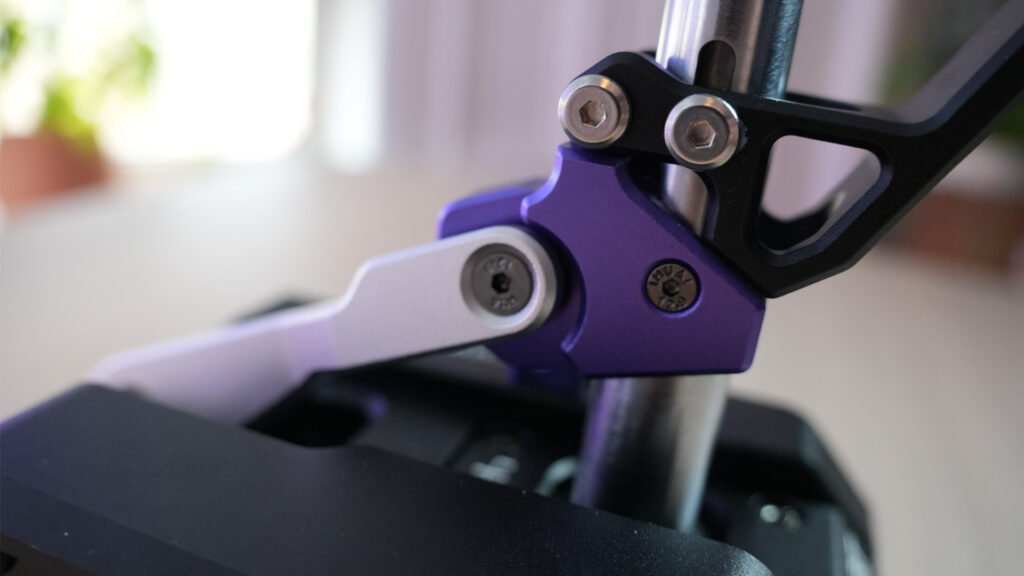
There are eight gears in total. Six in a familiar format, plus seventh and reverse accessible via a lockout trigger.
That’s not all, as there’s been some serious consideration when it comes to its movement…
SnapShift asymmetrical sequential throw for quick downshifts
A real-world motorsport competitor wants a positive shift from their race car. They want to know clearly, almost instinctively, that another gear has been selected and they want it to behave in a dependable manner that can sustain repeated, high-stress usage.
Consequently, so do sim racers, who desire a realistic experience.
The shift must be accurate and feel-some, with a shift action that can be trusted without taking their eyes off the screen. Changing gear must be instinctive.
“For the H-pattern mode, we were not trying to copy one specific car, but we did look at the kind of manual gearboxes that enthusiasts usually like: direct, precise, with clear gates and a solid shift-in feel,” said a CONSPIT spokesperson to Traxion.
“Manual transmissions can feel very different from one car to another. Some are soft and vague, some are tight and mechanical. The CHS is obviously a sim racing product, but the feeling we wanted was closer to the latter.”
The sequential action must be solid, too. The aforementioned adjustability helps sim racers find their preferred setup.
But the CHS also has a clever trick in this mode. Called SnapShift, it’s an asymmetrical throw. In other words, the amount of travel is different fore and aft. Longer for changing up a gear, shorter for downshifting, ideal for rapid changes during late-braking.
This is designed to make pushing down the gearbox more defined and quicker.
The challenge
That’s some of the interesting features and unique aspects covered, but how did it come to be? What are the challenges in creating a new shifter in 2026, when several other companies are already on the market?
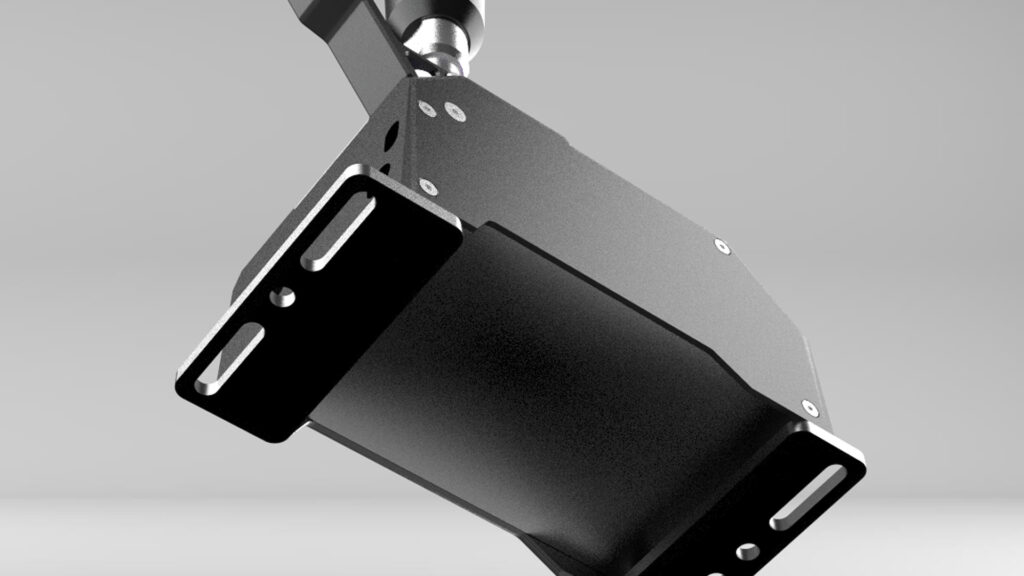
Well, CONSPIT was keen to keep its design compact – the body has a footprint of just 95 x 165mm. A smaller footprint can help the often complex mounting process, considering that not every sim racer will have a large rig. For those who enjoy sim rallying, usually a shift has to sit alongside a handbrake, and a slim profile helps free up space for the companion piece.
This is particularly impressive, considering this is a dual-mode device.
“The compact size was also difficult to create,” explained CONSPIT to Traxion.
“A bigger shifter is easier to design, easier to assemble, and gives you more room for every part. But for users, a large shifter can easily get in the way of handbrake placement and cockpit ergonomics.
“So we had to balance size, strength, mounting, tool access and assembly order. The integrated aluminium body helped a lot, but it also made the internal layout more sensitive. Every part had to be placed carefully.”
The CHS actually started life as two separate research and development projects.
One was a dedicated H-pattern-only shifter, a second a pure sequential device.
Somewhere along the line, the decision was to merge these two projects into one device, but with the stated aim of not compromising the experience of either gearshift type.
“Of course, you can make both sides give up a little bit and create a simpler dual-mode shifter. But that was not really what we wanted to do with CHS,” says CONSPIT.
One of the design decisions was to create what CONSPIT terms a Dual-Trace Mechanical Architecture.
In essence, each sifting type has its own motion path, quite the feat given, again, the device’s diminutive size. It avoids forcing both modes into one mechanism, which can impact shift quality and precision.
“H-pattern should feel like H-pattern: clear path, solid engagement, and proper mechanical resistance,” explains the manufacturer.
“Sequential should feel direct, short and crisp. We did not want one mode to feel like an add-on to the other.”
Mechanical feel
Having tested the near-final version on the Charlotte show floor, and then again with the final production specification model, the CHS is for those who are looking for a highly mechanical feel with satisfying feedback.
It’s an old-school sensation. Sim racing can be about living out motorsport fantasies, be that classic cars in Automobilista 2 with H-pattern gearboxes, or the aggressive nature of sequential rally beats in Assetto Corsa Rally. The CONSPIT CHS is here for it.
The CONSPIT team has also rapidly iterated on initial prototypes, with mounting rails designed so the CHS can be installed easily on popular 40 series aluminium-profile sim racing cockpits.
“I think the reception will be positive, not only because CHS has two modes, but because both modes are treated seriously,” says its creator.




Discussion