
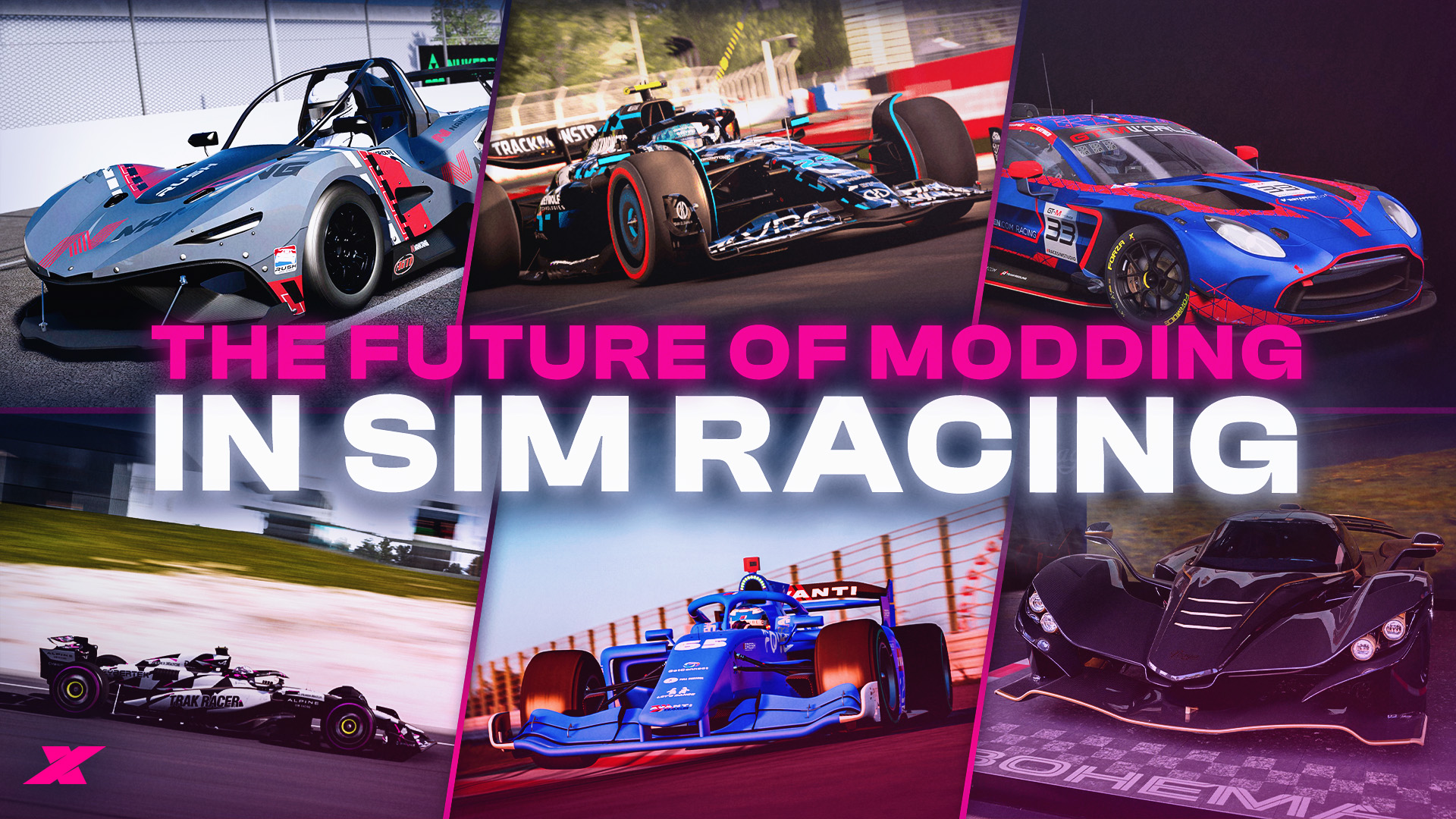
Modding in sim racing stands at a turning point.
With the developers of Project Motor Racing, Assetto Corsa EVO and Rennsport all promising to implement proprietary mod marketplaces in their games, sim racers are facing a potential shift in how they download and access mods.
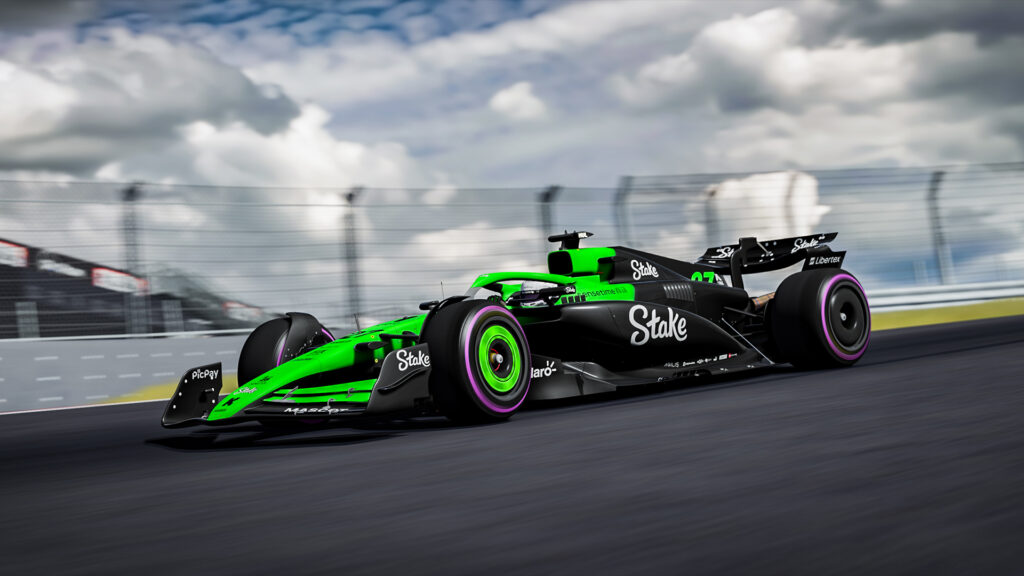
Modding is the keystone that cements Assetto Corsa’s position as the most popular PC racing sim today, 11 years on from its release. AC players can enjoy high-quality vehicles from the likes of Race Sim Studio (RSS) and Virtual Racing Cars (VRC), extensive physics and gameplay mechanics from the Custom Shaders Patch (CSP) and overhauled graphics and dynamic weather from Peter Boese’s incredible Pure mod.
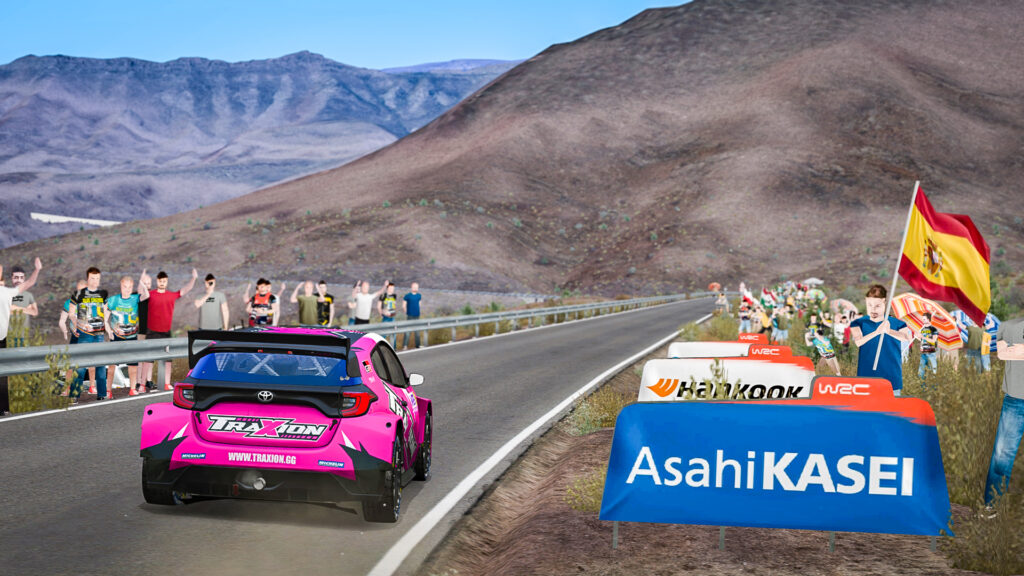
All of these can be installed and accessed via Content Manager, a third-party application that serves as a concise launcher for Kunos Simulazioni’s evergreen sim. The sheer volume of add-on tracks and cars built by modders, plus the addition of new game modes and utilities (including rally pacenotes!), makes AC a modding Mecca.
By speaking with leading modding studios and game developers, we’ve gained unique insight into how the sim racing modding landscape could change in the future, including fresh perspectives from RSS, VRC and Authentic Simulation.
Piracy
Modding carries both positive and negative connotations. Some modders have been known to rip content from major game studios and pass it off as their own work, even charging for the privilege. Others allegedly use ripped content and release it for free, engulfing them in a moral quagmire.
If you’d worked for countless hours to produce a detailed car, paying a steep manufacturer license fee in the process, you’d rightly be annoyed when someone stole your work. And you’d be even more angry when you discovered they were profiting from the scheme, too.
Piracy is a legitimate concern for game studios and legitimate modders alike, such as the aforementioned studios: “Piracy is currently the biggest obstacle we face as a studio when it comes to publicly released
mods,” states Daniel Findley of Authentic Simulation.
“Based on our research, for every legitimate sale, there are often multiple unauthorised copies circulating online, which significantly impacts creators across the entire ecosystem” he adds, pointing out a common gripe faced by developers and modders today.
Surely, then, a system like PMR’s ModHub, where game studios must approve each piece of content, would go some way to alleviating these concerns.
“Piracy should be reduced as it is a lot more difficult to rip and distribute content between consoles,” agrees Findley.
Likewise with tracks. Laser scanning a circuit can be expensive and time-consuming. In fact, Traxion understands that it’s not unheard of for developers to share the burden of a laser scan or to exchange data to help keep costs down. Third parties can also get involved, as was the case with the community-funded version of Zolder for rFactor 2.
Beyond mods
Not all mod makers share the same high standards as Authentic, RSS, or VRC, so when a poor-quality mod of a real-world car is released with missing details, it could devalue a car brand.
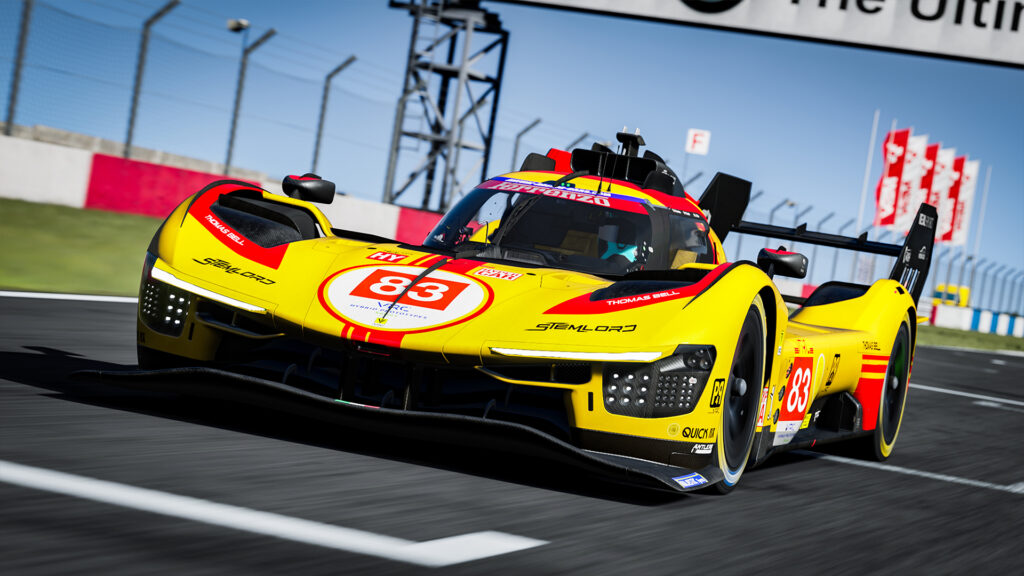
Legitimate modding studios avoid licensing headaches by producing fictional vehicles inspired by their real-world counterparts. In fact, the studios we’ve interviewed for this article are regularly contracted to work on current racing sims.
“What I can say is that those experiences were very valuable, because they gave us a lot of insight into how things are done officially, how the workflows are organised, and what kind of quality standards are required,” states VRC’s Matias Sala.
“The knowledge and experience they [VRC’s team] gained are part of what we apply today in our own work at VRC,” he expands, explaining how modders can gain new skills and knowledge by working with large developers, applying their learnings to their own projects.
“Modding in the sim racing world hasn’t just added content, it’s created careers,” added RSS’s Ali Goz.
“It’s helped shape the developers, artists, and designers working in this space today. It’s also created the tools that aspiring racers, esports teams, and real-world drivers rely on to train and compete,” he continued, rightly highlighting how talented modders are often headhunted by game studios.
“If the platforms we help support don’t actively give back to independent creators, especially those building things from scratch, we’ll start losing the very people who push this scene forward,” states Goz.
Going it alone
So, the developers of Rennsport, PMR and AC EVO are all forging ahead with a mod marketplace-style approach, or at least some form of official approval process. The question is, why?
Put simply, it helps them control both the standard of the mods and protects the interests of their manufacturer partners.
Focused sims such as Assetto Corsa Competizione and Le Mans Ultimate, which are based on the real-world GT World Challenge and World Endurance Championship series, respectively, weren’t designed for modding primarily due to their restrictive licensing arrangements. This means you won’t see a random drift car skidding down the Mulsanne Straight in LMU or a Formula E car driving on ACC’s version of the Nordschleife.
This also comes with a financial element, as OEMs (car manufacturers) want to be paid by developers for the privilege of using their cars, and developers want the kudos of having that manufacturer’s logos and models in their game.

However, for that relationship to blossom, it’s unlikely OEMs would like to see poorly made, unlicensed mods of their cars in-game.
Obtaining more control of the mod process allows developers to prevent this. This also presents an opportunity for high-end mod makers, but at a cost.
“Having to go through an approval process means there will be restrictions and maybe longer waiting times before a mod can be released,” states Sala.
“But at the same time, it could also be an opportunity if it is done properly. Everything will depend on how the approval system is organised. If it is fair and clear, it might even open doors for modders to work more officially with manufacturers,” he continued, hoping that increased exposure from console mods can help build licensing relationships with OEMs.
OEM relationships
“We have worked with manufacturers before,” begins Sala, “but what often happens in those cases is that the mods end up being released by them, and you don’t even get public credit for the development.
“I also believe that commercial licenses for mods are usually extremely expensive. And nowadays, especially after the pandemic, many car companies are much more aware of what mods are and how simulators and video games are used.
“That has made the prices for licenses even higher… obtaining commercial licenses is very complex. It is very different when a company approaches you to request a mod than when you have to approach the company and ask for a license,” he adds, showcasing the pitfalls of trying to obtain OEM licenses while balancing the potential return on the investment.
“If game studios are actually going to begin vetting less qualified or less legally compliant studios, this will help us gain market share over the coming years,” stated a pragmatic Findley.
“I’m a licensed US attorney with a background in licensing and business law,” he explained. “It was easy for me to incorporate our company, and we began providing outsourcing support, acquiring official
licenses, and hiring staff,” Findley continues, highlighting how his specialised legal knowledge gives Authentic Simulation a unique advantage.
OEMs and modders
“The ultimate goal is to create a platform where the modders can also work with cars and track licensors because we want to make them eligible to work with car manufacturers,” stated Kunos’ Co-Founder and Executive Manager, Marco Massarutto, to Traxion in 2024.
“We guess that today we may have the right conditions for modders to cooperate with cars and track licensors in the right way; also, respecting the intellectual properties of real manufacturers,” he continued, agreeing that he sees a mod approval system as an opportunity for modders and OEMS to form closer relationships.
“We [also] don’t like to see content grabbed from other games,” concluded Massarutto, perhaps referring to the swathe of unlicensed, poor-quality mods that are currently available in AC. This is perhaps the main reason Kunos and other developers want to take more control of mods on their respective platforms: it prevents piracy and keeps OEMs on-side.
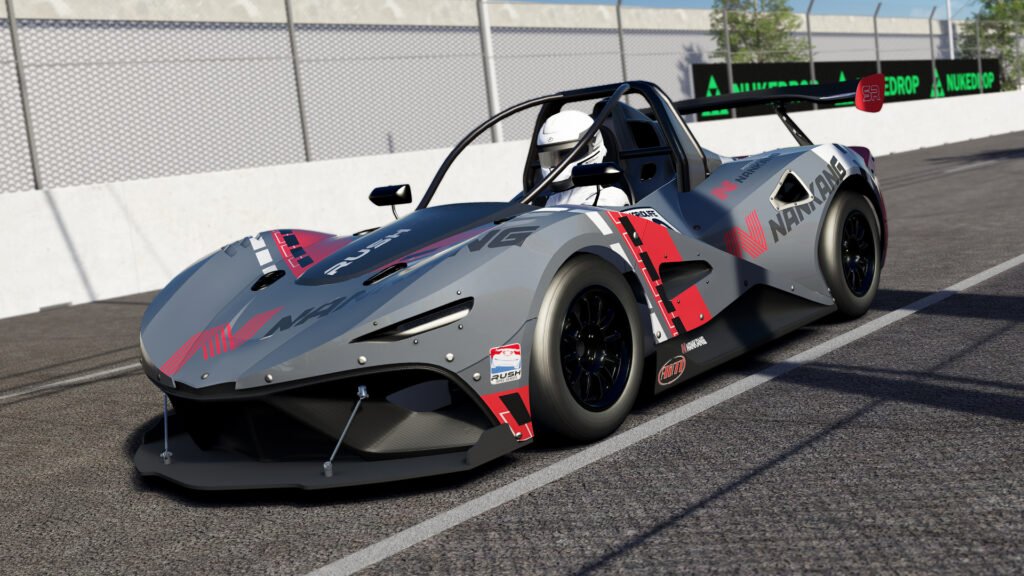
Authentic has already moved on to the next step by securing licences to release official Rush and Revolution sports car mods, thanks in part to Findley’s legal acumen, but working with OEMs isn’t all smooth sailing.
“I’d say around 90% of our inquiries never even receive a response from the licensing agencies that represent many brands,” begins Findley, “however, if we have the connection directly to a CEO or owner, we’ve actually had good success negotiating licensing agreements,” he explained.
The rise of mod marketplaces
Thus far, only PMR has gone live with a mod marketplace feature, and it’s best-placed to do so given it can rely on the know-how of its publisher, GIANTS Software.
GIANTS is also responsible for the Farm Simulator series, and has successfully implemented community-made mods on both PC and consoles. Creators can release both licensed and unlicensed mods of farm vehicles, with the most successful earning financial rewards for their work.
The download and installation process is seamless, with PMR players able to experience the licensed Praga Bohema hypercar in-game. Although Straight4 Studios’ title has been an enormous disappointment, its ModHub highlights the platform’s potential, as players can quickly download new community-made liveries and setups, most of which are free. This is a neat feature, especially in comparison to PMR’s peers.
For example, you can’t run a community-made livery in Le Mans Ultimate unless you or your team manager has a RaceControl Pro or Pro+ subscription; in iRacing, you need to use the separate Trading Paints application to enable custom liveries (although it’s free).
Potentially, a ModHub-style arrangement streamlines this process, but it will prohibit the use of any unlicensed brand logos. It’s difficult to envisage this as an acceptable solution for the community (although, for the PC version of PMR it’s still possible to share and download mods outwith ModHub).
Conclusion
Although there’s a fear that the modding scene as we know it will die out, a cursory glance at Steam player numbers tells us a different story. As of 22nd December 2025, Assetto Corsa had a 24-hour peak of 18,564 players, which is remarkably close to its all-time peak of 19,796. This number is higher than the combined player total of Le Mans Ultimate, Assetto Corsa EVO, RaceRoom, and Automobilista 2 in the same period.
“Assetto Corsa isn’t going anywhere. Even if it’s no longer front and centre, it’s still very much alive to us,” states Goz.
“Assetto Corsa will definitely remain our main focus,” agrees Sala. “It still has the biggest community, the most open modding tools, and even after so many years, it is very much alive. That is why most of what we release publicly continues to be for Assetto Corsa,” he continued.
Authentic plans to release its officially licensed Revolution 500 and 427 mods for AC, too, but is also aiming to release its own Unreal Engine-powered sim in 2026, Autozi Garage.
Regardless, what’s clear from our discussions with VRC, RSS and Authentic is that traditional Assetto Corsa modding isn’t going anywhere anytime soon, especially with AC EVO still in Early Access.
However, the new wave of sim titles is changing the way modders think about the future – and it could be a future with further legitimacy, licences and consistent quality.
Thank you to Daniel Findley (Authentic Simulation), Matias Sala (VRC) and Ali Gozubuyukoglu (RSS) for their expertise and time in contributing to this article. To read more in-depth interviews with our three contributors, please follow the links below.


Chat with the Community
Sign Up To CommentIt's completely Free
While I understand the concerns and the want to regulate, I feel that the old way allowed creatives who couldn’t afford costly licenses (but creative ability/talent) to showcase it. I worry that these restrictions could stifle creativity. I think many of us would prefer the old NASCAR Heat, RFactor and AC style modding to that. Though I do welcome easier mod installation, quality assurance, etc.
Admittedly I’d like to see a “Virtual Mod” capability where you can combine numerous cars/tracks together allowing for individual creators to focus on a higher quality singular car or cars, or tracks and then let a league admin or sim racer to select a roster of cars, use base physics to span across the cars, and then focus on creating the differences in performance, assign B.O.P., and possibly have panels to define rules, flag rules. define rolling/standing starts, track version (i.e. different layouts), and even have possibly oval rules for paved oval, dirt oval, random lineups, qualifying lineups, x# of cars transfer from heat, passing points and editable formulas, etc.
This all could allow for things to be less reliant on mod teams and could make individual modders be more valuable to the community. It can be more flexible for racers and league admins. It can lead to a more communal and less friction-filled community. It could also be more flexible to racers and admins as the physics could be kept separate from the cars and then paired with the cars per league/event admin preference or racer preferences. Casual physics vs. hardcore. Fixed setups vs. open.
Interesting point, this would require the cooperation of many individuals and commercial modders though, so might be tough to pull off!