We don’t make life easier for ourselves either, our 3D work is intentionally highly detailed. But that’s where things are now. The goalposts keep moving, and nobody’s quite sure where they’ll stop.
How long does it take to create a car mod from start to finish? For example, one of your Hypercar mods?
3D is the challenge, especially in Formula, Hypercar or GT racing; it’s the most time-intensive part. Once it’s done, there’s still a six- to 12-week process for physics, audio, integration, coding, and testing.
Because of how long that pipeline is, we don’t just work on one car at a time. We have multiple artists working in parallel, so things can keep moving like a production line behind the scenes.
How difficult is it to find reference materials to help create your mods?
It depends on the car. The older it is, the harder it gets. Things that were available quite some years ago often disappear as sites go down or books get lost, and original data can be hard to track down.
Give our artists a few high-quality photos and some known dimensions, and they can match proportions down to the millimetre.
We’re lucky to work with real brands, teams and professional drivers in motorsport, so when it comes to newer cars, we usually get direct access to good material which helps the sounds and physics.
In some cases, projects are even requested by the real brands for marketing and training, giving us more access, but you’d never know which of our cars are built that way because it’s almost always under wraps.
It’s a good reminder of how far this scene has come.
Have you worked directly with developers to create cars for their sims?
Yes, our 3D Team Lead has credits in Assetto Corsa, and other team members have worked on rFactor 2 and a few other titles, which we can’t speak of.
We’ve also seen several people we trained or worked with early on end up at Kunos Simulazioni, contributing to both 3D and 2D work. That kind of crossover shows how strong the modding community has become, and how it continues to feed into the industry.
Have you ever helped find a bug with any of the above sims, or helped develop an interesting new feature?
While we’ve not been doing bug finding for the newer titles, back when the Assetto Corsa support forums were more active from 2014 to 2017, we were there daily, treating it like a second home, reporting bugs, making suggestions, and trying to push the sim forward. That was the peak of collaborative efforts, at least in Assetto Corsa, or sim racing as a whole.
More recently, a lot of features in the Custom Shaders Patch, a tool to enhance the capabilities of Assetto Corsa, such as flexing aero, tyre blowouts, glass effects, digital display boards, and more, came directly from our input. So now, it’s modders helping modders.
How do you think sims like Project Motor Racing, Assetto Corsa EVO and Rennsport having final approval over mods will affect your work? Will this make producing mods more challenging in future?
It makes things more difficult, no doubt. Right now, I don’t think many sims truly know what they want from modding. For some, it’s a key part of their platform. For others, it’s something they tolerate, if they must.
We do hope it stops the cheap, low-effort ports that take the work of others and stitches them in parts.
But here’s the reality: modding in the sim racing world hasn’t just added content, it’s created careers. It’s helped shape the developers, artists, and designers working in this space today. It’s also created the tools that aspiring racers, esports teams, and real-world drivers rely on to train and compete.
If the platforms we help support don’t actively give back to independent creators, especially those building things from scratch, we’ll start losing the very people who push this scene forward.
Would you consider trying to obtain licenses from manufacturers for your mods in this case?
We’ve had some good interactions with brands over the years; some even led to official private work you’d not hear about. We will always be respectful to the sims and licensors, but in most cases, licensors and sims aren’t aware of the cost of what we do. This is a high-cost, high-effort, low-reward industry unless you’re doing it at volume or working under a bigger umbrella.
I’m not here to play diplomat when livelihoods are at stake. Sim titles and licensors could recognise further how much of this ecosystem is held up by modders doing things properly. Additionally, an understanding of how we came to be where we are, unplanned, so as not to see us as an inconvenience, or not doing the “right thing”, or as a source of cheap labour.
We’re not talking about simple asset swaps or quick ports, which is wrong and has been damaging to the legitimate sim creator space as much as the licensor’s or sim’s intellectual property; scratch-made modding demands world-class capabilities. It requires time, skill, and investment, likely beyond what sims usually pay for.
If we had stepped away for good in 2016, the very people these sims and various motorsport teams have since hired might never have had the platform to exist. The same is said about us if the sims never existed. That’s why it is cyclical.
Mod creators are not asking for charity; we’re asking for recognition, a fair structure, and support for the people who’ve helped build the foundations many are now standing on.
The real question is: do these platforms want to foster quality and invest in the future of sim racing, or are they just ticking boxes to look mod-friendly on paper? We saw how quickly the Assetto Corsa support forums shut down the car modding section in 2016, so forgive me for being sceptical. Our door is always open to Kunos and Marco [Massarutto, co-founder of Kunos].
Continuing on the above topic, does the size of the potential console mod market excite you as a studio?
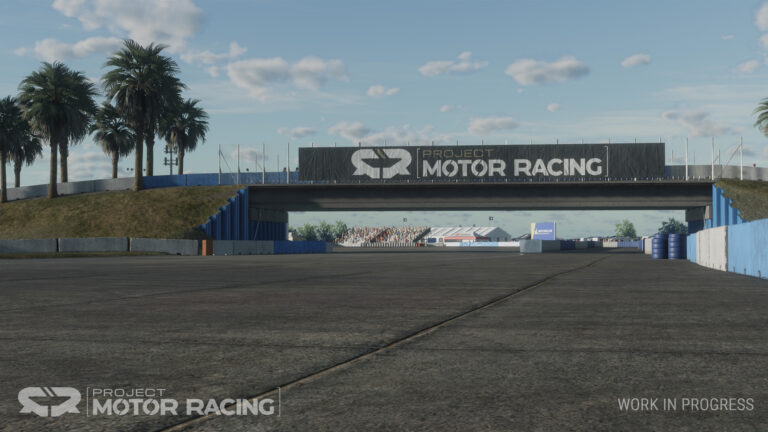
It’s a big step forward, and it’s great to see a platform like Farming Simulator do it, and Project Motor Racing being upfront about wanting modding to be part of their framework for their title.
But talk only goes so far; what really matters is whether creators are given the space and tools to produce high-quality work and be allowed to grow from it. Because this isn’t a hobby-level effort at the top for many of the teams in the market.
It’s globally recognised sim content creator businesses working on cars, simulating the most complex visual, sounds and physics systems the game developers don’t have. The time and cost involved are real.
If the platform helps modders, it’ll raise the quality for everyone. If not, the risk is that we lose the people capable of doing the best work.
Yes. Assetto Corsa isn’t going anywhere. Even if it’s no longer front and centre, it’s still very much alive to us.
Assetto Corsa EVO may shift the focus, and we’re open to being part of that, but there’s no doubt that Assetto Corsa has more life left in it.
More cars. More competition. And a step into products of the physical world, which we’ve already advanced quite a long way into.
We’re always going to be committed to sim racing, but the key to longevity now is smart diversification within sim racing, especially when the digital market gets uncertain.
Whatever happens next, we want to help push sim racing forward.





Discussion