The Simucube 2 was a tough act to follow. Launched in 2019, the unassuming sim racing wheel base would go on to become a yardstick for others to follow.
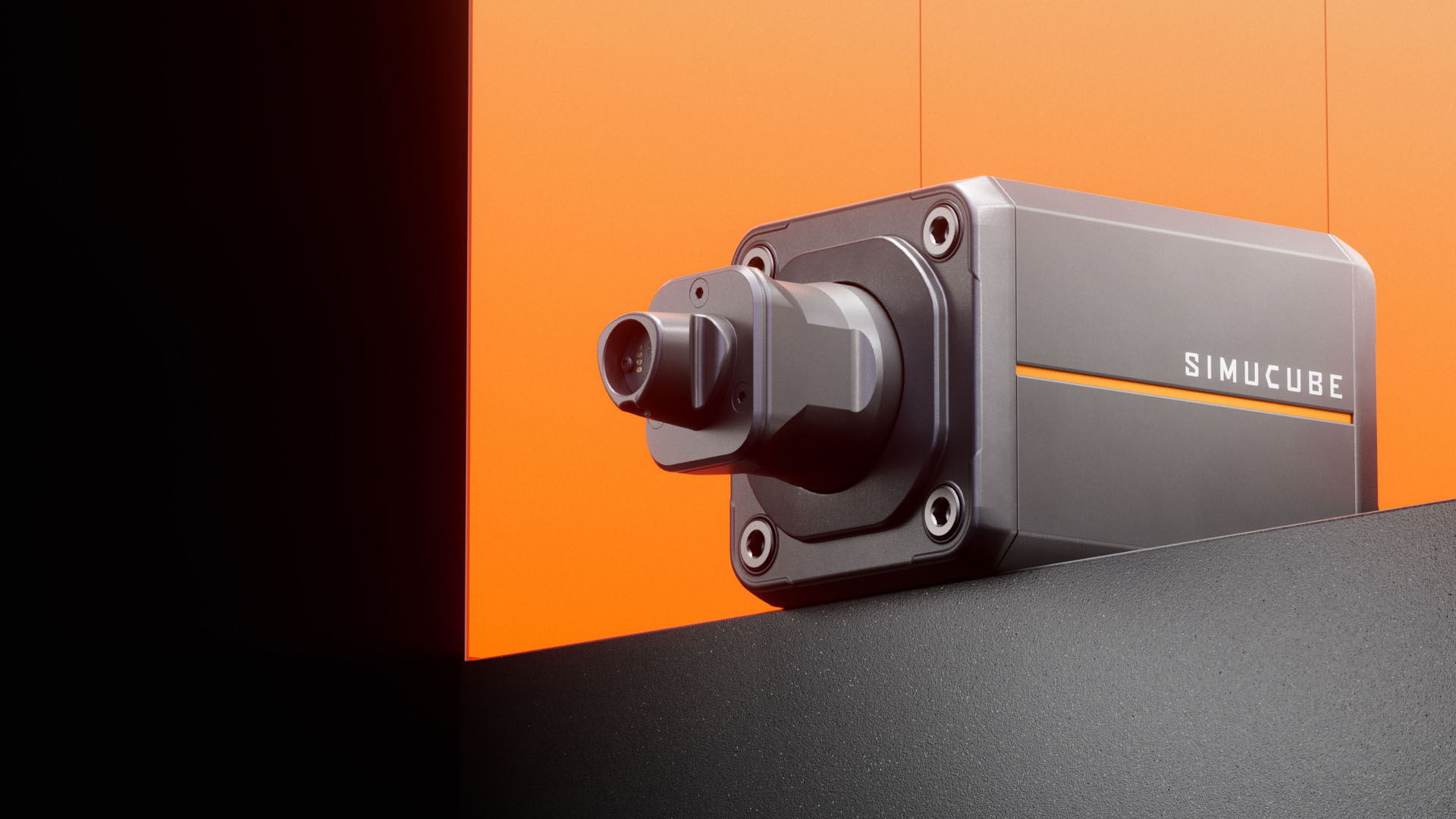
But times change, and in a technology-driven market, so must Simucube. Six years later, it has launched a follow-up to its most successful device yet – the Simucube 3.
While the name is somewhat predictable, the device isn’t. Eschewing the inexorable march towards ever-higher torque output figures, the Finnish team of engineers has primarily focused on reliability, ease-of-use and fidelity.
All three include notable innovations. It’s a process that began back in 2022.
Trying to replace the Simucube 2
With the Simucube 2 wheel base long established and with a glowing reputation, there was no need to replace it soon after launch. After all, community feedback was positive, plus it was being supported by regular software updates, such as 360 Hz force feedback for iRacing.
Simucube didn’t want to rush into a new project just for the sake of it; besides, it was busy innovating with the ActivePedal.
But, eventually, an idea formed.
“There was really no need, per se, for a new wheel base in the beginning; we had made a quite good wheel base with Simucube 2,” explains a humble Marko Lepola, Simucube Product Manager, to Traxion.
“It was difficult for us to think about how we could improve. After a while, we realised there was something we could do better. We had a vision that involved making the experience easier.
“Think of sitting in a Porsche. You put in the key or press the button, and you start driving. You don’t turn on the screen, you don’t install software, you don’t map keys etc. So that’s what you want to achieve – you just sit in something and start driving.”
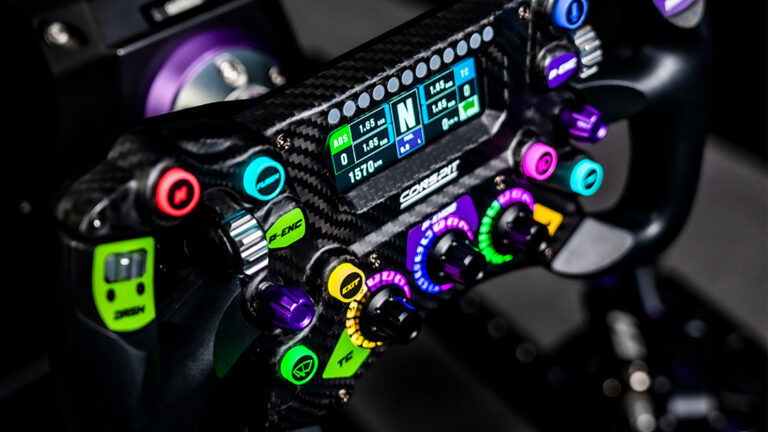
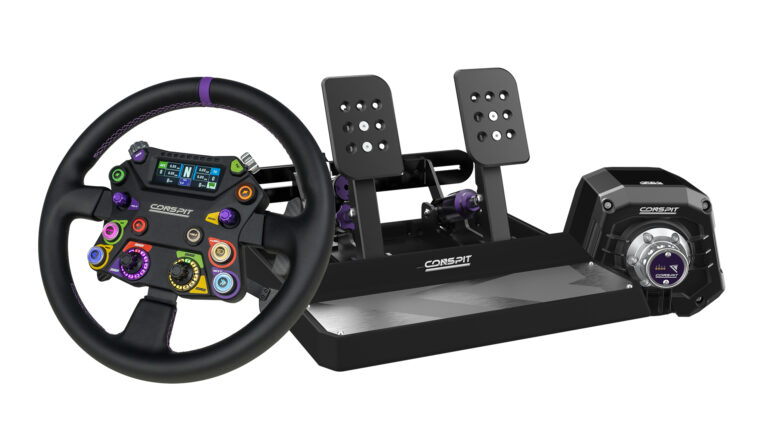
For the Simucube 3, the net result is a new wheel base, a new range of wheels, fresh LightBridge technology and the Tuner 3.0 software. Which is clear now, but it has taken around three years of work to get to this point.
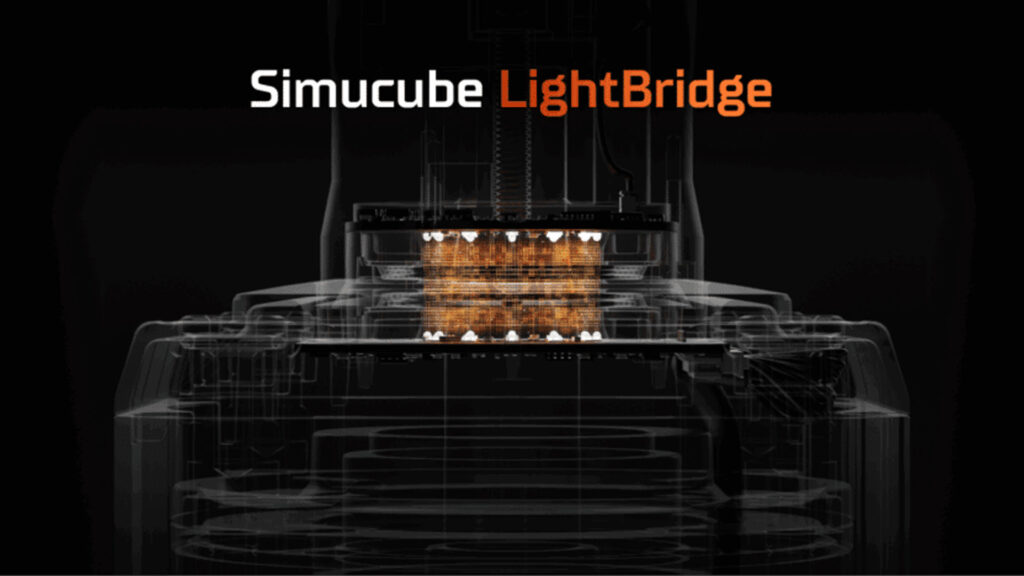
The isolated system uses a combination of coils, infrared LEDs and receivers to wirelessly transmit power and data.
Simply, electricity is passed through the coils (from wheel base to wheel) using magnetic induction, a similar principle to wireless phone chargers, while data is transferred both ways using the two infrared LEDs and receivers.
The idea is for there to be no need to connect your wheel via Bluetooth or Wi-Fi (for example), nor a physical USB cable. Consequently, this new system has been the source of many online debates.
“We wanted to get rid of the USB because of potential USB reliability issues,” highlights Lepola.
“It is basically not designed for applications like a powerful wheel base and the accessories. USB is primarily designed to plug your keyboard and mouse into a computer, and if you have multiple devices, it starts to encounter issues such as ground looping or unreliability in data transfer.”
“Our wheelbases, and also our pedals, are used a lot in turnkey setups where the rig manufacturer is building everything ready for use in one purchase,” says Antti Virta, Lead Hardware Engineer at Simcube.
“These are not necessarily your average DIY consumer, but someone with deep pockets. From those systems, we constantly hear the same message – USBs are causing issues.”
“Also, top motorsport competitors, those in Formula 1 or IndyCar, use our equipment to practice, so for them and serious hobbyists, I know they will pick this solution [Simucube 3 with LightBridge] because it is the most reliable,” clarifies Lepola in a similar vein.
“If you just like to occasionally race a bit, we completely understand that this is not necessarily the ideal solution for beginners.
The future of LightBridge
The ecosystem won’t end here. With the Simucube 3 marking the beginning of its rollout, third-party wheel manufacturers such as BavarianSimTec, GSI, Cube Controls and more are currently developing LightBridge-compatible wheels. There is also a behind-the-scenes feature roadmap for the future.
“This is a brand new technology, so it’s not going to be as comprehensive in the beginning as it will be in two or three years from now, but we think it will constantly grow and evolve.
“It’s also not a closed ecosystem, because anyone who wants to can create a wheel for the Simucube 3 with LightBridge.
“We’re in good relations with all our competitors, and we would let anybody make a wheel by providing them all the technical data needed for it.
But what about those with an existing wheel collection?
You can use existing wheels with Simucube 3, thanks to a quick-release adaptor combined with plugging the USB into your PC. That’s not the full LightBridge experience. You will see yourself using a potentially frail USB input, but at least you can still enjoy your current wheel collection with the new wheel base.
However, something else may be in the works…
“We understand the concerns of the people who have put €10k into their wheel collection, and we want to offer them something, but it’s going to take some time,” teases Marko.
“There are several ways and we will share them when we’re ready.
“We are listening, but at the same time, Simucube’s LightBridge and Link are here to stay because we feel it is better for the serious sim racer.”
Achieving greatness
That’s a lot of talk about wheels, connections and USBs, but what about the wheel base itself?
There is, of course, the exterior design, the telemetry-based effects, updated software and revised torque outputs across the three models. All are welcome, but there’s something else significant that the development team is most proud of, according to Virta:
“The telemetry effects add a new flavour to traditional force feedback, but I would say what’s really important for this new generation of wheel bases is, on the direct input side,
“From the Simucube 2 to the Simucube 3, the algorithm shares not a single line of code. It’s completely redone.
“We have direct input that follows the same vision that the sim developers have had, how the car should handle and the physics engine of the game, and we have put a lot of effort into improving the feeling on that side first, because that is 90 per cent of the feedback.”
This algorithm change sits alongside upgraded SPM-type motors in the Simucube 3 Sport and Pro, with higher manufacturing tolerances and a lighter rotor, while the Ultimate uses an all-new spoke-type IPM motor.
“The Simucube 3 Ultimate’s motor is an extremely power-efficient design,” continues Virta, who was the product’s lead designer.
“It can produce high torque levels, 35 Nm, with the same small power supply that the Pro uses, whereas with the Simucube 2 Ultimate, we needed a 1-kilowatt power supply to produce 32 Nm.
“To get these motors to our expectations took multiple prototyping rounds. Creating a very good wheelbase is easy, but creating a great wheelbase is very, very difficult.”
So, there we go – the Simucube 3 has three models, two of which are available now, and a third is on the way later this year. There’s the innovative LightBridge system and new software to match. That’s it, right?
“I will say two words: Ultimate Ultimate, and that’s it,” concluded Marko. Intriguing…







Discussion