Milestone is often associated with niche motorcycle simulations such as the annual MotoGP series, but the Italian studio found unexpected mainstream success in 2021 with Hot Wheels Unleashed, an exuberant arcade racer based on the diecast toy car line.
It was popular enough to spawn a sequel with 2023’s Hot Wheels Unleashed 2 Turbocharged, and now the series has returned three years later with Infinite Rush.
While this is Milestone’s third Hot Wheels entry, it’s worth noting that this is the fifth title in the surprisingly saturated lineup of diecast car games. The last Unleashed game was followed by Bamgtang Games’ Let’s Race, based on the animated Netflix series, and Monster Truck Stunt Mayhem by 3D Clouds, but they didn’t match the heights of Milestone’s revered arcade racers.
A tiny toy world
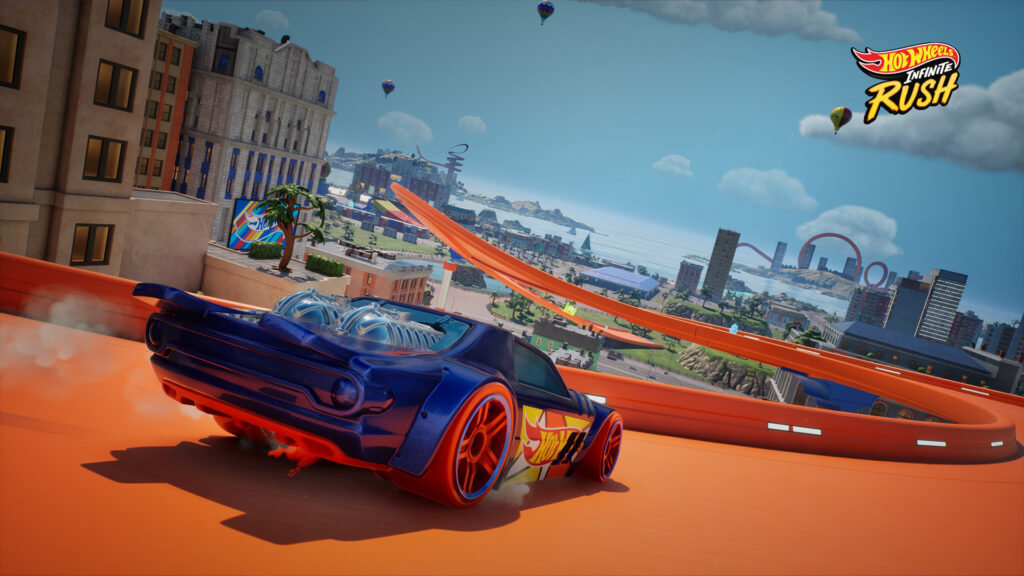
As the name implies, this isn’t Hot Wheels Unleashed 3. Milestone could have easily churned out an iterative sequel, but Infinite Rush instead attempts to reinvent the series by taking it into an open-world, with four diorama-style islands to explore in contrast to its predecessor’s linear circuit layouts.
While going in this direction is hardly original in this crowded genre, it’s a logical step for the arcade racing series. It’s an ambitious change of direction for Milestone, too, as this marks the Italian studio’s first fully open-world driving game.
Whereas the Unleashed games blended tiny toy cars with full-size worlds, Infinite Rush scales everything down, with miniature vehicles and environments that feel like plastic playsets. Combined with the colourful visuals, the toy-like locations are brimming with charm.
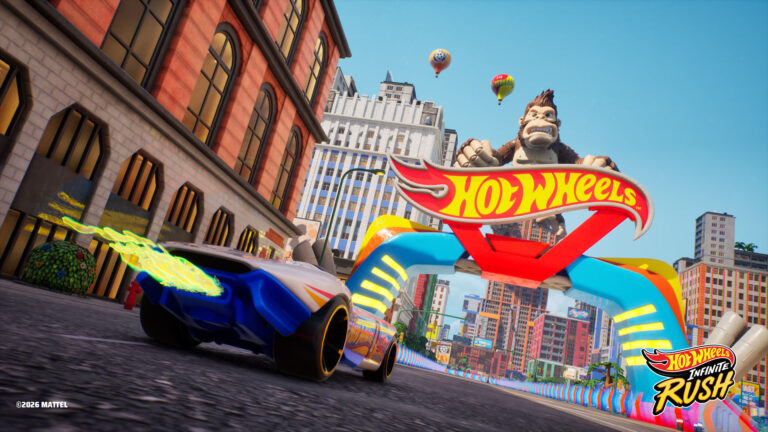
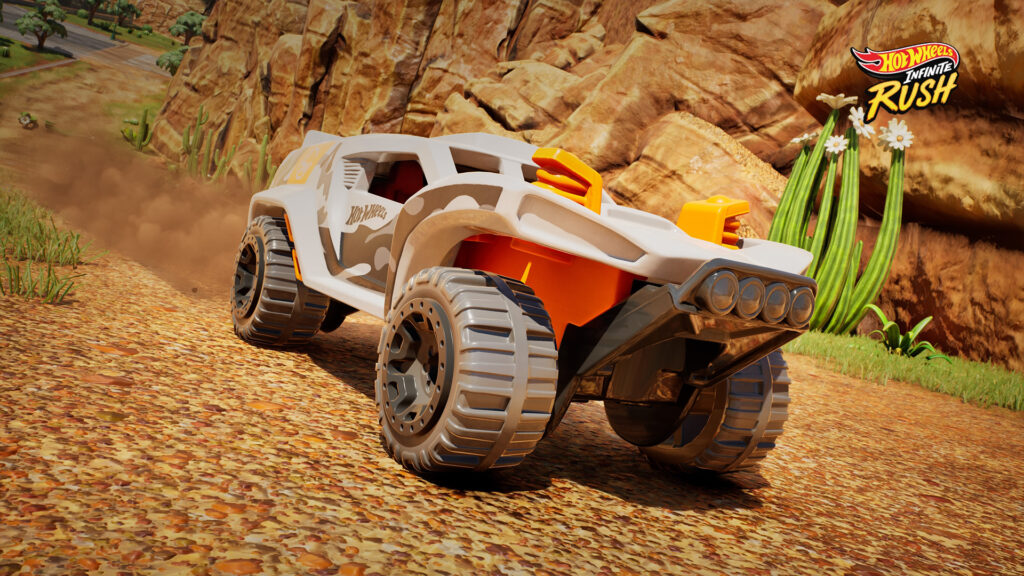
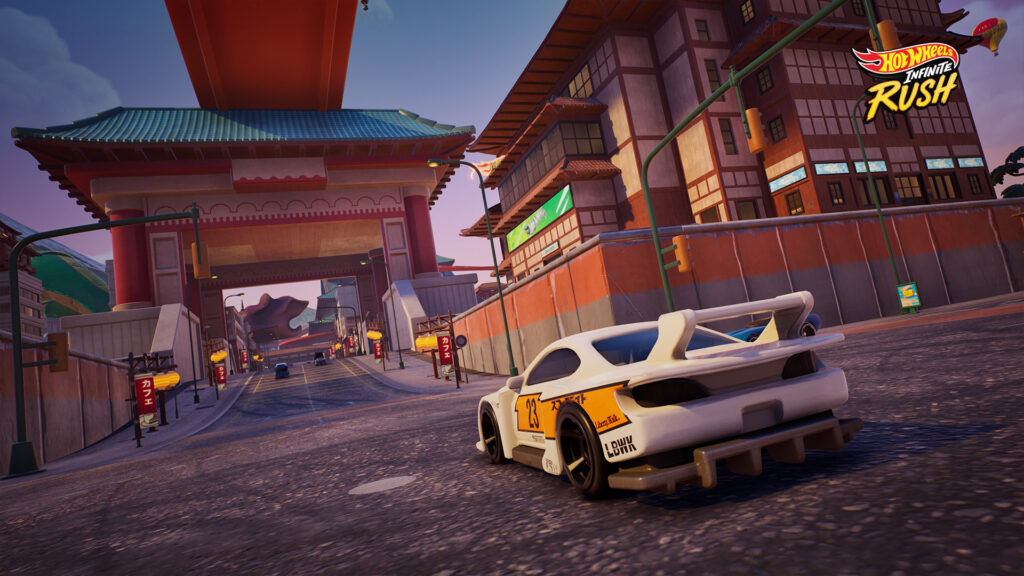
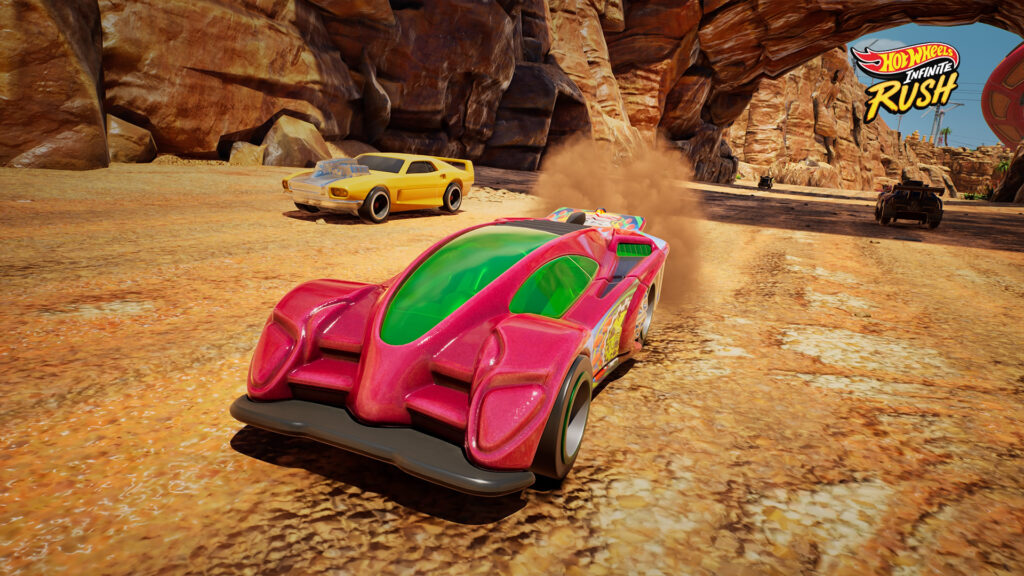
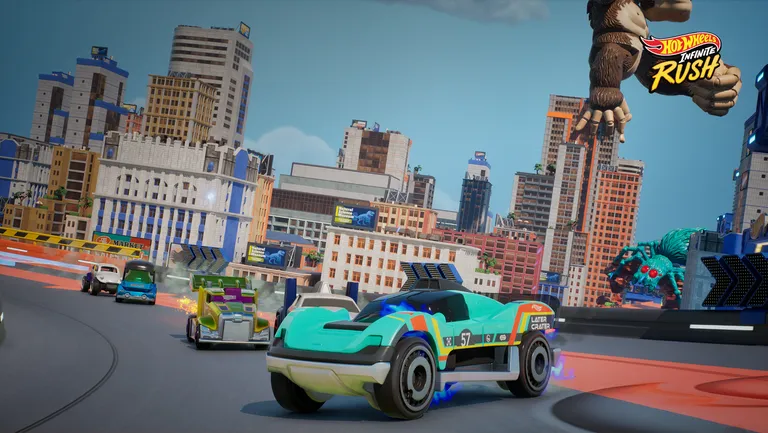
You start in the urban city of Wheelswood, complete with a Hollywood sign parody and a giant King Kong-style creature climbing up a skyscraper. Once you complete enough events, you gradually unlock the remaining islands, from the coastal roads and beaches of Tentacle Bay to the desert canyons of Gearville. Then there’s the Japan-inspired Drifty Temples, with its neon-lit streets and winding passes.
After unlocking an island, visiting fast travel zones lets you switch between locations, triggering a cutscene of your car jumping off a ramp and flying through a portal accompanied by cheesy elevator music. This also means you can progress at your own pace, whether you want to focus on ticking off every event in a single island or alternate between locations.
Each environment has a distinct visual style and is well designed, with memorable landmarks, varied elevation and dense traffic roaming the streets. They can sometimes feel lifeless, however, with no voiceover narration or radio stations to listen to.
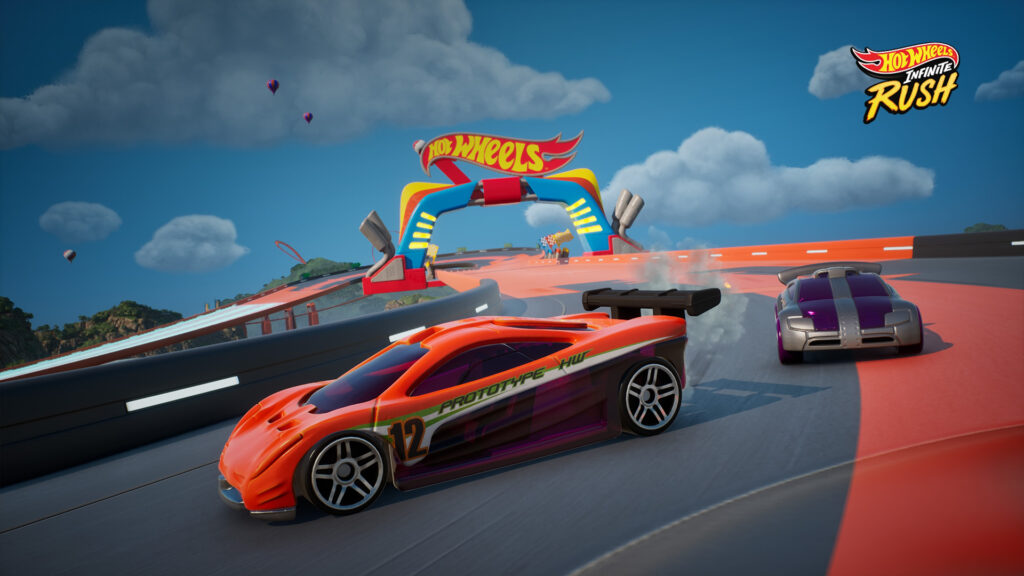
Alternatively, you can seamlessly enter Hot Wheels’ rollercoaster-style stunt tracks that tower above the landscapes with their giant loops, steep inclines and upside-down sections.
These are accompanied by outlandish themed tracks that see you plunge into the jaws of a giant alligator or scale up the remains of a dinosaur skeleton, adding a sense of discovery.
On top of this, you can create and share your own wild stunt courses with the track builder, which returns from the Unleashed games. It’s easy to use as you add track pieces while manipulating the corner angle and incline with the analogue stick.
From there, you can add hazards to knock the cars off course, such as fan traps and swinging rock pendulums. Thankfully, custom tracks seamlessly blend with the island’s scenery as you build them, so you don’t have to worry about clipping a building.
An abundance of activities
Compared to other open-world racers like Forza Horizon, the locations are compact, to the point that they can become overly familiar as it doesn’t take long to explore every area. However, the abundance of activities that litter the maps make up for this.
Alongside standard races, time attacks and eliminators, events range from drift trials to waypoint checkpoint challenges. These modes can also be played in the cross-platform online multiplayer, either in ranked matches or Rush Events, Infinite Rush’s answer to pick-up-and-play quickfire online competition.
Before each match, players can vote for a game mode and race on either standard or custom-built tracks. Multiplayer sessions ran smoothly during our testing, but this may change when the servers are populated post-release. Split-screen multiplayer for up to four players is also supported, but it’s a shame there is no option to free roam with friends locally.
Additional free-roam activities encourage exploration, as does the lack of a fast travel feature. Reminiscent of Burnout Paradise, Daredevil events have you chase down a target vehicle charging around the environment, before challenging it to a race and adding it to your collection when defeated. These opponents are often tough to beat, making for some engrossing battles and last-minute wins.
There are also Test Drive-style delivery missions where you drive a vehicle to a destination while trying not to incur damage. Then there are the Stuntman events, which challenge you to destroy as many environmental objects as possible within the time limit.
As you tear up the city and plough through plastic trees, fences and signs, you feel like a mischievous eight-year-old terrorising a toy city. The environmental destruction is delightful, even if it’s less satisfying than Lego 2K Drive’s breakable brick scenery.
Coupled with hundreds of collectibles to find, there’s enough event variety to keep you engaged and prevent the campaign from getting too repetitive.
Mercifully, new events are added to the map gradually to avoid cluttering the UI and overwhelming you. The campaign is well-paced, with a satisfying sense of progression – you always have something to aim for.
Even after reaching the final location, there was still plenty left to do, with additional events unlocking, cars to obtain and collectibles to find across each map. Good luck reaching 100% if you’re a completionist.
While it borders on being derivative of other established open-world racers at times, the endearing presentation makes up for it. For younger players, Infinite Rush could become a gateway into franchises like Forza Horizon and The Crew.
Once you complete enough main events, a boss battle-style race is unlocked, pitting you head-to-head against a vehicle in a racing gang known as Rush Squads. Each island’s Rush Squad features four vehicles to defeat, culminating in a final battle against the leader to unlock a desirable car, such as an Aston Martin Vulcan.
Infinite Rush is aimed at younger players, which likely explains the lower difficulty. On the medium AI setting, it’s often easy to gain a considerable lead over opponents, and they rarely pose a challenge unless you crank up the difficulty to the Very Hard setting. This makes for more satisfying and closer racing, particularly in higher level events, without any noticeably egregious rubber banding.
Likewise, the weightless traffic cars can be knocked out of the way without slowing you down, reducing the challenge while cruising and keeping everything fast-paced and frustration-free.
There is a childlike joy in casually exploring the environments and causing chaos. Switching to an open world evokes the random nature of playing with Hot Wheels toy cars, whether you’re launching off huge jumps and spinning in the air, sliding around canyon roads or tracking down every collectible coin and sticker scattered around the map.
The open-world setup doesn’t always work, however. Compared to the defined routes in the Unleashed games, it can sometimes be too easy to lose your direction or fall off the track.
This is compounded by the cumbersome vehicle handling. Returning players from the Unleashed series will be familiar with the tight controls. There’s an inherent stiffness to the vehicle physics, with an emphasis on tapping the brake to drift and counter understeer.
This approach makes sense given that these are toy cars without working suspension and feels more natural when you’re sliding across wide-open stunt tracks like the previous games. However, it doesn’t always translate well when navigating crowded city streets and tight 90-degree corners, sometimes resulting in you going too wide, slamming into a wall or missing a checkpoint.
Collect them all
Vehicles are split into four classes: Versatile, Drifter, Speeder and Titan. Each class has different handling and boosting characteristics, and you can conveniently switch between vehicles assigned to each one on the fly by holding the D-pad.
The rapid Speeders, for example, charge their boost when reaching high speeds, whereas the heavier Titans temporarily stall if you max out your boost. Drifters, meanwhile, feel the most agile to drive, whereas the Versatile class strikes a balance between both.
These attributes can be further customised in an upgrade system where you can install up to five unlockable modules for each vehicle, enabling perks such as tighter handling while drifting, more powerful boosts or reduced weight. It works well, and they can be mixed and matched to suit your playstyle.
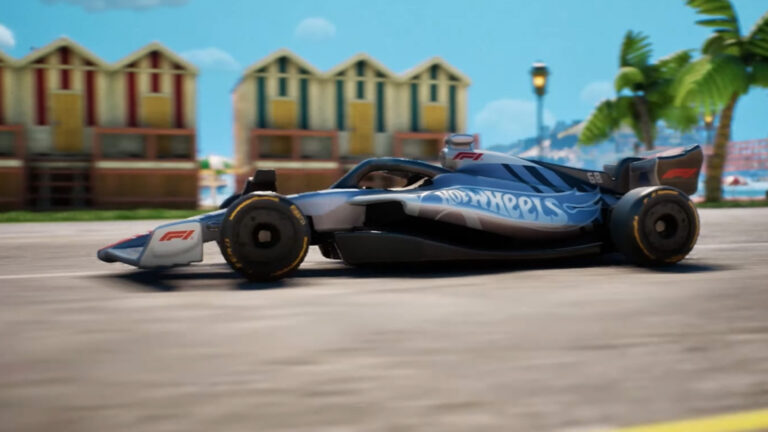
As for the car roster, Infinite Rush launches with over 150 vehicles, with series debuts including diecast versions of the Koenigsegg Gemera, Audi RS5 Coupe and Chevrolet Corvette C8, to name a few. There are plenty of inspired choices for petrolheads too, from race cars like the Group 5 Lancia Stratos and Alfa Romeo 155, to quirky additions like the Honda City Turbo hot hatch.
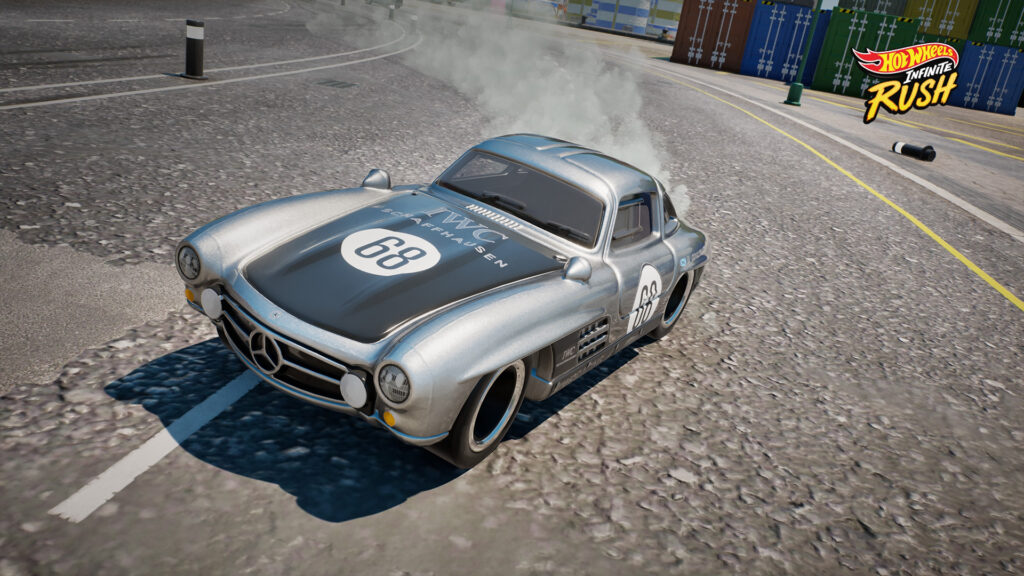
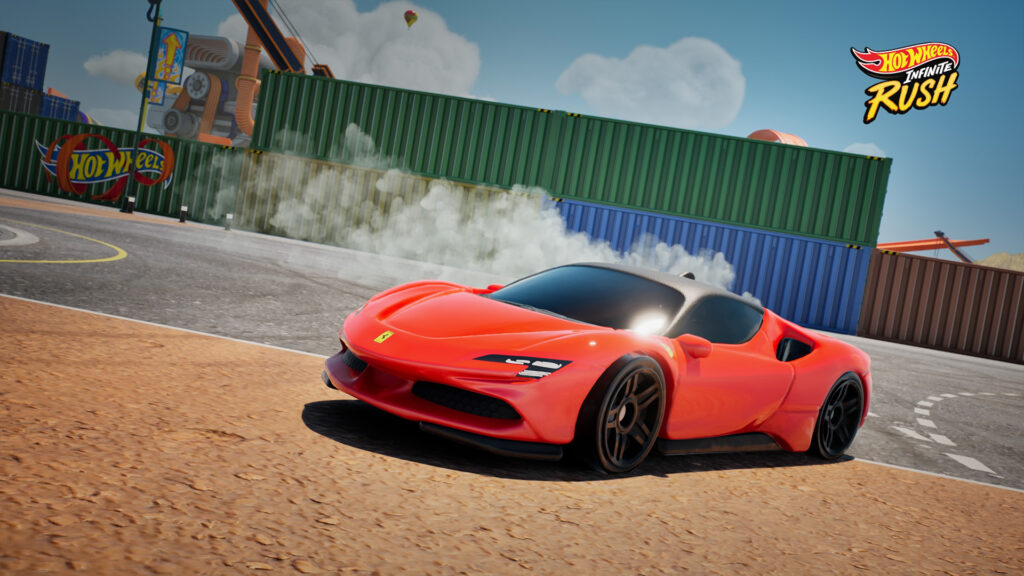
These are combined with classic Hot Wheels staples like the Bone Shaker and a host of novelty vehicles, from a rubber duck to a Japanese lucky waving cat. Each island has exclusive vehicles to buy at a dealership, or you can expand your collection by winning vehicles in events. As with the Unleashed games, they are impeccably modelled, convincingly replicating the diecast paint of Hot Wheels cars.
Notably, Ferrari makes its Hot Wheels racing game debut, but only a handful are playable in the base game, such as the SF90 Stradale plug-in hybrid supercar. Unsurprisingly, most of the remaining models are limited to an upcoming paid DLC expansion, with eight models including the F50, LaFerrari, and Testarossa, along with an additional island themed around the Italian manufacturer.
The Hot Wheels Unleashed games were often criticised for their excessive DLC. Alas, Infinite Rush will also have plenty of post-launch content, but it’s less convoluted, with a single Vehicle Pass adding 44 extra cars spread across multiple packs until April 2027, compared to the multiple Season Passes in the Unleashed games.
Hot Wheels Infinite Rush is a mostly successful attempt at reinventing the series. The heavy vehicle handling doesn’t always suit the expansive environments, but this is another supremely polished, fun-packed arcade racer from Milestone that will surely be a hit with younger players, while channelling the inner child of adult gamers.



Discussion
Very excited for this game to come out! Hoping it runs well on steam deck