


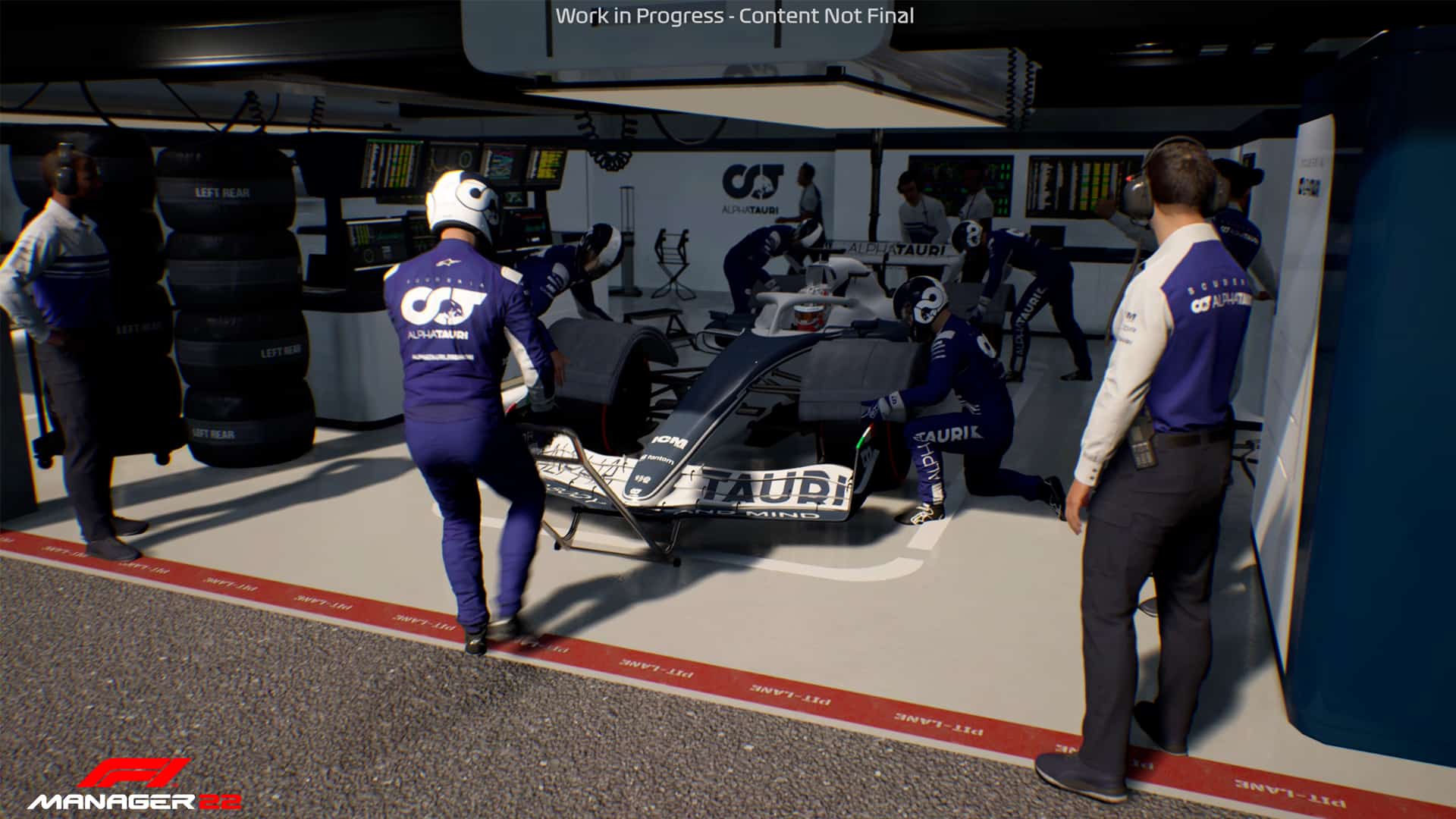
Always a topic that sparks debate, the driver ratings have been revealed for the upcoming F1 Manager 2022.
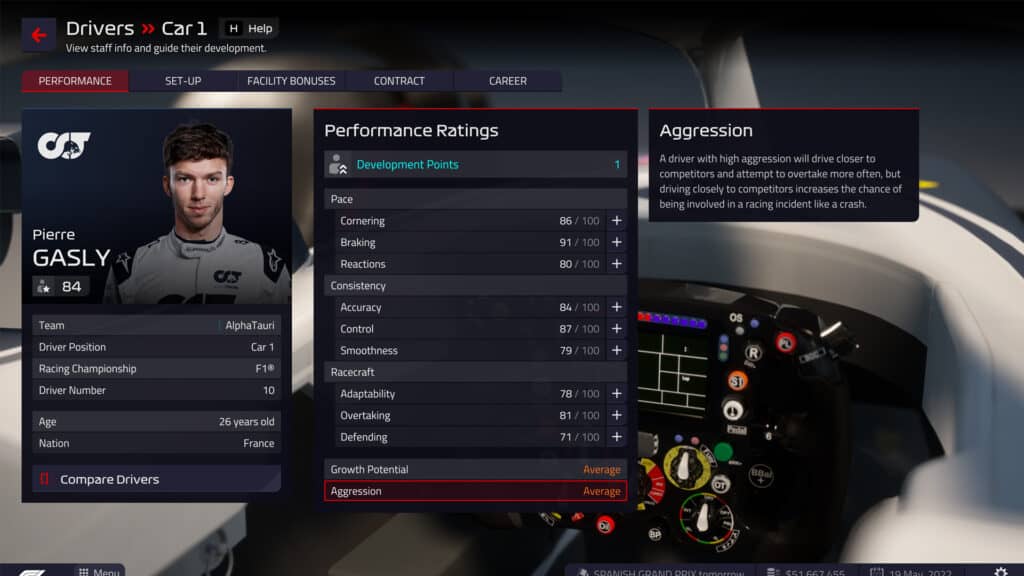
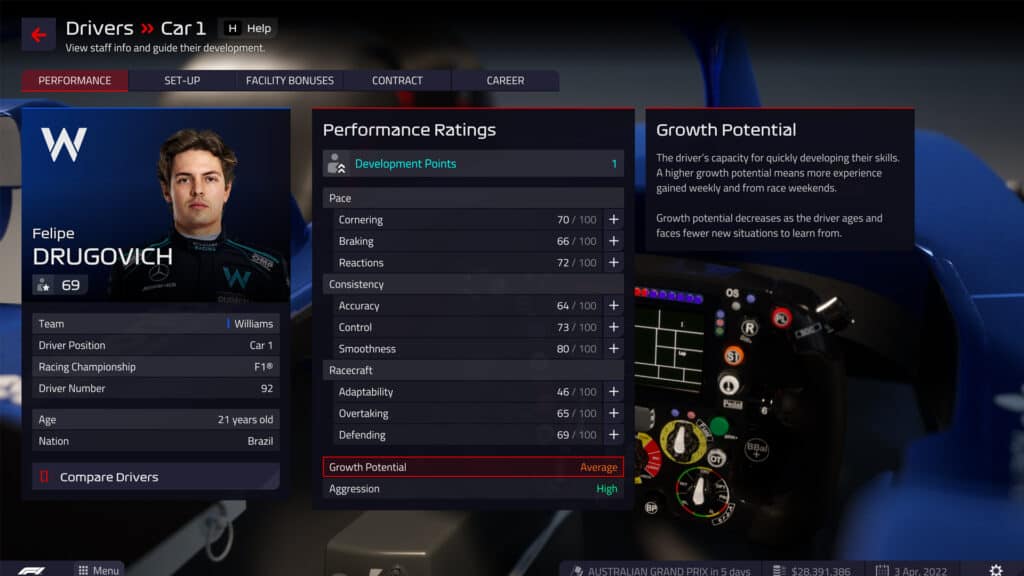
Ultimately, an overall rating from a possible score of 100 will determine general proficiency, but how the team got to that number was based on real-world Formula 1 data and across nine differing skill categories.
- Cornering – The cornering rating influences the speed drivers will be able to carry through slow, medium and high-speed corners.
- Braking – Drivers with a high rating in this stat are able to brake later and are less likely to suffer a lock-up.
- Reactions – Drivers with a higher reaction stat will have stronger race starts and accelerate out of corners earlier.
- Accuracy – A high accuracy rating will result in the driver sticking closer to the ideal racing line during sessions and reduces the likelihood of them running wide.
- Control – Drivers with a high control rating are less likely to make errors such as lock ups, spins and crashes.
- Smoothness – The smoothness rating influences how a driver is able to manage their tyre wear throughout a session.
- Adaptability – A high adaptability rating allows a driver to find grip during variable track conditions.
- Overtaking – Drivers who have a high overtaking rating are more likely to be successful in their overtaking attempts.
- Defending – A high defending rating allows a driver to protect their position on track, making it more difficult for rivals to overtake.
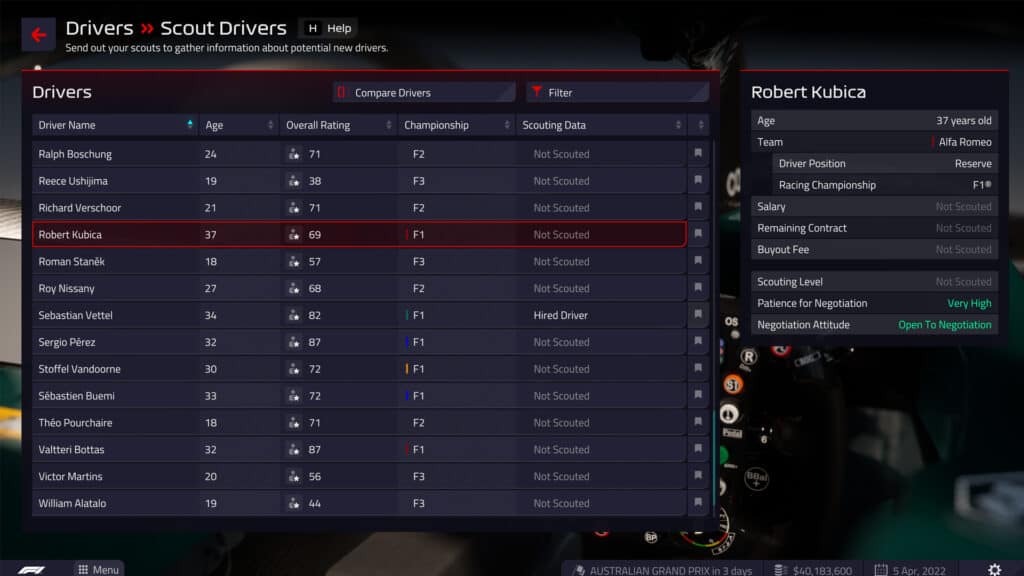
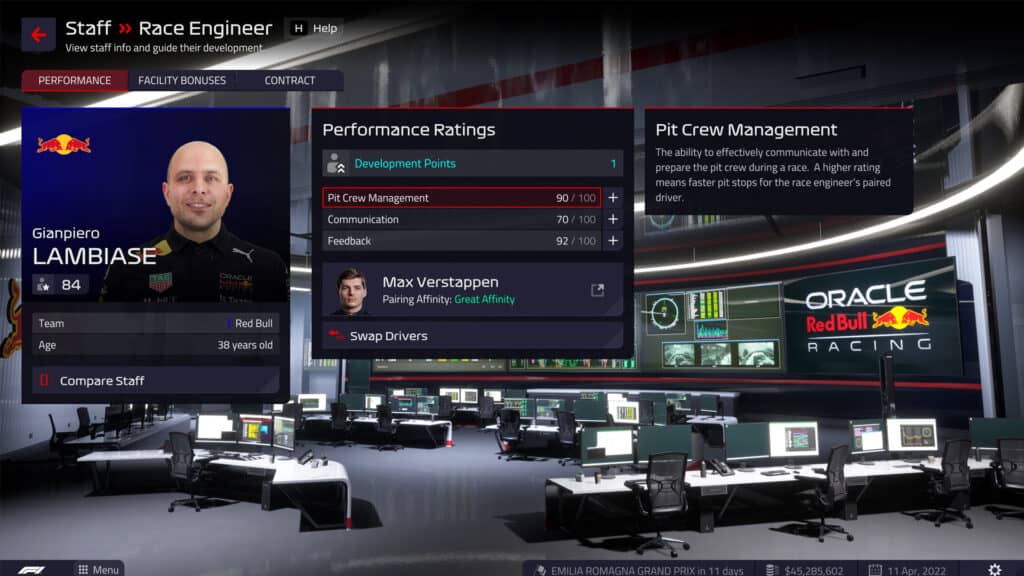
The management title will not only include the current F1 grid but reserve drivers plus Formula 2 and Formula 3 stars. Alongside those behind the wheel, team members are also represented, and each squad’s Race Engineer, Head of Aerodynamics and Technical Chief will also feature attribute ratings.
Driver and personnel development
During a race, each driver is said to have their own unique driving style, based upon the attribute scoring. Off-track personnel’s ratings affect the amount of data gathered, for example.




Discussion