In the latest episode of ‘what if Sega had done things differently in the 90s’, there’s a homebrew conversion of a Sega classic causing quite a stir on YouTube.
A user called Camtrack is working away at phenomenal speed on a 32X port of the biggest arcade hit of all time: Daytona USA. Day by day, improvements keep coming, and the results are astonishing. See for yourself:
I was perplexed when I first saw it pop up in my feed because the car’s flip animation looked familiar. It was one I’d seen hundreds of times in Virtua Racing on Mega Drive. That’s because this Daytona USA is essentially a ROM hack of Virtua Racing Deluxe, the Sega arcade racing conversion that hit the Mega Drive’s ill-fated 32-bit add-on in 1994.
I’m contract-bound to use the words ‘ill-fated’ before saying ‘32X’, but it is an apt description. Thing is, with two of the same Hitachi SH-2 (SH7604) 32-bit RISC processors inside both the Sega Saturn and the 32X (albeit running slightly slower in the 32X), the Mega Drive add-on arguably died in a pool of untapped potential.
The interesting (read: nerdy) thing here is that Virtua Racing Deluxe is a flat-shaded game. Its 3D visuals are block-filled polygons. Just coloured triangles. But Daytona USA famously introduced texture mapping to Sega’s arcade gaming, making every polygon look like it had a photograph on it.
Thing is, unlike Saturn, which distorted sprites to appear as polygons, 32X could (apparently) do texture-mapped polygons. And so Camtrack has been adding textures to Virtua Racing Deluxe’s game engine, which changes the look of the game completely.
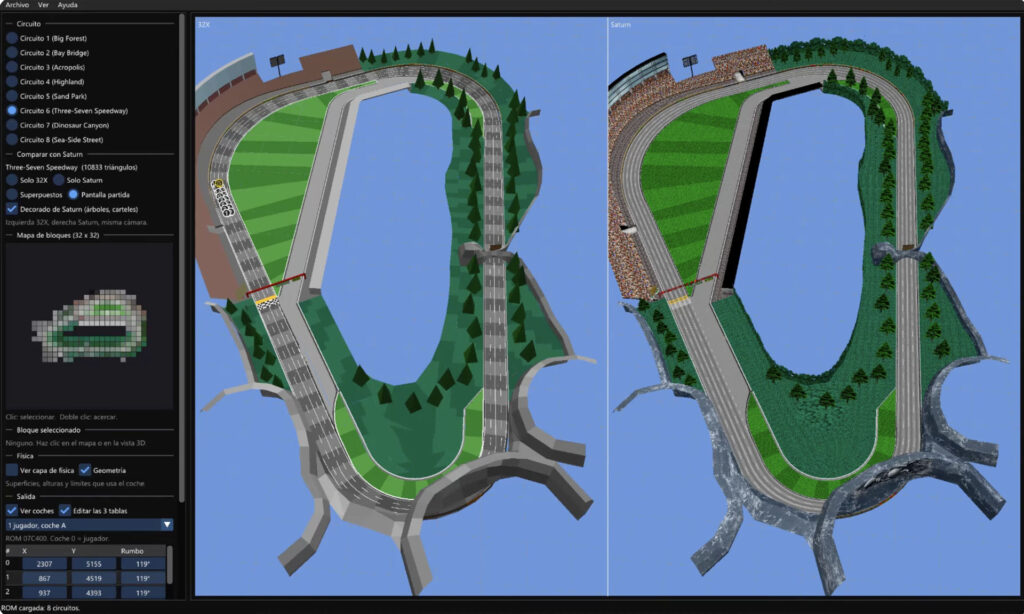
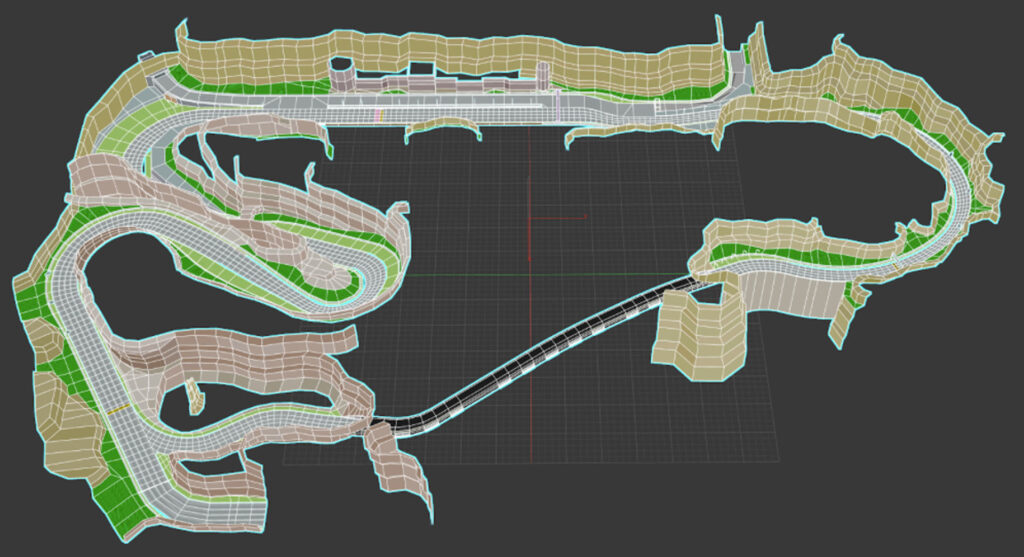
To map the first track, 777 Speedway, the 32X version of Virtua Racing was reverse engineered and the track itself was found to be broken down into a grid of blocks, each containing a set of 3D geometry. By substituting the polygons contained in each block with simplified models of Daytona’s tracks, Camtrack could build the Beginner oval track in Virtua Racing’s engine.
The 32X can be told how many blocks to draw to find a good compromise between frame-rate and draw distance, and soon it was running in a convincing fashion. Not everything can be texture-mapped due to the processing load, but the track surface and Sonic Wall are textured. The results are extraordinary.
Then came the cars. At first the iconic Daytona Hornet car model was recreated as a flat shaded stock car, looking reasonable but still more like Virtua Racing Deluxe’s own. But when textures were added to that, with the Hornet logo and the number over the top of the car, all doubt was gone. No sooner had a comment requested the back window could perhaps sport the moving, pseudo-reflection effect, than it was incorporated.
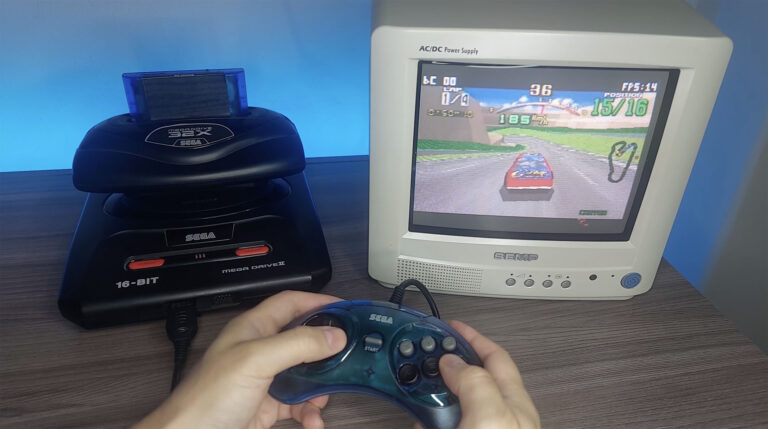
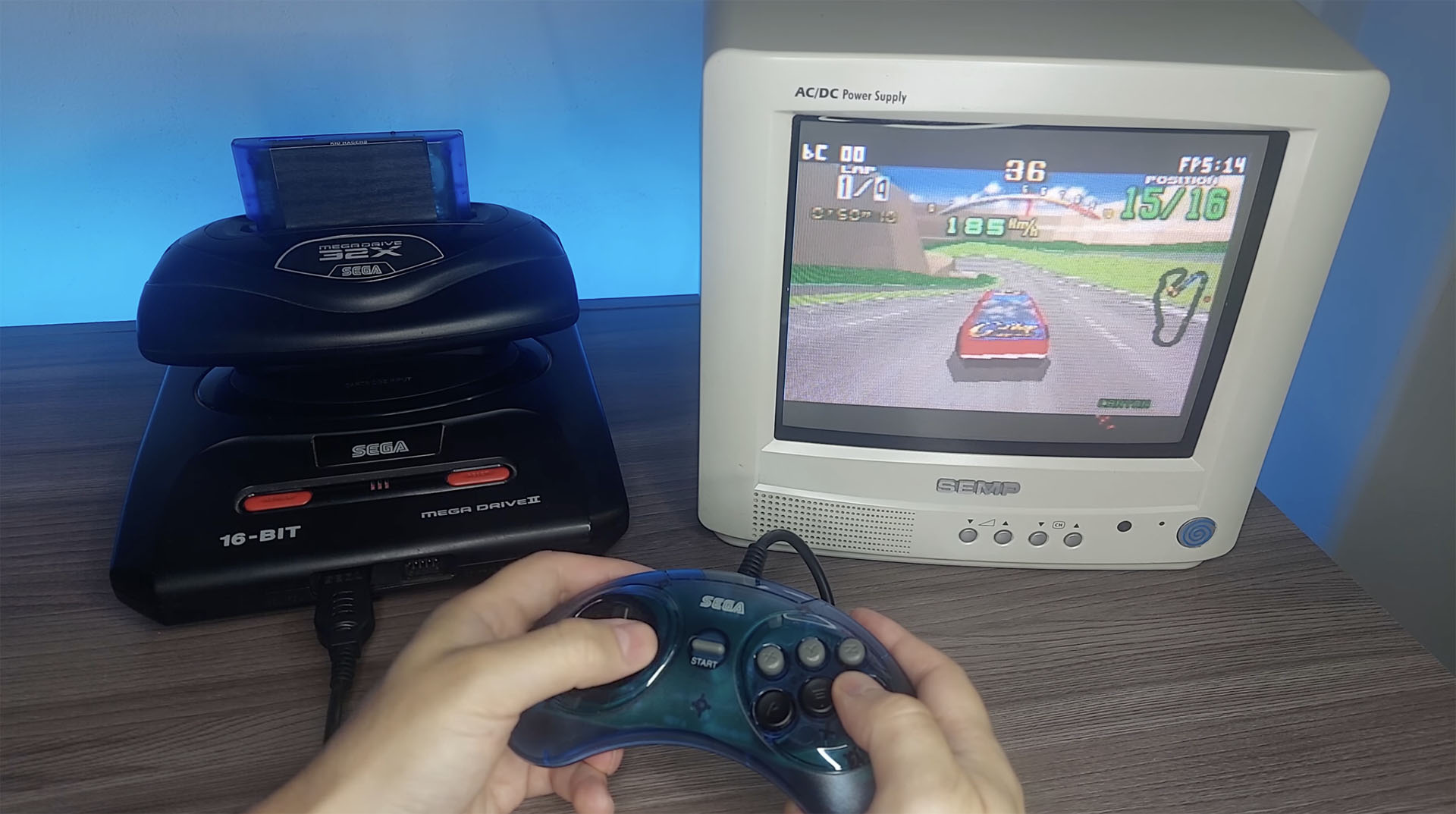
Then the unthinkable. The mod was run on real hardware. At first it would only display the demo before crashing. Other times, when it did run, the frame rate was far lower then the emulated dev build. But before long, there it was. Daytona USA’s 777 Speedway with playable Hornet car running on a real 32X at 20fps.
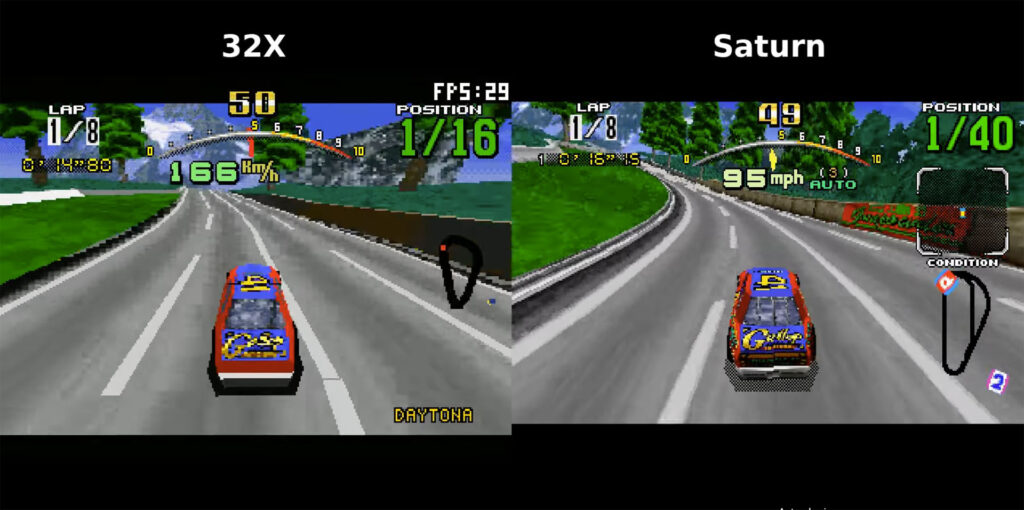
20fps may not sound much in today’s climate, but it’s an incredibly important number. Why? That was the frame rate of the Sega Saturn’s launch version of Daytona USA. What’s more, while trees and polys flicker in and out of view and resolution of the rocks seems to be lower than the rendering of the track, the basic draw distance on 32X is comparable to that of the Sega Saturn version.
Neither is impressive outright – Saturn was slated for its poor Daytona conversion. But the point remains: If 32X can do a job this good with just a couple of weeks’ work by an enthusiast, what could it have done with the fabled AM2 itself working on it full time? Considering the £130 stock Mega Drive managed a recognisable facsimile of the £10,000 coin-op of Virtua Racing, I can’t help but wonder what could have been.
Comparison between Daytona USA on the 32X and Saturn
The music still needs work. Currently it’s a mix of Virtua Racing checkpoint ditties and a MIDI version of ‘Let’s Go Away’, though the tempo of the audio is slow and flaky at present. There was much glee at the announcer only saying ‘Gentlemen’ to start with, but now he does say ‘Gentlemen Start Your Engines’ before the race begins.
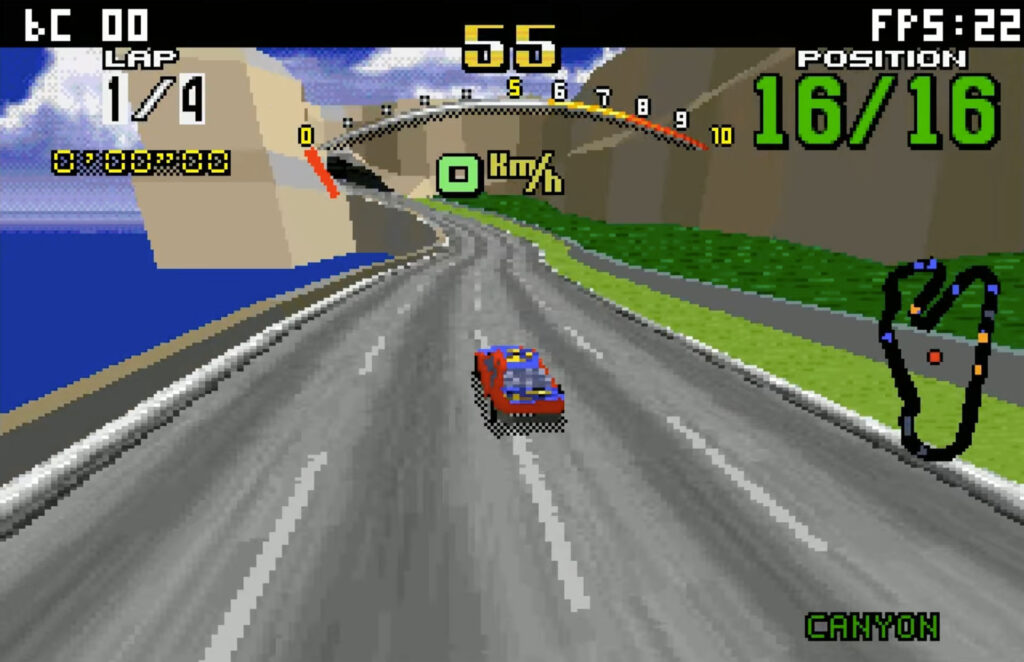
Best of all, Camtrack isn’t done yet. The second course – Dinosaur Canyon – is already rendered and playable. It looks wonderful. Despite the reduced polygon count, the accuracy of the course geometry is superb. The draw distance even exceeds that first Saturn version on the famous AM2 corner stretching away down the hill to the left.
There is no official, Sega-backed release coming, of course, as the work is nothing to do with modern Sega. Though I’d argue it’s surely worth Sega considering it as a ‘what if’ inclusion should they ever make a 32X Mini console. They did include the theoretical Sega Mark V hardware on the Mega Drive 2 Mini, after all.
Dinosaur Canyon
The prototype build is not yet publicly available to download and play. But I live in hope. Only two things remain to be seen. Firstly: whether Seaside Street Galaxy can be displayed convincingly on 32X. With its flyovers and open areas, it will be a massive task to do it at all. And secondly, can Daytona USA on 32X ever match or even surpass the quality of that original Saturn version?
If it can, it would be an achievement of gargantuan proportions. 32X did enjoy conversions of Sega’s Super Scaler technology with After Burner and Space Harrier, and approximations of Model 1 arcade games, Virtua Racing, Virtua Fighter and Star Wars Arcade. But a Model 2 game? Not just that but the biggest Model 2 game of all time? Now I’m back to dreaming about Sega ‘what if’s. Excuse me while I stare into the middle distance for a while…
All images were taken from Camtrack’s YouTube channel, and the real hardware shot is itself borrowed from @costenaroplay on YouTube.


Discussion