The Peaks Peak International Hillclimb is one of motorsports’ most-feared challenges.
Amongst the Rocky Mountains, an intestinal road rises to over 14,115 feet above sea level. The altitude makes it hard to breathe, the drops are steep and riddled with uncompromising rocks.
This mercurial Front Range member bites, hard.
That doesn’t stop a group of lunatics from trying to drive (or ride) up it as quickly as possible each year in The Race to the Clouds.
Not for me, that. Far too dangerous. I’ll stay at home and experience the daunting prospect virtually, thanks.
Except. I can’t really. Not officially or in laser-scanned glory.
Which is odd, and a bit confusing. Some say it’s because of a Gran Turismo exclusive deal… but is it actually? Here’s the full story of a notorious Rocky Mountain route that is missing from sim racing.
Before we discuss Pikes Peak’s racing game and simulation backstory, we must first understand the appeal of the real-world event.
The concept itself is simple enough, but the road used is anything but, lasting over 12 miles and 156 turns.
Initially held in 1916 as a dirt event, by the mid-1990s, sections of the pathway were covered in a ‘surface treatment’, and in 2012, after several years of work, it became entirely asphalt.
Romain Dumas holds the record, a 7-minute 57-second run in the frankly bonkers electric Volkswagen ID. R, and while he won the event again this year, in a Ford Super Mustang Mach-E, he was 20 seconds behind his past best. This is perhaps due to several large bumps appearing on the higher areas.
Before the Dumas domination, nine-time world rally champion Sébastien Loeb (more on him later..) set the best time in a Peugeot 208. No, not the same compact hatchback you see in a Tesco car park, a heavily modified one, and this 2013 time remains the best by internal combustion and the second quickest overall.
However, for many, including me, it was the 1989 promotional film by Peugeot and Jean Louis Mourey, Climb Dance, that caught the imagination. It took the then-relatively obscure event and turned it into a legend.
It’s those opening wisps of the dusty atmosphere after the car has passed. And the ludicrous sight of the French vehicle skimming the edge, narrowly avoiding certain catastrophe. Or maybe even that shot of driver Ari Vatanen holding one hand up to block the sun as he nears the summit.
There’s a je ne sais quoi that makes for compelling viewing.
Another defining moment came when Mr Hoonigan himself, the late Ken Block, took his Hoonicorn beast up the mountain for a Toyo Tires commercial. On one corner, he slewed sideways, coming as close to disaster as is humanly possible. This was his ‘Climb Dance’ moment for a new generation, cementing Pikes Peak as one of the ultimate challenges in motorsport.
Yet, as I sit here in 2026, there’s no official way of experiencing the risky route in sim racing, unlike say, the Nordschliefe, or Mount Panorama or… Snetterton.
But, that wasn’t always the case…
Peak Performance
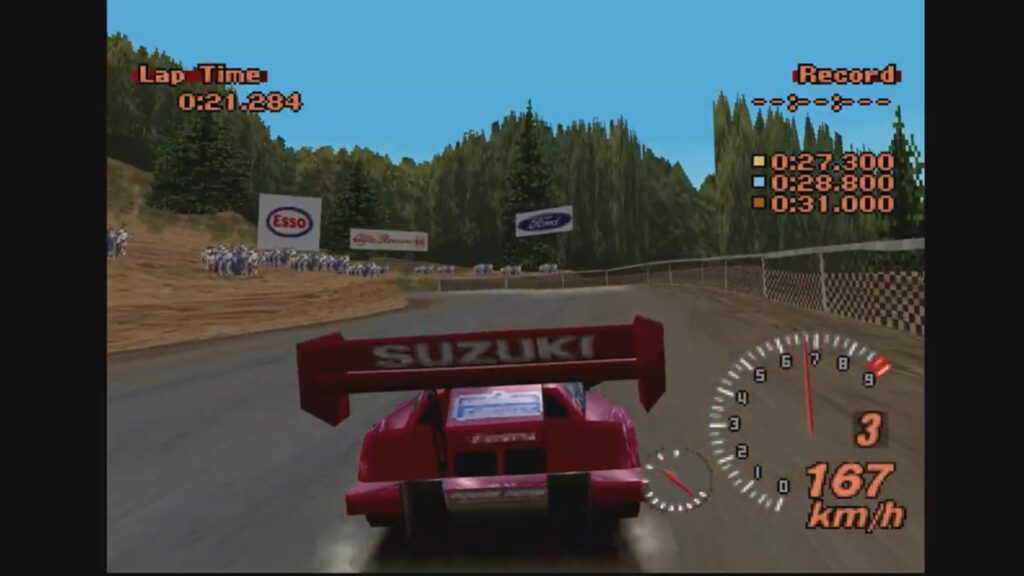
No, back in 1999, the seminal Gran Turismo 2 was the first video game to feature the Colorado test.
Except, not so fast.
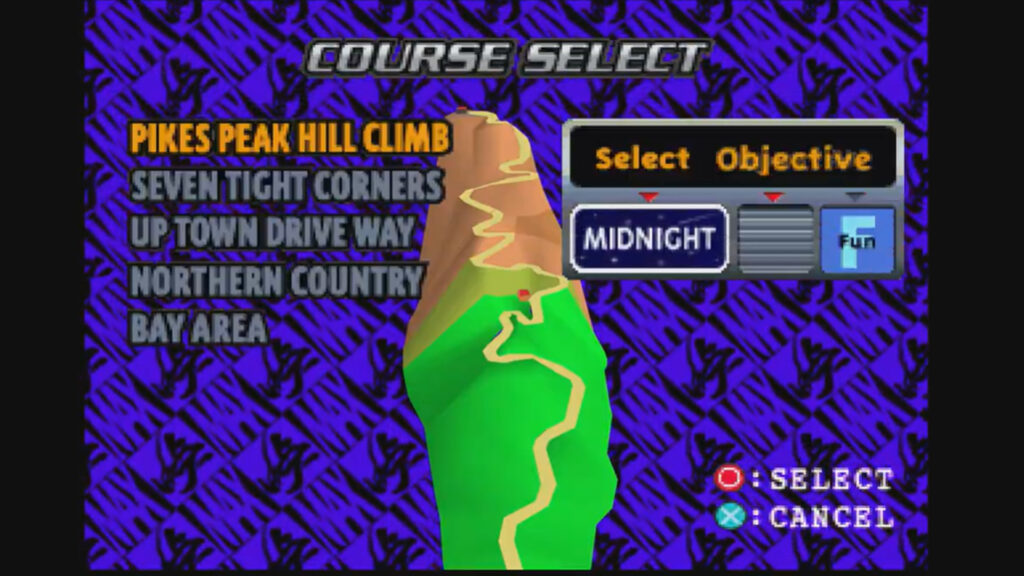
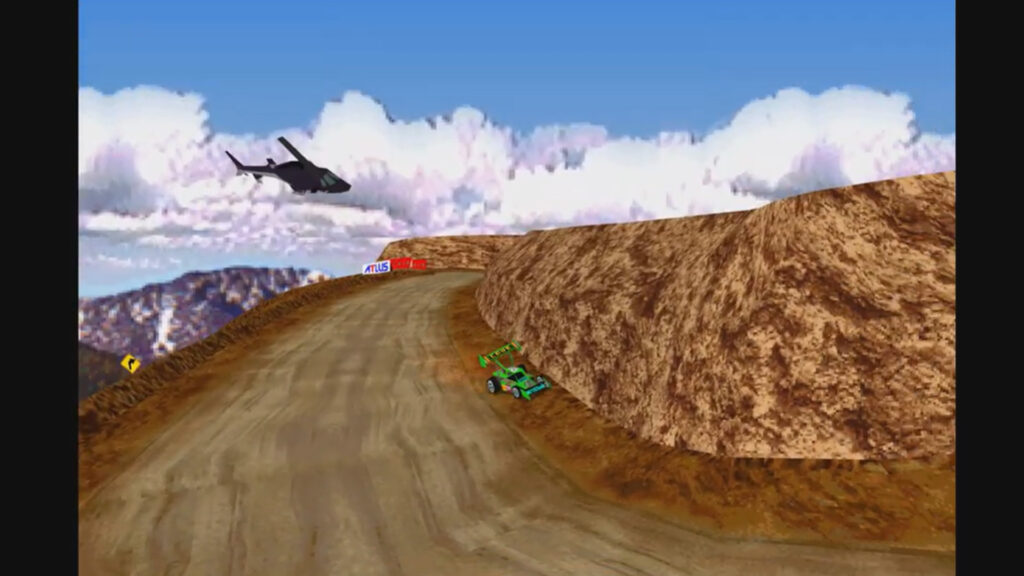
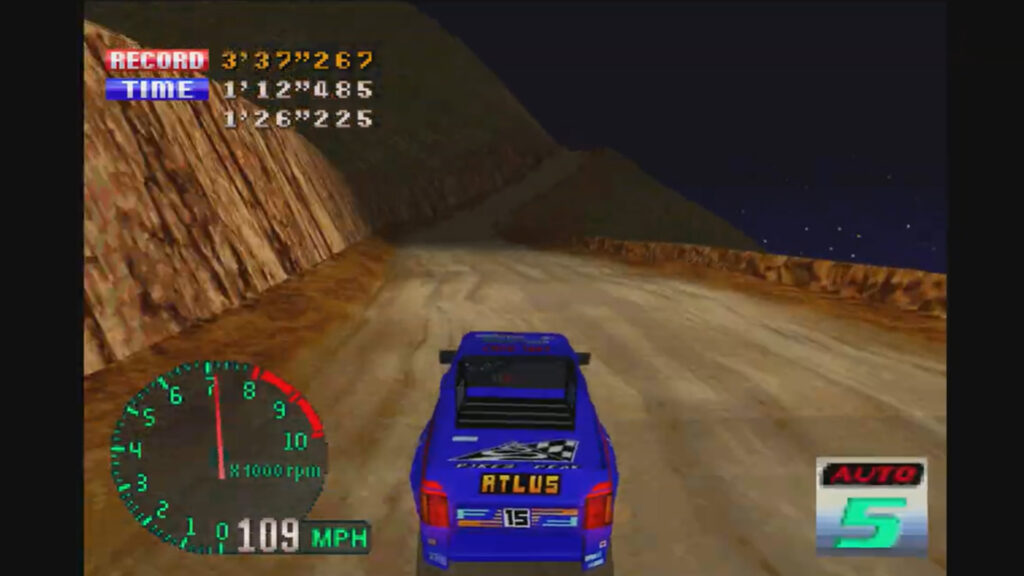
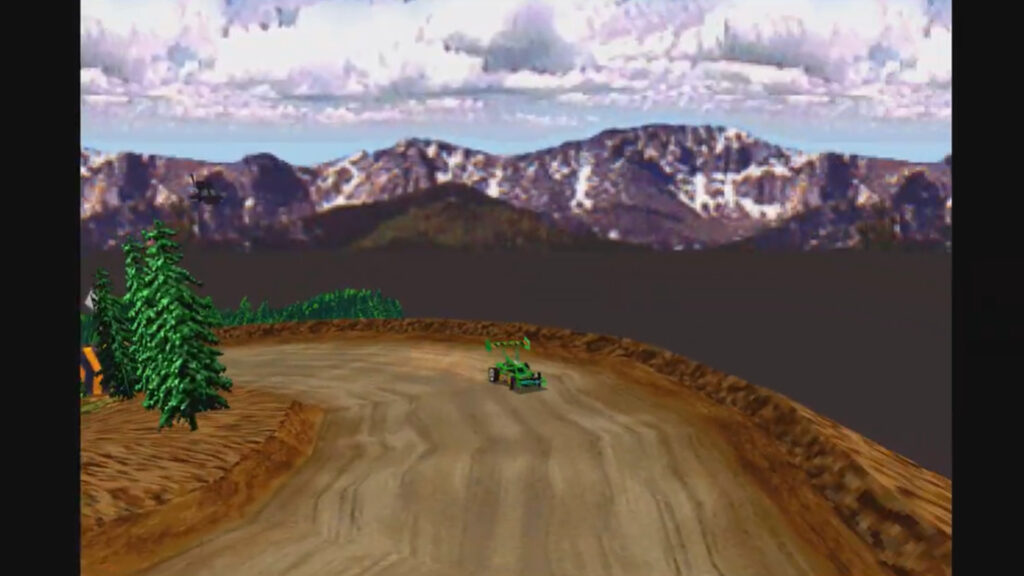
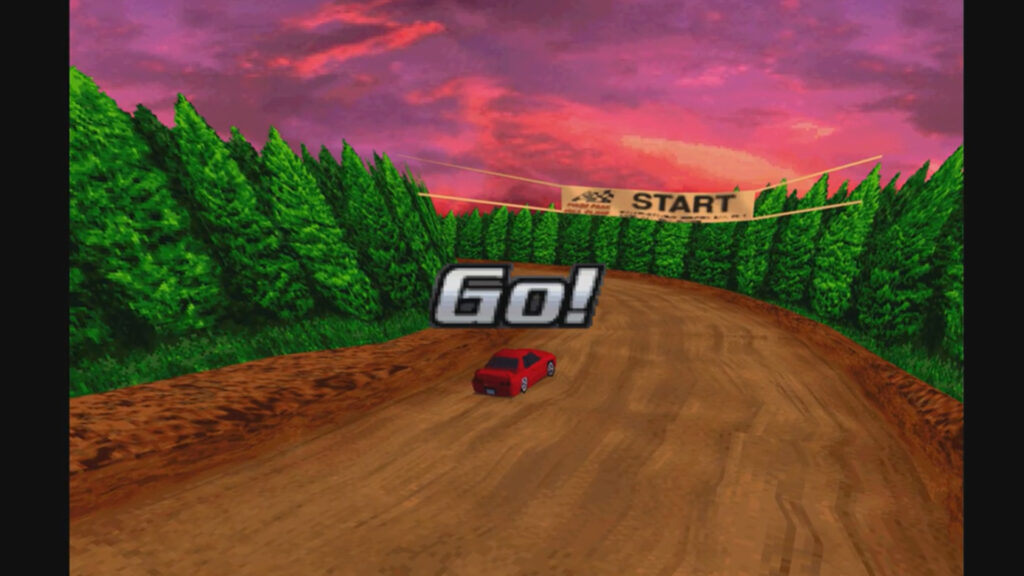
That honour actually goes to 1997’s Tōge MAX: Saisoku Drift Master, created by Japanese development team Cave. Outside of its home nation, it was sold as Peak Performance, perhaps in a nod to the included hillclimb. Certainly, the main menu’s background looks to be a mountain range.
The main gameplay is around fictional venues, some with typically charming names such as ‘Seven Tight Corners’.
However, alongside these is the actual Pikes Peak.
In action, there are severe technical limitations. You can’t fall off the side, for example, as there’s always an invisible wall. Collisions with the checkpoint building are less predictable than an excitable lamb and the vehicle handling is vaguer than a modern-day politician.
Mind you, judging by some of the real-world creations of the era, that may have been accurate…
But you can’t help but marvel at the virtual creation for its time. There’s even an animated chase helicopter and functioning replays, plus the option of completing the Race to the Clouds at night. This would never happen outside of gaming because it’s lethal.
Gran Turismo 2
Right, now it’s time to talk Gran Turismo 2.
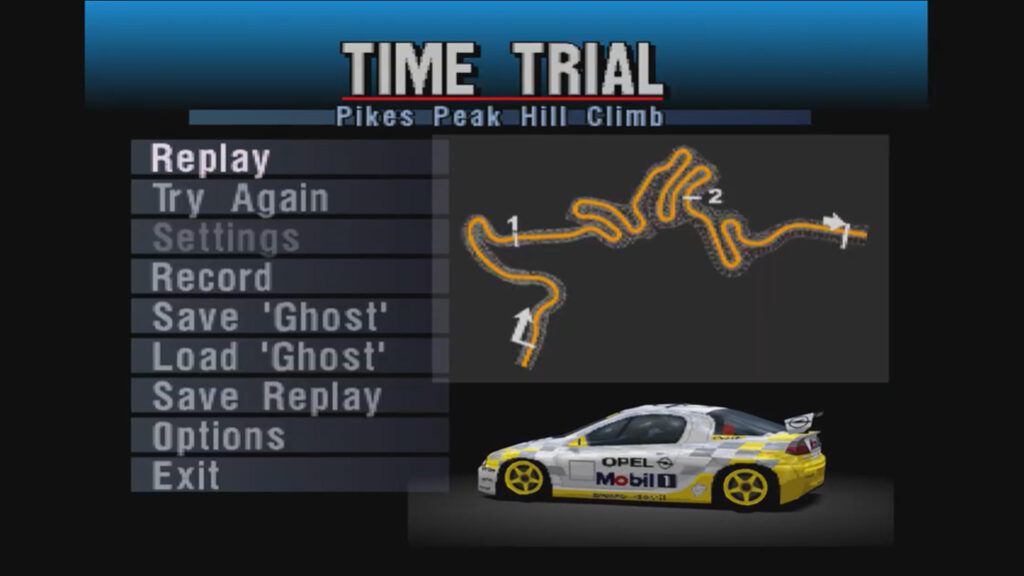
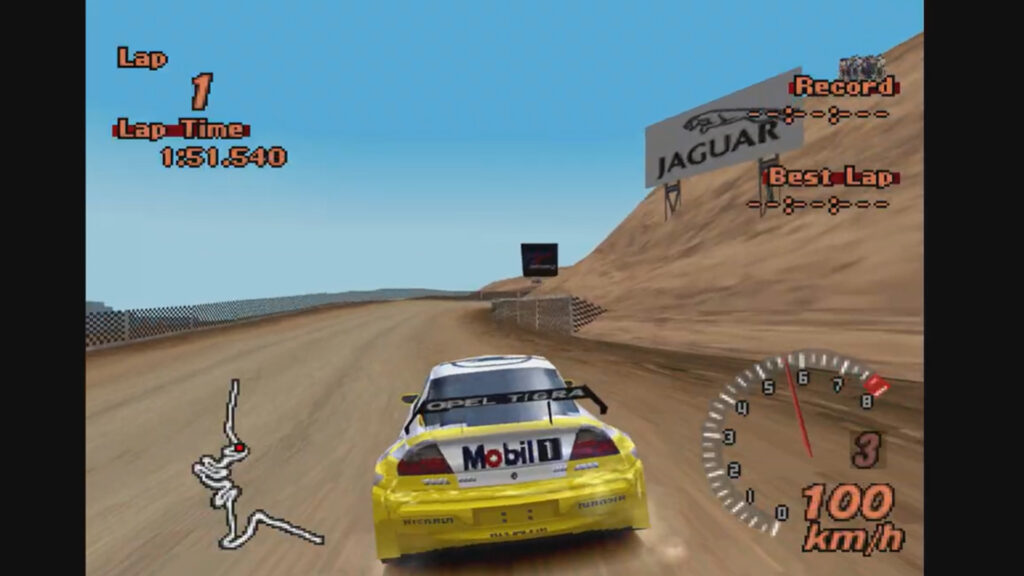
Seen by some as the apogee of Polyphony Digital’s driving simulations, this sequel heralded the first-ever licensed venues for the PlayStation-exclusive series.
One was the Californian circuit Laguna Seca, and the other was Pikes Peak.
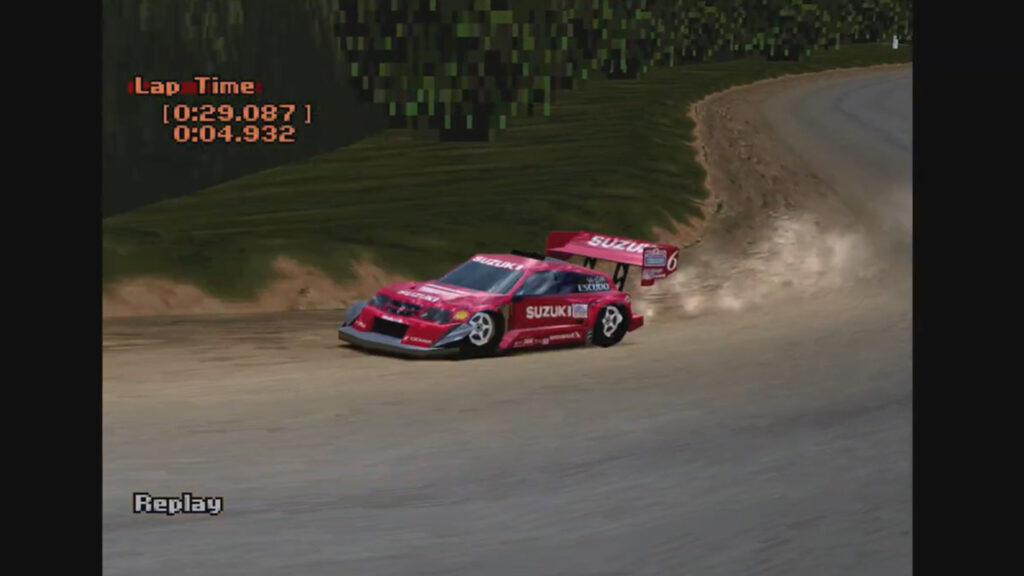
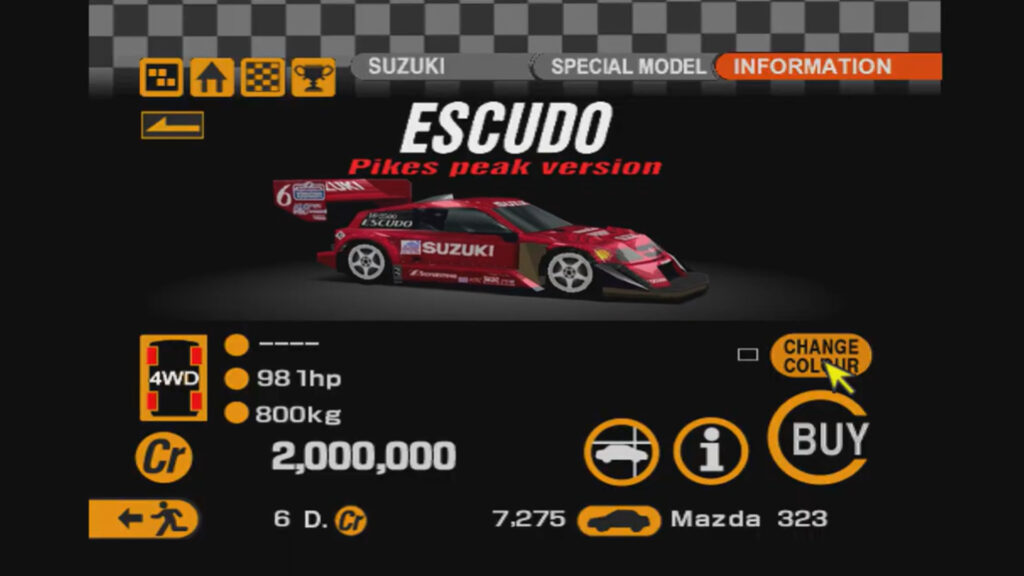
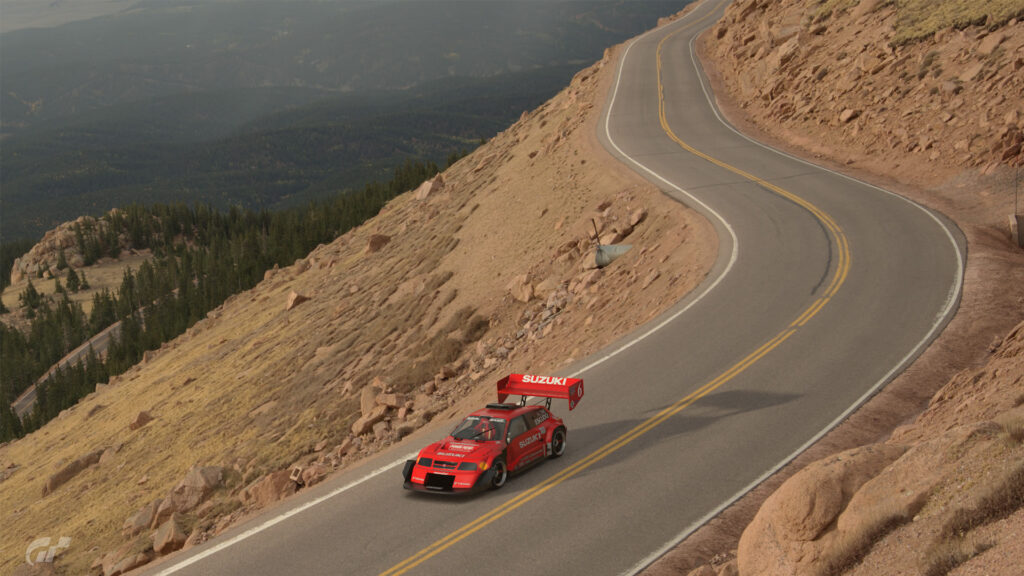
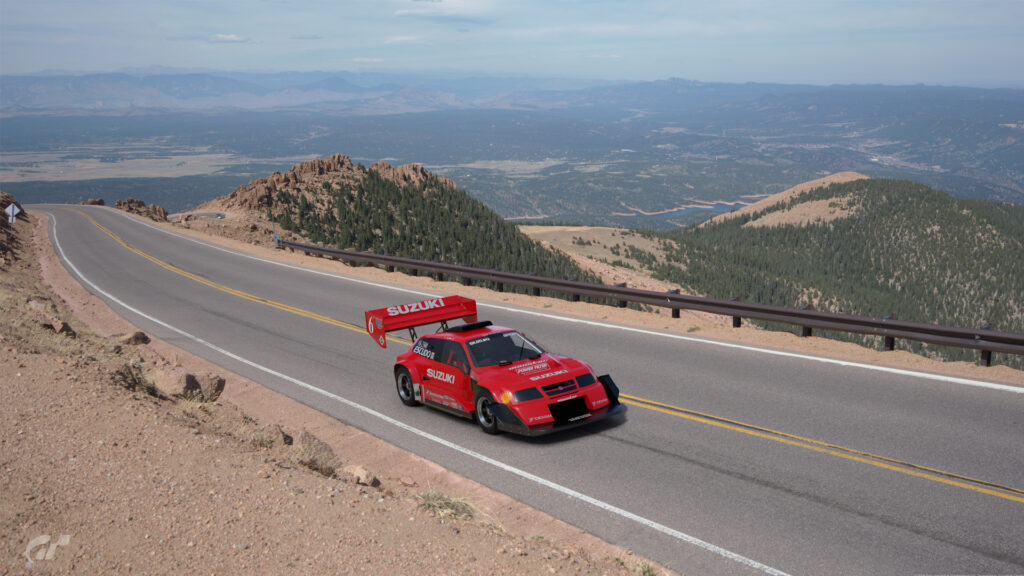
It’s also here that the Suzuki Escudo made a name for itself. Well, really, it was because Nobuhiro ‘Monster’ Tajima ragged it up the hillclimb in the real world. The Japanese driver won the event overall no less than seven times, although funnily enough, never in the famed red machine.
In blocky pixelated form, its appearance as a bewinged monster and its insane performance cemented its place in virtual history, becoming a regular feature in most subsequent Gran Turismo releases.
The track, didn’t, however. But, we’ll cover that more, soon…
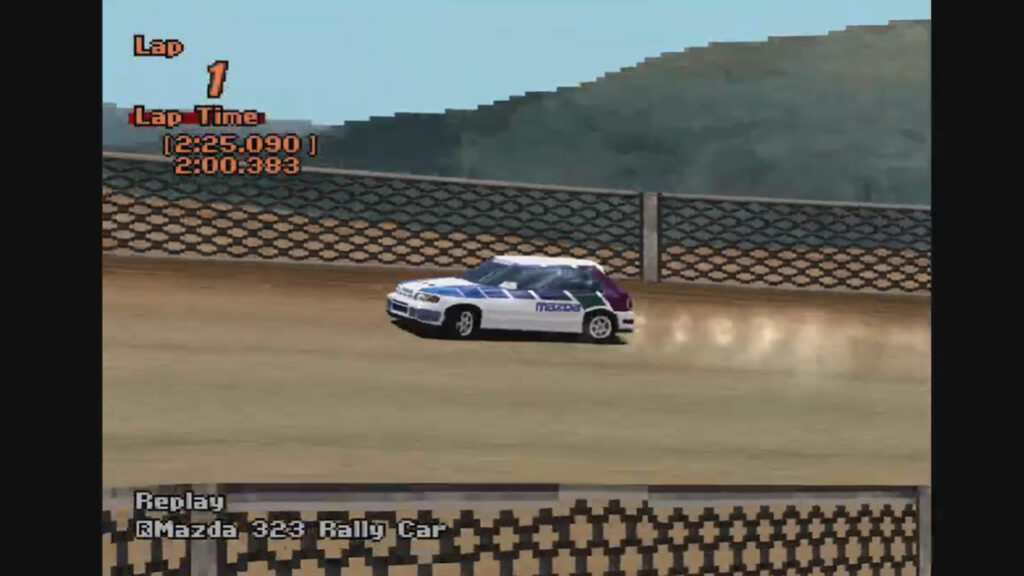
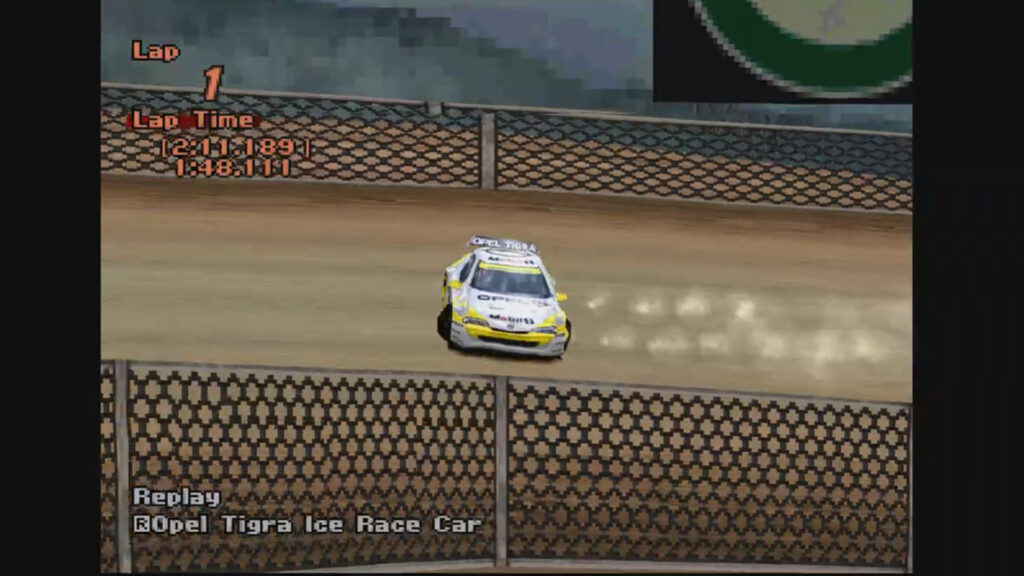
This version, while officially named in-game, isn’t even the full experience, either. It’s more of a vague reproduction under the formal branding.
Dare we posit that, while the vehicle handling and graphical fidelity in Gran Turismo 2 are no doubt strides ahead, Peak Performance actually has a more accurate representation? Yes, actually, we are going to say that.
Colin McRae: Dirt
And that’s all we heard about it for nearly a decade until Colin McRae: Dirt. Not to be confused with the later DiRT Rally, this was the penultimate Codemasters game to eponymously use the Scottish world champion’s name.
It also ushered in a new generation of consoles for the British developer, using its proprietary EGO technology. The scope of the game was now broader than the PS1 and PS2-era McRae games, with rallycross, buggy racing and hillclimb now part of a sprawling, satisfying career structure.
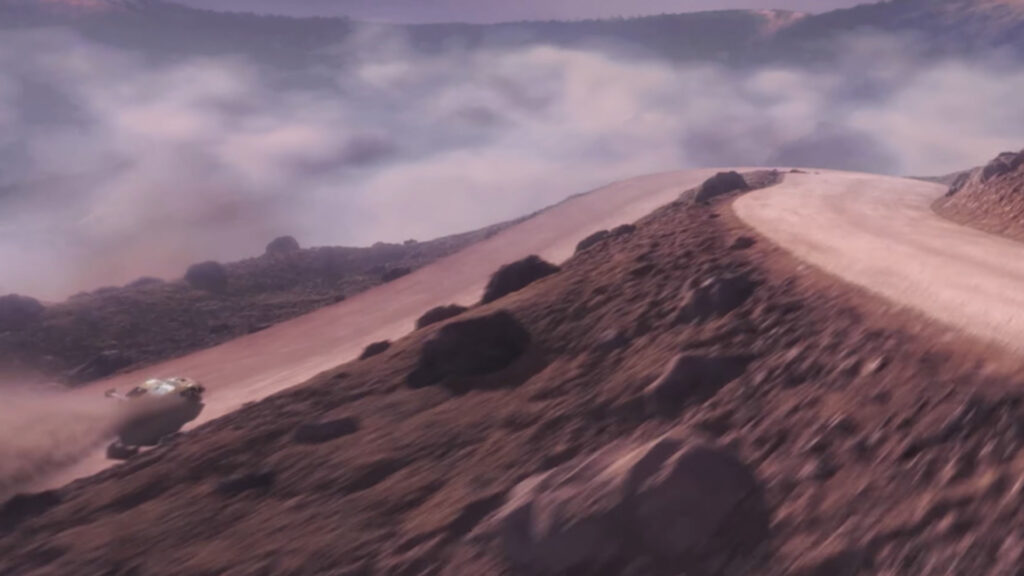
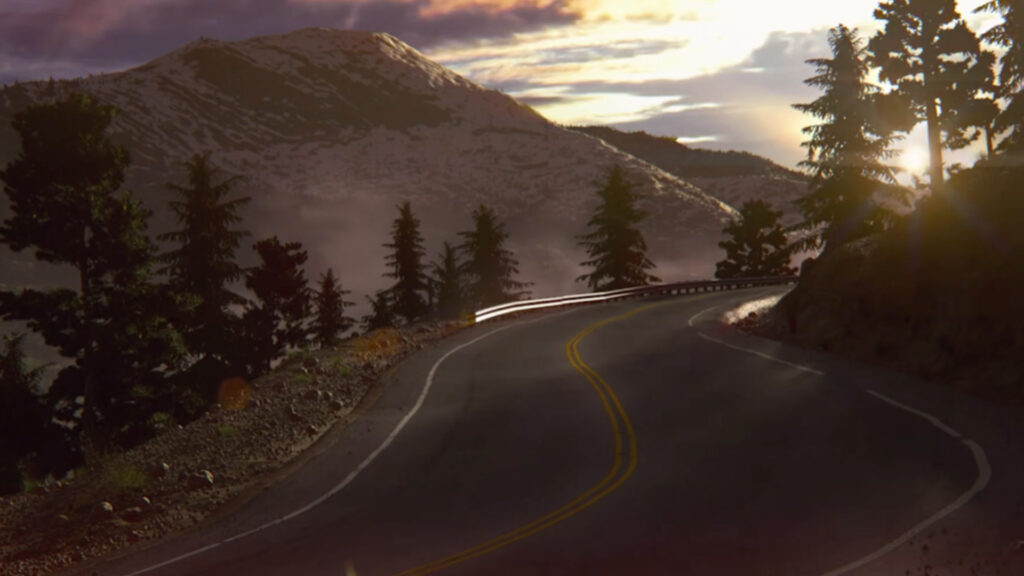
Pike Peak is visible right from the start, a centrepiece of the dramatic CGI intro, witnessing Rod Millen’s modified Toyota Celica race up the dirt road, coming close to the edge, before the camera dives down into the clouds.
Once you’re playing it, the full course is broken down into small sections, requiring progression to unlock the full thing. This is from an era where the surface is a mix of dirt and asphalt.
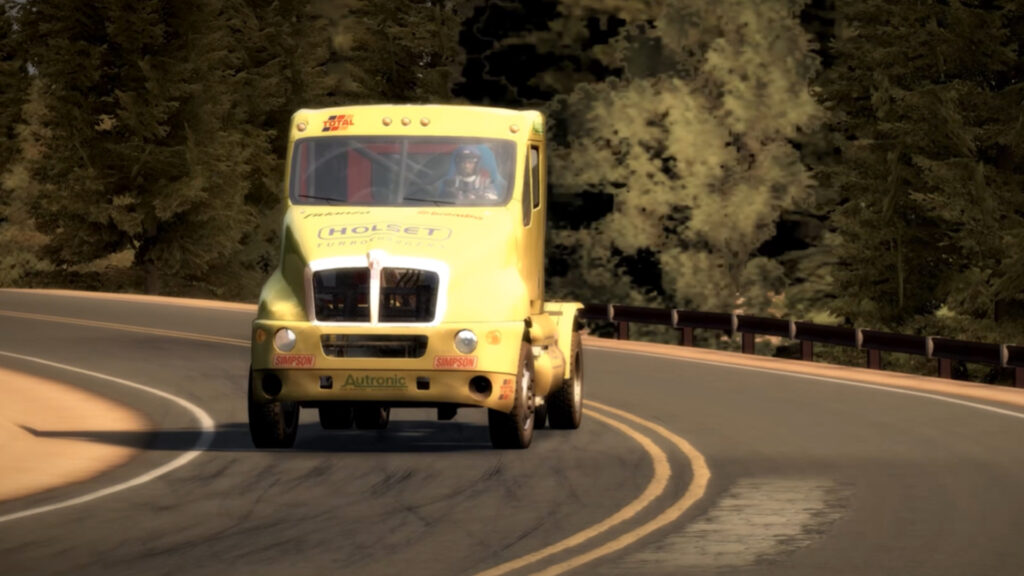
Despite its age, the representation is authentic enough and there’s even a giant Big Rig vehicle class, including the likes of Kenworth and Freightliner. Seems daft, but trucks like these did compete in the real world, as part of a faintly believable ‘tandem axle’ division.
We’d have to wait nearly another decade for the tempestuous American mountain to resurface in a game.
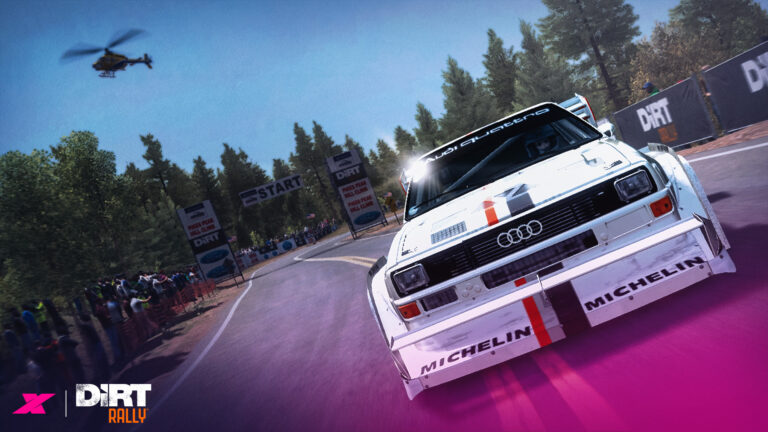
DiRT Rally
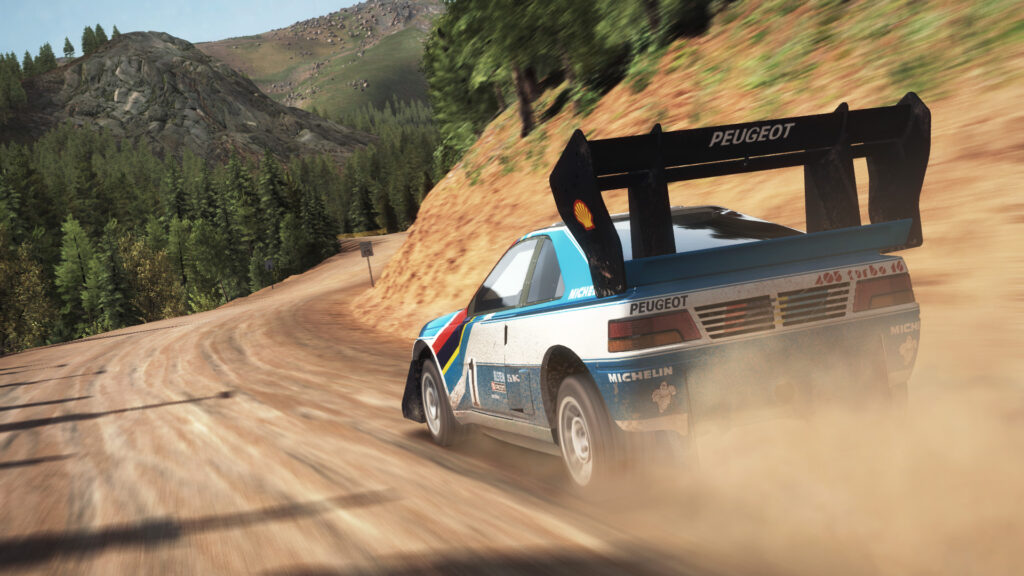
But, when it did, it was the most accurate, punishing and jaw-dropping recreation ever.
DiRT Rally, Codemaster’s rally sim, was a much more serious in focus than the aforementioned Colin McRae: Dirt. A series spin-off from a skunkworks project, it helped save the company in difficult times.
Of course, it’s fun to play on a controller, but being a somewhat serious sim, itsimply has to be experienced with a proper wheel and pedal setup for the ultimate immersion.
DiRT RallyDiRT RallyDiRT RallyDiRT Rally
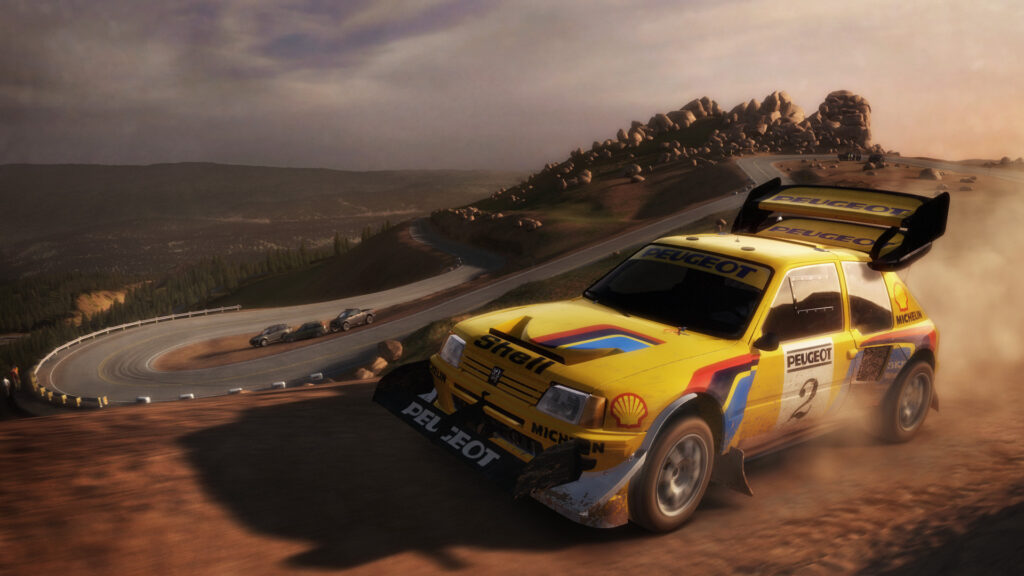
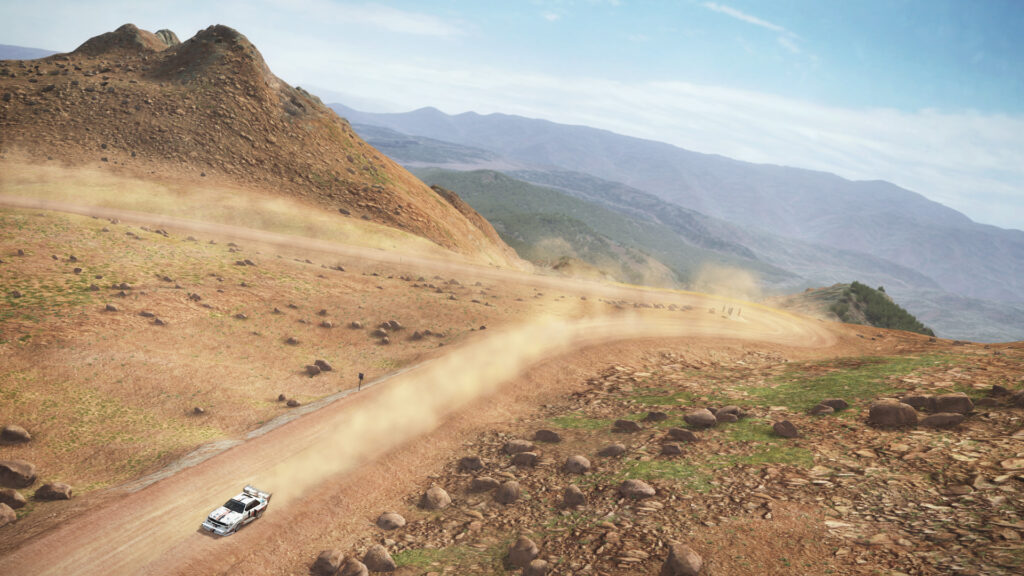
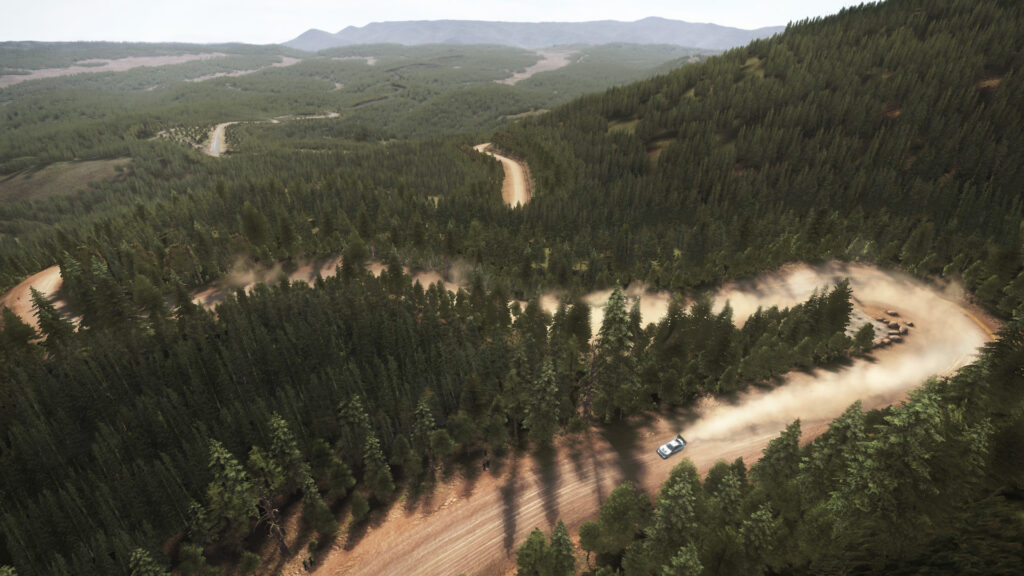
This truly was the first time in this modern sim racing age that the fabled hillclimb was drivable in an authentic fashion, at least for a mainstream game excluding mods.
The physics were always a bit of a mixed bag and haven’t aged particularly well, especially on asphalt. But does that matter? Not particularly, mainly because you can select the full gravel layout, and secondly, because it’s gob-smackingly beautiful.
Threading the needle through the trees’ early doors, and then that transition as you burst out onto the barefaced mountain, when all of a sudden the feeling changes, the altitude, the vast openness and the crazy views. It’s mesmeric.
This was also the final time Pikes Peak was in a game or simulation, officially.
Sébastien Loeb Rally Evo
That is, if you forget Sébastien Loeb Rally Evo, which you’d be forgiven for doing so, as it was perennially under DiRT Rally’s shadow. Codemasters’ rally sim left early access in December 2015. Loeb’s game arrived in January 2016. So the GOAT’s title is the last release with the American mound.
Unless, that is, if you count the PlayStation and Xbox versions of DiRT Rally, which didn’t release until April 2016.
Whether you think it was Codemasters or Milestone who made the last formal version of this formidable mound, we should still explore Loeb’s overlooked rally game.
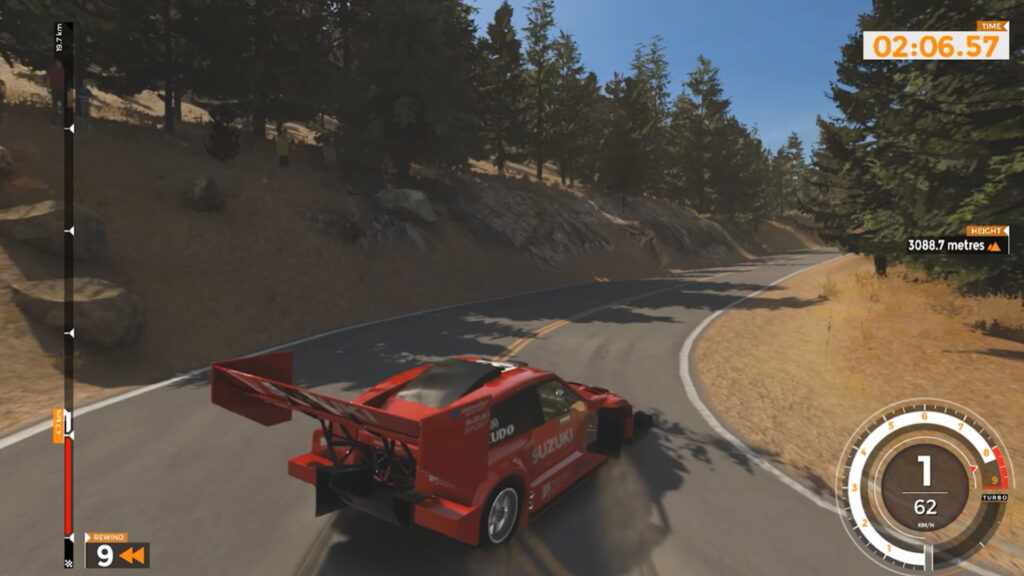
It may be, or may not be, the final game with Pikes Peak, but it definitely remains the only formal way you can buy the venue today.
There’s little doubt it doesn’t drive anywhere near as assuredly as DiRT Rally, and it certainly doesn’t help that nowadays, modern wheel hardware compatibility is a challenge.
If it came out later, or earlier, perhaps it would have been more successful, and remember, there was a planned sequel that was cancelled, where its potential could have been met. It’s a mixed bag, but Pikes Peak is there alongside a roster of appropriate cars, including that beastly red Suzuki.
Close, but not quite
Of course, there are other games with elements, or facsimiles, of Pikes Peak included.
Ubisoft’s USA-set open-world driving games The Crew and The Crew 2 have a Pikes Peak area, and an approximation of this mountain, which you can drive up.
Another overlooked game, V-Rally 4, has a substantial hillclimb offering, with the Mount Rainier track not quite the right route. It provides a similar vibe at least, which is something the RalliSport Challenge games offered too.
Then there are community-made PC mods, for both Assetto Corsa and BeamNG. These are enjoyable, cool, but not endorsed or accurately scanned as far as we can ascertain.
Gran Turismo and Exclusivity
Which brings us to now, 10 years since a proper version of Pikes Peak, and as we mentioned right at the start, that could be because of an exclusive deal between the event and Sony’s Gran Turismo series.
Perhaps related to this sponsorship deal, it’s long been believed that this series has the exclusive rights to the sinuous stretch, thanks in part to comments by former Codemasters employees to EuroGamer and on forums.
The elephant in the room is that Pikes Peak wasn’t in Gran Turismo Sport and isn’t in Gran Turismo 7.
The aforementioned GT2 remains the last game by Polyphony Digital with it in drivable form, especially if you discount the cracked version of Gran Turismo 5, where a really, really, work-in-progress version has been discovered. Which we absolutely are discounting.
And this got us thinking, is it actually exclusive?
Well, we contacted the Pikes Peak Hillclimb event directly, and a senior spokesperson said to us:
“The Gran Turismo partnership does not apply to PC platform games. Which, I believe, leaves most [of] sim racing open.”
And naturally…
“There are still commercial licensing requirements associated with any development and usage of our IP.”
So, at last, now we know. In theory, if someone can strike the right deal, which admittedly is a big if, a PC simulation could recreate a laser-scanned official Pikes Peak. It is not fully exclusive. Perhaps it’s time to start a crowdfunding campaign?






Discussion
Bits of Pikes Peak also appeared in Colin McRae Rally 3 and 04, though chopped up a bit.
Well remembered, loved those games! I don’t think it’s ‘actual’ Pikes Peak, those, more something inspired by elements of it.
I’m pretty sure the Pikes Peak branding appeared on a banner somewhere on a stage, as well as the hut
But it’s been a while 😂
I think about this every year when the hillclimb event happens. Thanks for the writeup!
What I wouldn’t give to send it up the mountain in something like AC Rally with support for proper sim gear and triples.
AC Rally would be perfect for this, agreed!