
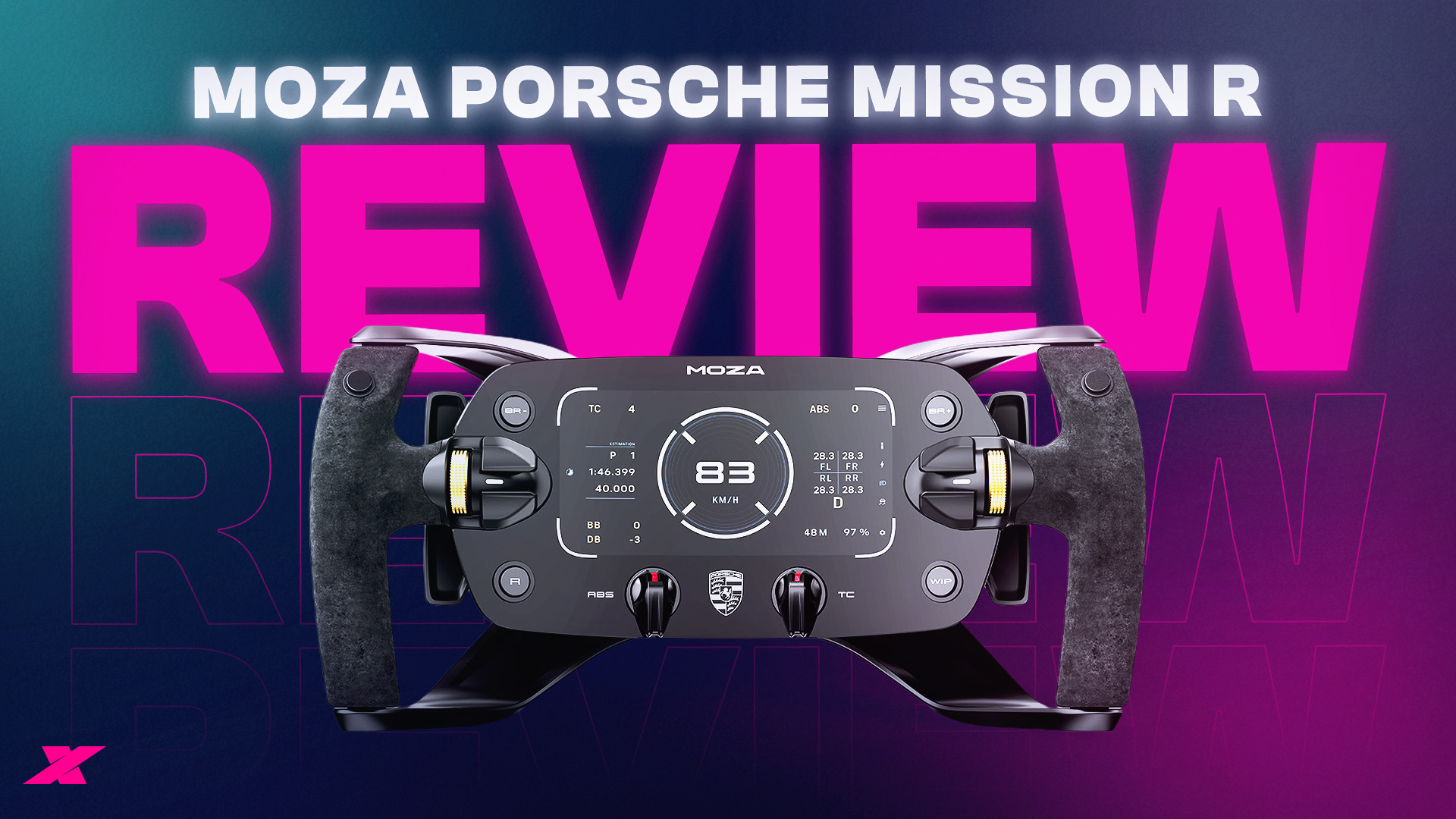
Moza’s latest sim racing steering wheel is a replica of the one used in its Porsche Mission R all-electric racecar. The Mission R project is a case study into the future of motorsport, with the 1073 bhp concept showcasing a bold future for the Weissach-based manufacturer’s motorsport customers.
However, the car is a one-off, inaccessible to the masses, despite its virtual presence in iRacing and Rennsport (and its popularity in these sims is questionable, judging from player feedback).

With a recommended retail price of $1,299 / €1,399 / £1,299, Moza’s version of the Mission R steering wheel certainly isn’t aimed at the mass market. Likewise, given the competition from rival sim racing hardware manufacturers at this price point (and below), it’s difficult to see where it fits into the sim racing landscape.
On that premise, I’ve tested the Moza Porsche Mission R to see if it does enough to carve out its own niche.
Build quality and features
Initial impressions of the Mission R wheel belie its premium price tag. Its box features official Porsche logos and attractive lines, with the interior lined with black lint. However, this lint was everywhere, covering the wheel, the box, the floor and my hands.
A quick vacuum, and the box was safe to handle, with Moza assuring me this issue would be solved for production models.
The wheel features a fully CNC-machined aluminium chassis, a 5.4-inch OLED display, 12 buttons (four of which are backlit), two analogue clutch paddles, two shifter paddles, two thumbwheels and two rotary encoders.
Materials are of better quality than Moza’s usual fare: the thumbwheels are aluminium, for example, as opposed to the newly released CS Pro’s plastic counterparts.
The paddle shifters (aluminium instead of Moza’s favoured forged carbon) also feel deliciously positive, featuring a beefy action far superior to Moza’s regular output. Likewise, the grips are made from faux suede, which feels both premium and sticky.
But the best part is the screen. It displays information unlike any other steering wheel I’ve used before, with information presented in great clarity. The fact that it’s also curved makes it an interesting oddity in the world of sim racing, allowing Moza to showcase its manufacturing abilities.

With 720p resolution, it’s possible to include a ludicrous number of widgets on-screen, and for it all to remain legible. These are editable using Moza’s proprietary software, Pit House, and it’s powerful in its own way.
However, many will be disappointed by the Chinese company’s continued lack of support for SimHub – this could be a deal breaker for a large slice of the sim racing community.
Deal breakers
Another potential deal breaker is the Mission R’s size. At 320mm wide, it feels much larger than conventional formula-style rims, but it feels stable, boosted by its rigid all-aluminium construction.
The Mission R is also deeper than your average steering wheel, extending beyond the quick-release mechanism by around 50-60mm more than a standard Moza steering wheel (by my rough measurements, it’s around 155 mm from the face of the Mission R to its QR collar).
I had to move my seating position as a result, which might be a pain for sim racers who don’t have the luxury of an adjustable sim rig.

The default screen layout also required a bit of finessing for me, as the main display shows your speed and not the current gear, pointing to the real car’s electric platform. To combat this, I edited the default screen layout in Pit House, replacing the speed indicator with an enlarged gear display.
The screen is superbly clear, but bear in mind that there are no rev lights, nor are there any separate TC or ABS indicators, which may put off potential buyers.
Performance
The Mission R wheel feels well-balanced in practice, coping well with iRacing’s IR18 Indycars and other single-seaters, but it naturally copes less well with rally or road cars given its shape. The lack of joysticks or seven-way funky switches also hurts usability for Hypercars and GT3s, making it tricky to navigate pit menus on the fly.
Generally, the Mission R has fewer inputs than most steering wheels, but the vast majority of its buttons and switches are easily accessible while driving and tactile in operation. This was surprising given its dimensions, but it’s a pleasure to use despite its shortcomings.

I adapted to its width in good time, revelling in its premium materials and feel: it’s undoubtedly a well-made piece of equipment.
However, its biggest downfall is that there are already cheaper, more functional steering wheels out there.
Value for money
Although the Mission R wheel ticks a lot of boxes in terms of how it looks, feels and performs, the limitations of its real-world facsimile stymie it. Inputs are limited by modern sim racing standards, while its 320mm width and a deeper-than-average chassis will be ergonomic dealbreakers for some.
A lack of SimHub compatibility doesn’t help matters, despite Pit House’s custom and community-made dashboard features, but the biggest issue is its value.
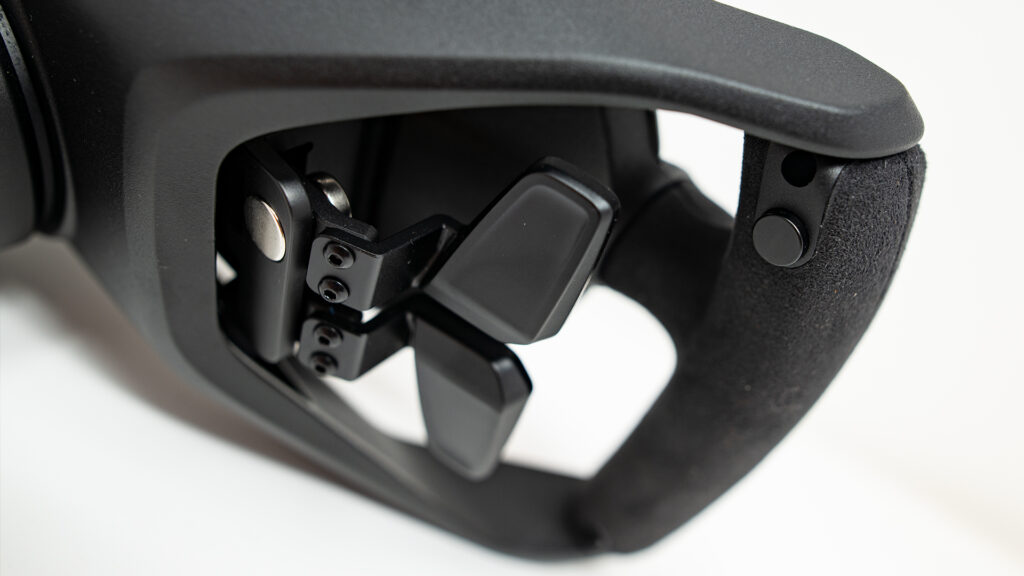
By comparison, Moza’s own GS V2P GT (under £400) and FSR 2 (under £600) offer far more functionality but at a fraction of the cost.
As an object, the Mission R steering wheel looks and feels like a premium product, and it works well, despite some limitations. However, for the same money, you could purchase a high-quality steering wheel with zero compromises from other companies and still have change left over.
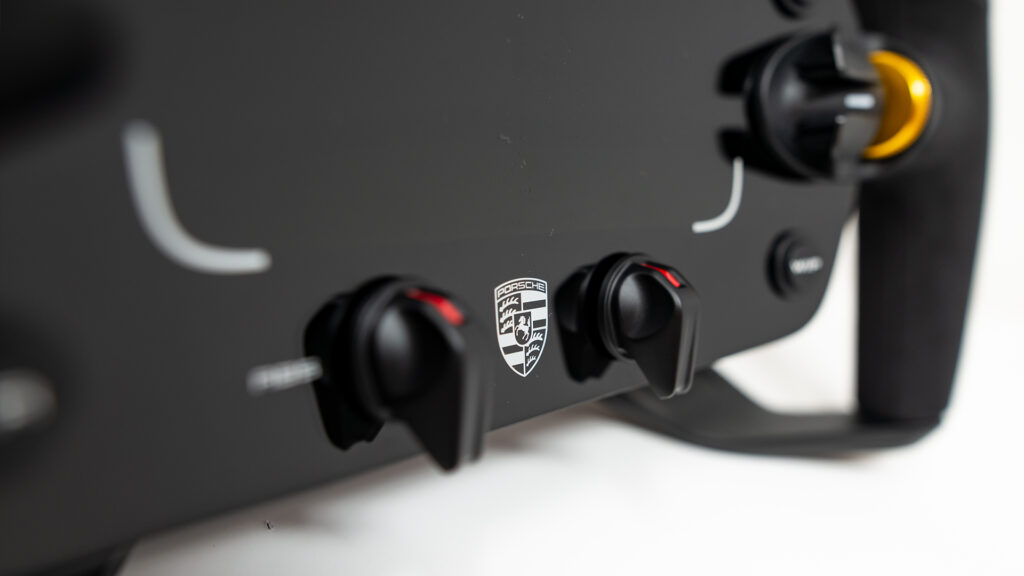
At nearly £1,300, this is one for Porsche completionists only.
If you wish to purchase Moza products, you can help support Traxion by using our affiliate link here.
Traxion has affiliate partnerships where we may earn commissions for products or services purchased via affiliate links. These do not influence editorial content.


Chat with the Community
Sign Up To CommentIt's completely Free