
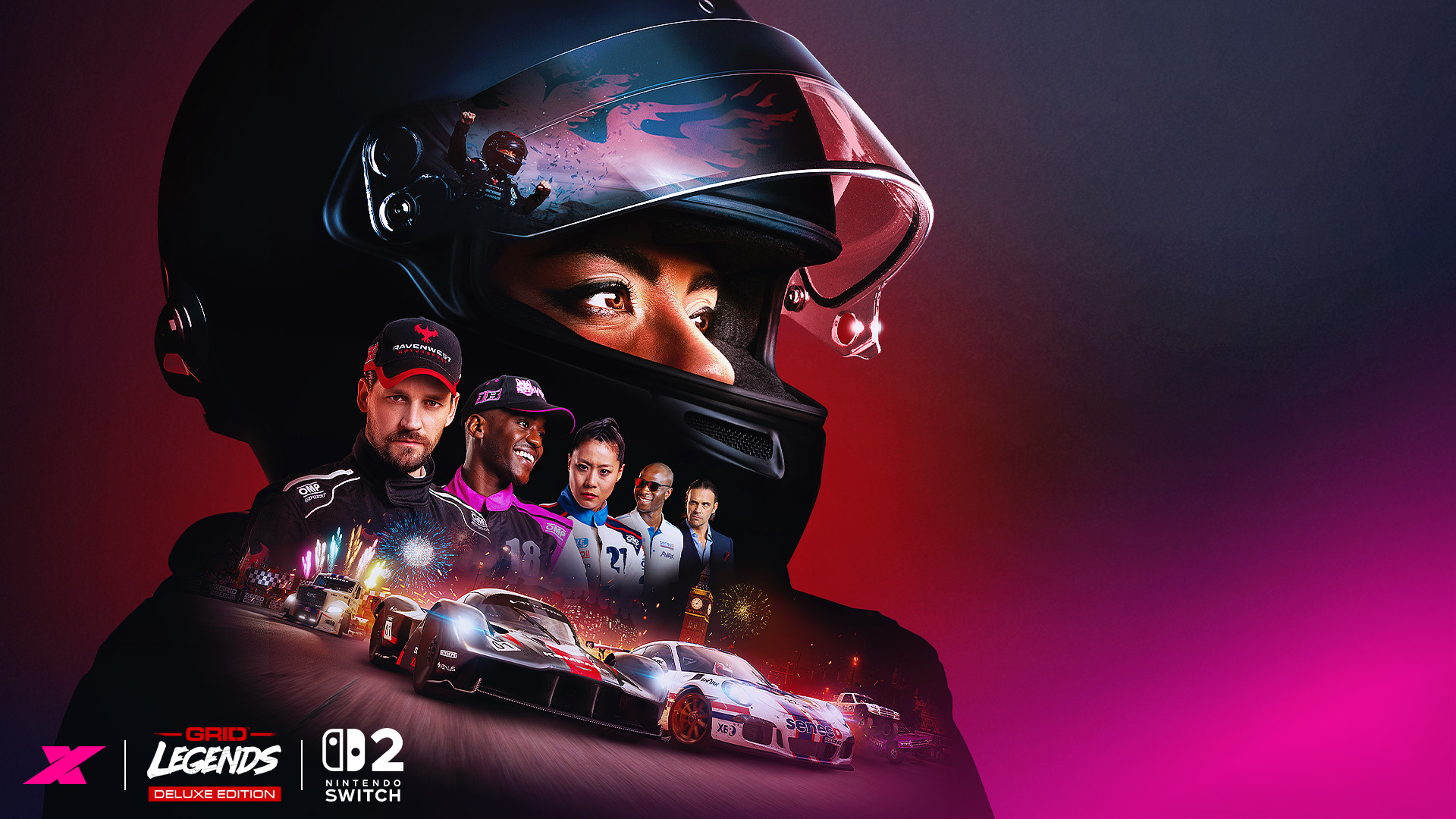
There is no shortage of racing games on the original Nintendo Switch. But if you prefer serious racing with real-world cars to family-friendly games like Mario Kart, your options are limited to GRID Autosport and the Gear.Club Unlimited series.
The same is true for its successor. Several racing games, including Mario Kart World and the futuristic Fast Fusion, made up the Switch 2’s launch lineup, but there were no options for car enthusiasts.
Fast-forward to now, and GRID Legends has been ported to Switch 2, with Gear.Club Unlimited 3 also heading to Nintendo’s console as a timed exclusive later this month.
Arriving nearly four years after its initial PC and console release, the Switch 2 port is developed by Feral Interactive rather than Codemasters. The British studio is well-acquainted with the series, having ported GRID Autosport to the original Switch. Unlike its predecessor, however, GRID Legends is not playable on the Switch 2’s predecessor.
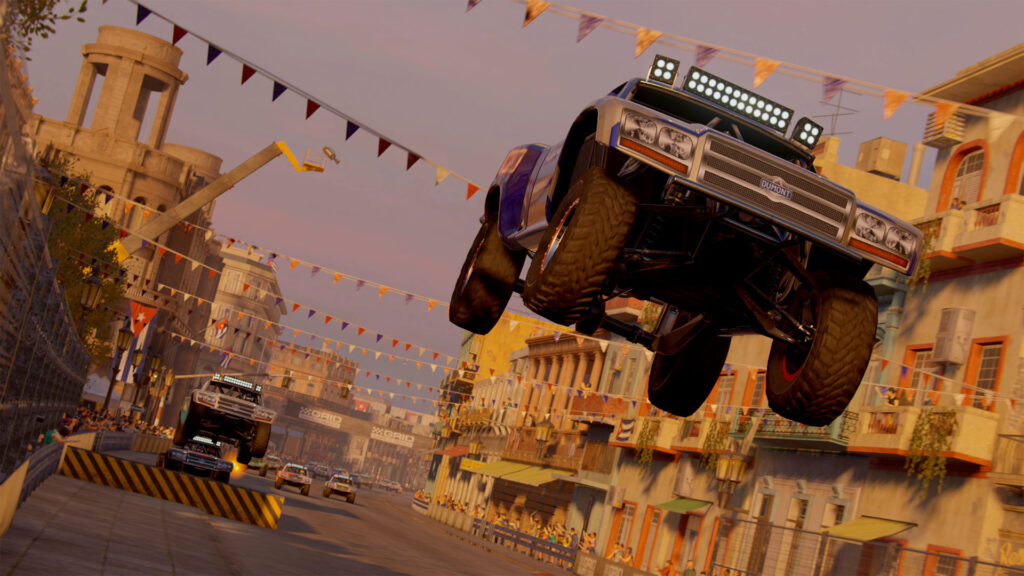
Feral also helmed the impressive mobile version of GRID Legends, which serves as the foundation for the Switch 2 port. Like the mobile game, the Switch 2 Deluxe Edition includes all post-launch DLC from the PC and console releases. It also means that the mobile’s unique, streamlined menus have carried over for easier navigation on the go.
Graphics or performance mode?
GRID Legends arrives on Switch 2 with a suite of graphics options tailored for the system, whether you want to prioritise visual quality or higher frame rates.
While docked to a TV, Graphics mode prioritises visual fidelity, locking the frame rate to 30 frames per second. Performance mode, on the other hand, raises the frame rate to 60fps but removes resource-intensive effects such as surface reflections during rainstorms.
Additional effects, such as sparks, can also be toggled on or off in both modes.
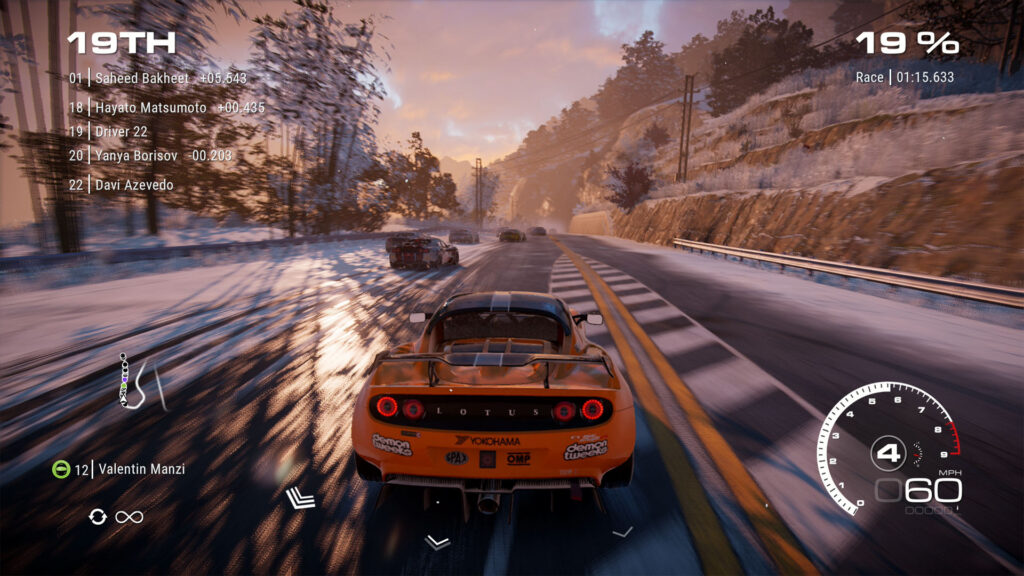
While GRID Legends sacrifices some of its visual splendour and runs at a lower resolution in Performance mode, the differences are negligible when you’re hurtling around circuits at high speed.
Naturally, Codemasters’ arcade racer looks its best in Graphics mode, but it’s not worth sacrificing the higher frame rate. Driving feels significantly better and more responsive in Performance mode, with rock-solid performance.
When playing in handheld, Balanced mode offers smoother performance than Graphics mode with fewer visual compromises than Performance mode. It doesn’t quite hit 60fps, but it feels close enough.
On balance, this is the optimal way to play on the go, but this option isn’t available in docked mode, oddly. There is also a Battery Saver mode that, as the name suggests, preserves the battery life when playing on the go by reducing the visual fidelity and performance.
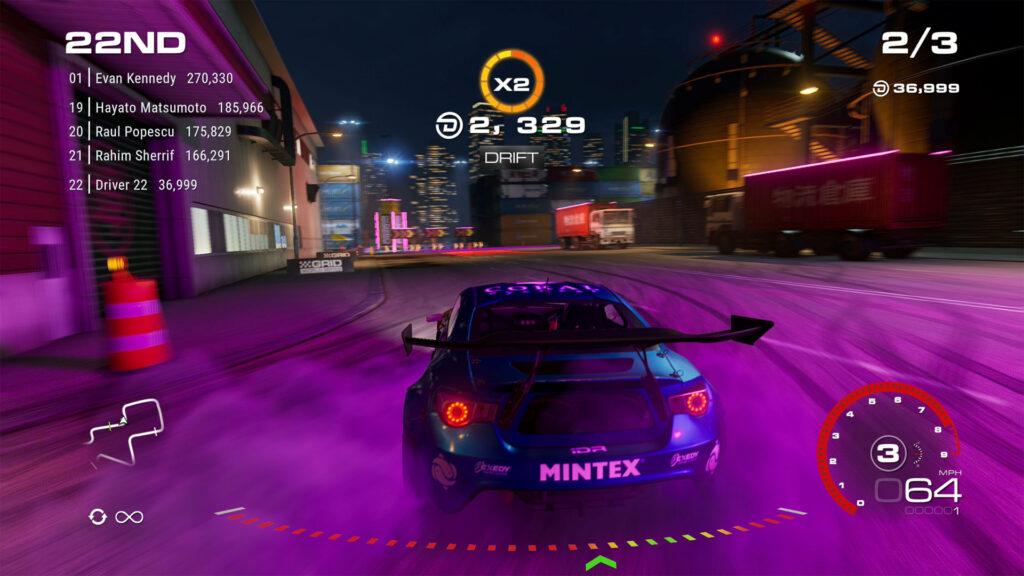
Regardless of the graphics mode, the racing game looks great on Nintendo’s second hybrid console and has aged remarkably well. With no slowdown, even with packed grids of 22 cars fighting for position, and clean visuals, it’s easily one of the best technical showcases of Nintendo’s new console yet.
Return to the grid
If you missed GRID Legends four years ago and enjoy arcade-style racers, you’re in for a treat. Originally developed by racing veterans Codemasters, the latest entry in the franchise is an arcade-style circuit racer with accessible vehicle handling, a mix of real-world and fictional tracks and a wealth of racing disciplines.
On the track, the bumper-to-bumper races are constantly exciting, thanks to randomised accidents (sometimes you’ll see rivals lose control or lose a wheel) and a ‘Nemesis’ system where AI drivers remember when you trade paint with them – whether it was deliberate or not.
When racing on tight street circuits set in locations like London and Barcelona, it’s the closest we’re likely to get to a new Project Gotham Racing sequel.
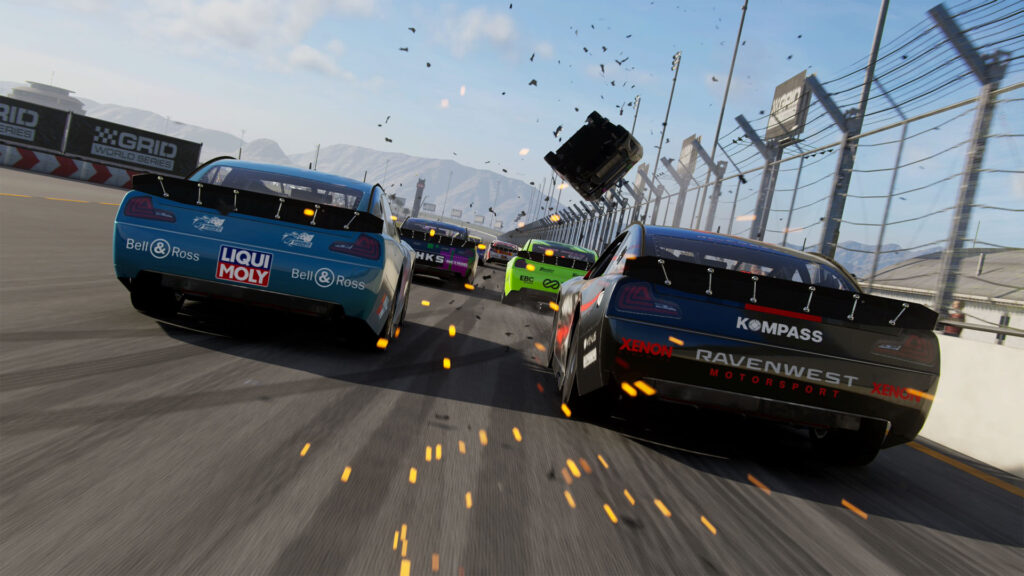
With everything from touring cars and open-wheelers to unwieldy stadium trucks that tip over easily, the variety of disciplines feels like a spiritual successor to the TOCA Race Driver series. You can even race 1990s super tourers like the Renault Laguna and Audi A4, complete with classic BTCC liveries.
While it’s not an ultra-realistic simulator, the tight, grippy vehicle handling hits the sweet spot between arcade and simulation, which translates well to the Switch 2.
The central ‘Driven to Glory’ story mode (something rarely seen in modern racing games) sees you race for the fictional Seneca Racing team in the GRID World Series, taking on the rival team Ravenwest Motorsport and driver Nathan McKane, who returns from the GRID games.
Filmed in a Drive to Survive-style documentary format, races are interjected with live-action cutscenes that, while often hammy, are slickly produced. Watching the rivalry between two teams escalate is enjoyable enough and provides context to each race, but it’s a shame the story mode is so linear – your on-track actions have no effect on the story beats.
Also included are four bonus chapters originally released as DLC expansions, with the highlight being the banger racing-themed Classic Car-Nage.
On top of that is a traditional career mode, where you compete in different disciplines, buy new cars with credits earned from events and complete sponsorship objectives. There’s nothing remarkable here, but a Gran Turismo-esque career mode is surprisingly novel on Switch 2. For the £24.99 / $39.99 / €29.99 asking price, GRID Legends: Deluxe Edition has a lot to offer.
An imperfect port
There are, however, a few caveats. While there are online leaderboards, an online multiplayer mode is absent – at least at launch. Multiplayer was added to GRID Autosport on Switch a few months after its initial release. Hopefully, this will also be the case for GRID Legends, but the developer has yet to confirm its plans.
Another issue is the Switch 2’s bewildering lack of analogue controls. This sometimes makes steering, accelerating and braking feel twitchy, especially in the more demanding cars when assists like traction and stability control are switched off.
Fortunately, the accessible handling mostly mitigates this issue, but it highlights the inherent difficulty of adapting realistic simulators requiring precise controls to Nintendo’s console.
There are a few workarounds. The right analogue stick on the Joy-Con or Switch Pro controller can be repurposed for analogue acceleration and braking, but it’s not an ideal solution and feels cumbersome.
Alternatively, the Switch 2’s GameCube controller features analogue triggers. Again, this isn’t ideal as the optional controller will set you back around £60 / $70 – an expensive solution just to enable analogue control in Switch 2. Why Nintendo decided not to add this feature once again is baffling.
When GRID Legends launched in 2022, it was overshadowed by Gran Turismo 7 on PlayStation 5, releasing merely one week before Polyphony’s racer. Nearly four years later, the Switch 2’s new Deluxe Edition gives the underappreciated arcade racer a new lease of life.
For those looking for a more grounded, semi-realistic racing experience on Nintendo’s latest console than Mario Kart with licensed cars and authentic motorsport, GRID Legends is in a league of its own and a welcome addition to the Switch 2’s rapidly growing racing game library. Feral has delivered yet another outstanding port of an already excellent arcade racer.


Chat with the Community
Sign Up To CommentIt's completely Free