People are often accused of not understanding where their food comes from. The source of the supply chain is too far removed from the consumer. When you buy vegetables, you go to the supermarket and don’t think much about how they were grown, processed, and packaged to sit on the shelf, ready for you.
Much the same can be said for games. Studios outsource key components of development: art, environment, animation, sound, etc, but the supply chain is longer than you might think.
Art Studios in Europe are not always the creators; instead, they outsource work to more cost-effective alternatives. In Vietnam, for example.
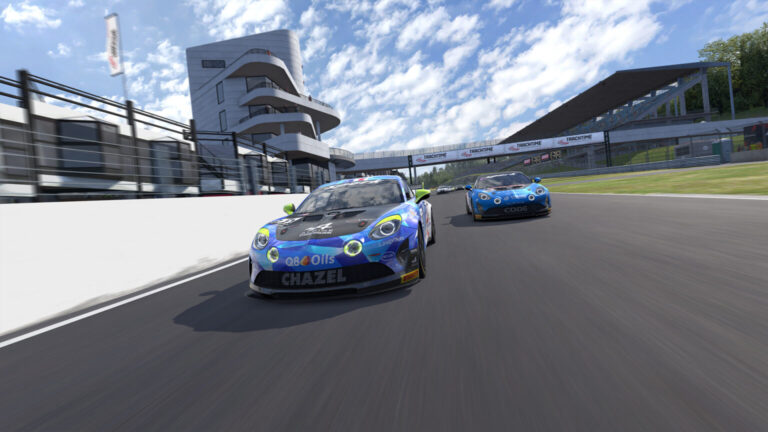
Racing games require accurate 3D assets for cars, tracks, track-side furniture and environments in order to credibly use the term “simulation”. These assets are rarely created in the UK, Italy, France or wherever else you might expect the larger racing game studios to create the cars and tracks you interact with.
Here at Traxion, we always claim to go “straight to the source” to bring you the best quality racing game news and insights.
Well, I’m in Vietnam.
Glenda Studio
I’m visiting Glenda Studio, seeing first-hand how much work goes into the faithful recreation of an LMP2 car, a trackside cafe or a pitlane.
On the outskirts of Ho Chi Minh City, inside an oasis of calm (relative to the frenzied chaos outside) sits a technology and business park that houses the little-known Glenda Studio.
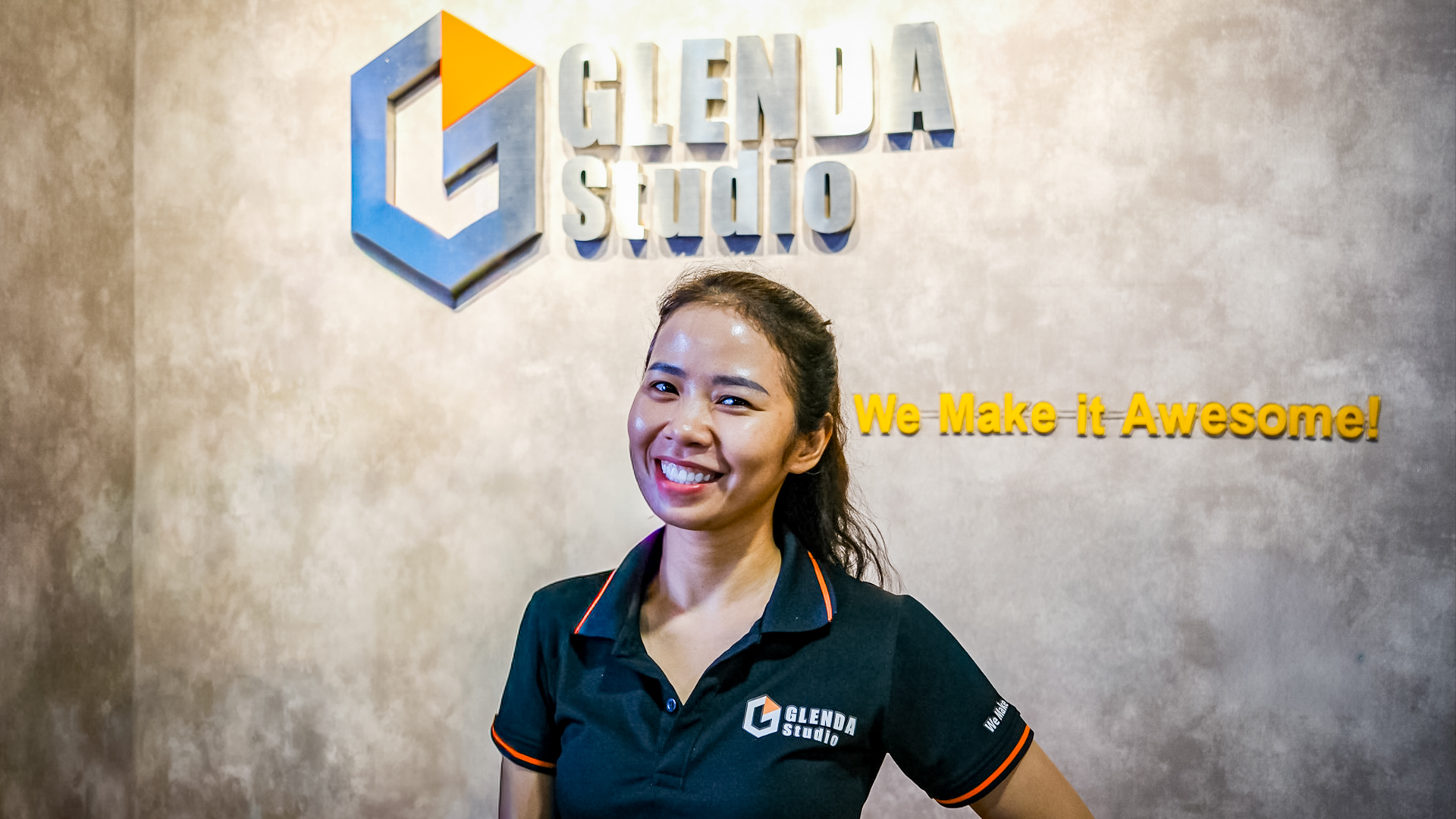
I met with studio boss Suong Phan to see how detailed car modelling is done and how she manages a team of 70+ young artists.
Walking into the first studio room, I was hit by the intensity of the work. Each artist had their headphones on, listening to whatever flavour of music got them into their flow state, creating a silence in the room which laid bare the rapid-fire clicking and typing on their custom anime and Pokémon keyboards.
The speed and detail of the work was ferocious. And Suong manages it all.
Vehicle modelling team at work in Glenda Studio. The screens aren’t off; I’ve just darkened them!
I stood watching one artist making minute alterations to a rear wing of a race car on one screen while zooming into real-world photography of that same car on a second screen.
While much of the shape comes from accurate scans, textures and detail are all done by hand.
“Usually a race car will take us 75 working days to create”, Peter told me as we stood watching this mesmerising work. “Whilst an 18 wheeler or some farm equipment could take upwards of 3 months”.
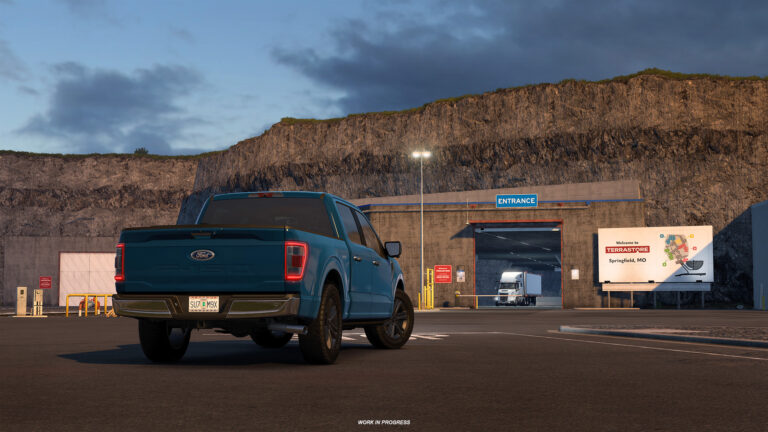
Now of course, a lot of the assets being created in the room were for some seriously exciting unannounced games that I can’t disclose. But it’s no secret that Glenda does and has created 3D assets for Milestone, Straight4 Studios and more. Seeing assets being created live gave me a new appreciation for the craft.
I asked Peter how they stay so focused whilst designing.
“Well, this isn’t a sweatshop, as people might like you to think. We have invested heavily in the office; it’s light, modern, well air-conditioned and has a great break room with karaoke, sofas and a place to host our weekly pizza parties.”
“Every day, the team stop for an hour after lunch to nap, relax and listen to music. We’re surrounded by cafes and restaurants in the technology park. It’s a great place to work”
Shoreditch-adjacent
I was struck by the interior design of the office. The natural wood, integrated up-and-down lighting, the models of cars and games and the lay-flat space-age gaming chairs would give any development studio in San Francisco or Shoreditch a run for its money.
There’s no getting around the fact that European gaming studios use Vietnamese outsourcing agencies because of the much lower cost. A Vietnamese 3D artist’s day rate is a fraction of a European’s equivalent.
That being said, the inflow of European investment by game companies to this part of Southeast Asia has spawned an ecosystem of education facilities, apprenticeship opportunities and technical career pathways that otherwise may not have existed.
Getting into the studio was a story in itself. Each individual cluster of artists was concealed behind biometrically locked doors requiring a face scan to allow entry. Every screen is monitored by cameras, which clients can access to be assured of their game assets’ security.
Data security seemed just as tight, with separate server rooms, each only accessible by one or two senior managers, hosting isolated and individually allocated server racks to ensure that no game data can leak between teams.
Tight security and cult-like secrecy are no surprise in the video game industry, but it was very cool to see that same level of care and attention out here in Vietnam.
Interview with Suong Phan, Production Director, Glenda Studio
Suong clearly adores her team and her role at the studio. I was fortunate enough to ask her a few questions about what it’s like to manage production at Glenda Studio.
Q: How does it feel to hire local people to work on these big international projects?
A: “It feels really rewarding. We have a lot of talented artists here in Vietnam, and it’s great to see them getting the chance to work on big international projects.
I think what makes me happiest is seeing the team grow and become more confident with every project. And of course, it’s always a proud moment when we see something our team created being used internationally”.
Q: What do you enjoy most about running the studio?
A: “For me, it’s definitely the people.
“I really enjoy seeing the team grow, not just as artists, but also in the way we work together. Every project brings a new challenge, and we’re always learning something from each other.
It’s really satisfying to look back and see how far the team has come and what we’re able to create together now”
Q: What are the biggest challenges when creating 3D art based on race car models?
A: “I would say getting all the details right.
“Race cars are very technical, so accuracy is really important. There are so many small details: the body shape, aero parts, wheels, materials, liveries… and everything needs to feel like the real car.
“Sometimes the references can also be challenging. We might have CAD data, photos, or other references that don’t completely match, so the artists have to do some research and make decisions along the way.
It can be challenging, but I think that’s also what makes these projects really interesting for the team”.
My major takeaways
3D asset creation is intense and requires serious training, experience and simply: time.
90% of the details I saw being worked on were the sorts of details most gamers don’t notice, but they will feel.
AI processes were in use to speed up the process, but my instinct tells me this industry is safe from the evil perils of AI for a little while yet. (I doubt we’ll catch Ferrari allowing a studio to feed their car models into an LLM any time soon! )
Interesting! Did you talk to any of the workers? What do they think? Tech and video games have a brutal history of exploitation. Western outsourcing also… has… history. The cameras pointed at their screens and the pizza parties raises eyebrows.
You make a good point, videogame development asks a lot of their employees in a well run company, in a bad one it can be criminal. However, standards of hard work and quality of life vary significantly from country to country. Asian work ethic is often legendary across many business sectors vs some European standards of 35 hours per week so it can be hard to distinguish what you are seeing unless you also understand broader standards and work conditions in that country.
Different cultures view work differently for sure. But here we have a journalist that flew out to Vietnam to promote the studio. Who paid for that? Did the studio fund that? We only heard from management and one of the first things we hear after the devs working “ferociously” is “ Well, this isn’t a sweatshop”… “we have pizza parties”.






Discussion
Interesting! Did you talk to any of the workers? What do they think? Tech and video games have a brutal history of exploitation. Western outsourcing also… has… history. The cameras pointed at their screens and the pizza parties raises eyebrows.
You make a good point, videogame development asks a lot of their employees in a well run company, in a bad one it can be criminal. However, standards of hard work and quality of life vary significantly from country to country. Asian work ethic is often legendary across many business sectors vs some European standards of 35 hours per week so it can be hard to distinguish what you are seeing unless you also understand broader standards and work conditions in that country.
Different cultures view work differently for sure. But here we have a journalist that flew out to Vietnam to promote the studio. Who paid for that? Did the studio fund that? We only heard from management and one of the first things we hear after the devs working “ferociously” is “ Well, this isn’t a sweatshop”… “we have pizza parties”.
It really smells like exploitation.