Among the points of interest shown within Assetto Corsa EVO’s free roam mode is an intriguing multiplayer mode: Sprint Races.
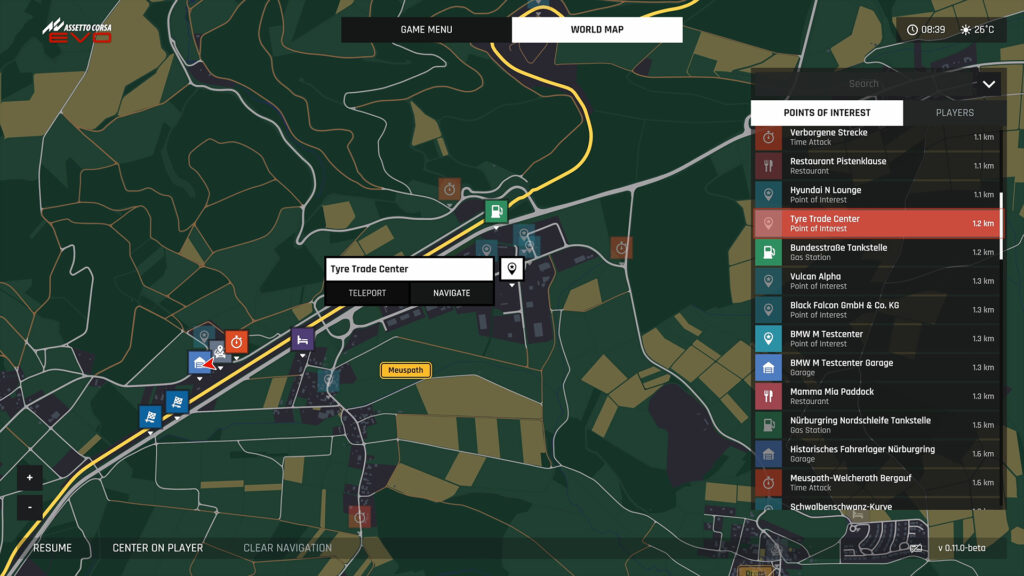
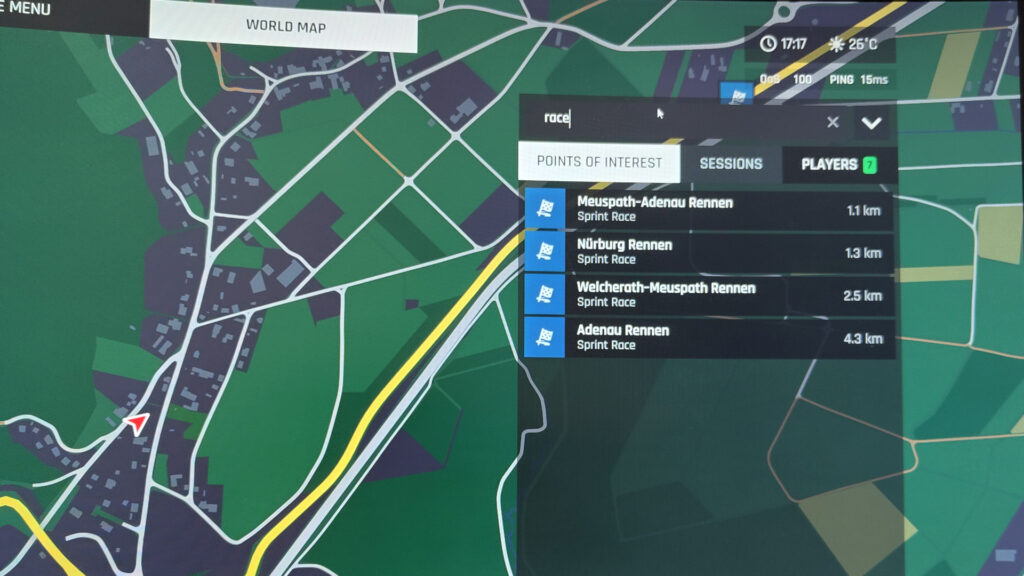
You’d be forgiven for overlooking these, as they weren’t explained during the recent keynote or release date trailer. Blink, and you’ll miss it; there was at least the on-screen map shown very briefly, and if you pause at the right time, you can see a chequered flag icon. That’s it, however.
Yet, it could be a key feature, one that reduces (a little bit) the “but what is there to do in free roam?” queries. They’ll also be included at launch, during early access, from 9th December 2026.
Assetto Corsa EVO world map
At the recent SimRacing Expo Frankfurt, the Assetto Corsa booth has eight sim rigs running a work-in-progress EVO build on a local area network (LAN). It meant that when visitors tested free roam, they were in the same game world as the people they were sitting next to.
John and I were able to spawn near each other, at the BMW M Testcenter. This facility is home to the Munich brand’s top-secret prototypes (around the rear), before they do laps of the ‘Ring, and a snazzy showroom (up front).
From there, we drove our Lamborghini Temerarios to a race start location on the map. Or rather, one of us did. Here’s how the rest works from there and what to expect next month.
How Sprint Races work
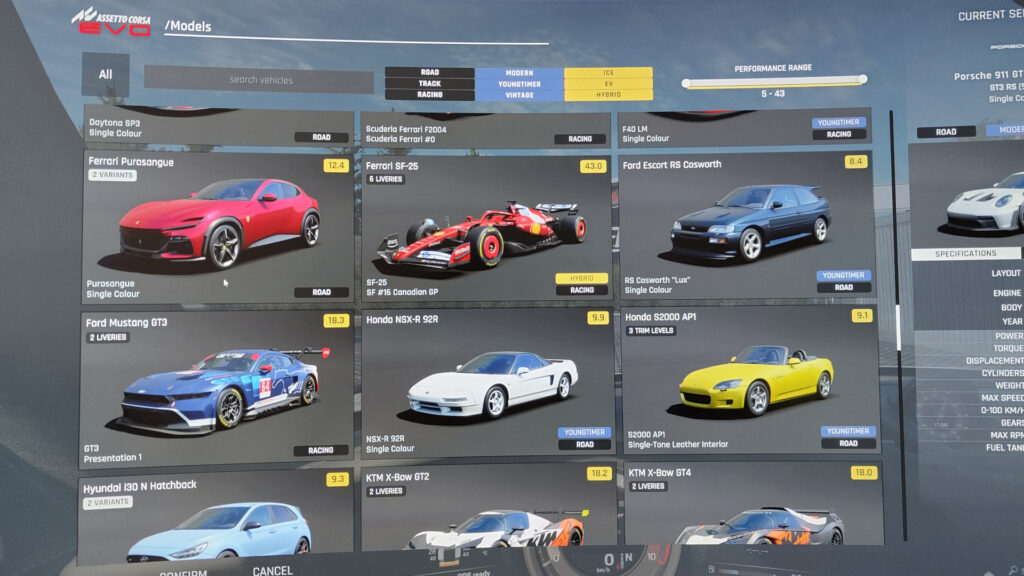
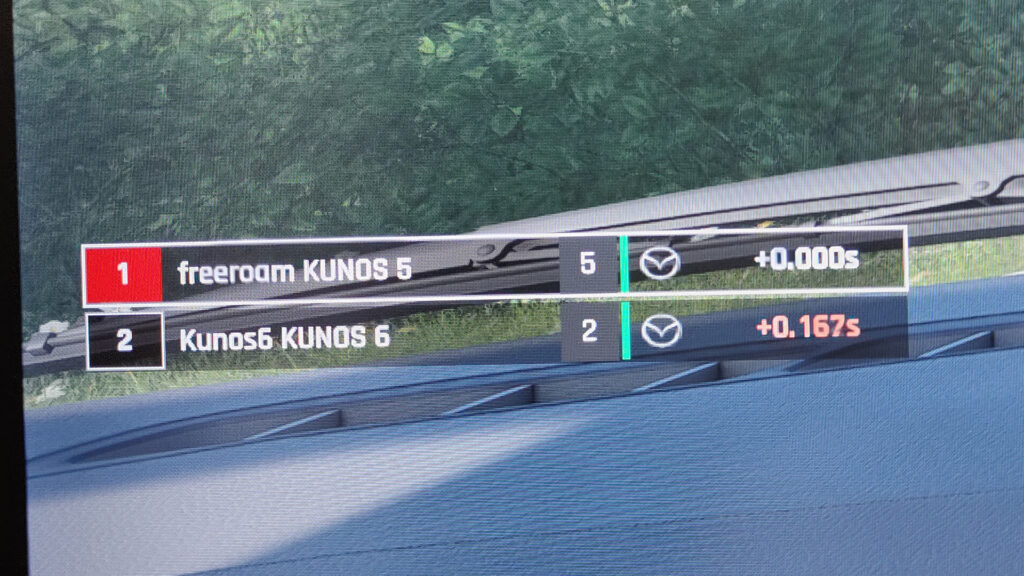
John was at the race location, clicked on the race event, and a car selection screen appeared. We both went with identical Mazda RX-7s in this instance.
He selected to join an existing session or create a new one.
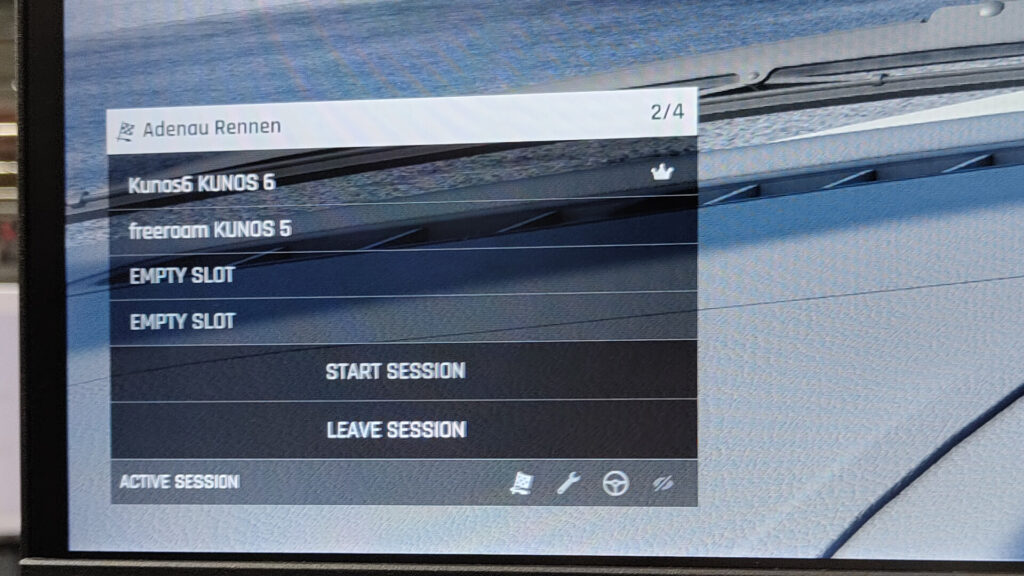
Having selected ‘create’, a list appeared at the bottom left of the screen with his name and the empty slots. Four people maximum can races in the mode presently.
The server will then appear on a list for anyone else who selects the same Sprint Race.
Once we were both ready, John clicked on ‘start session’, and the event loaded in.
Riotous Racing
That’s the admin out of the way; what happens next is a point-to-point route through the Eifel region.
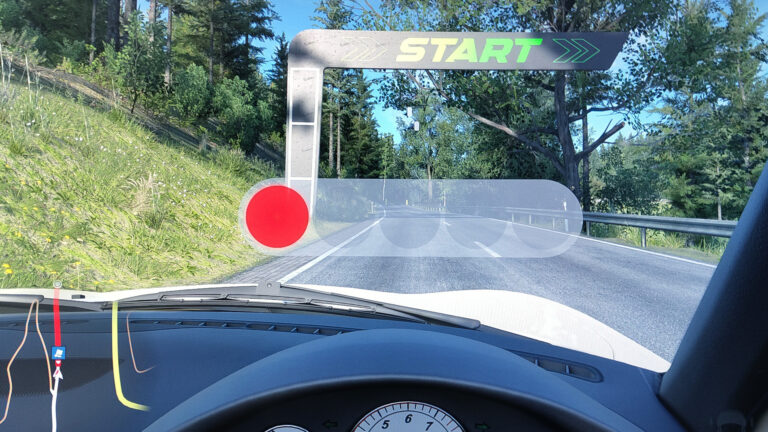
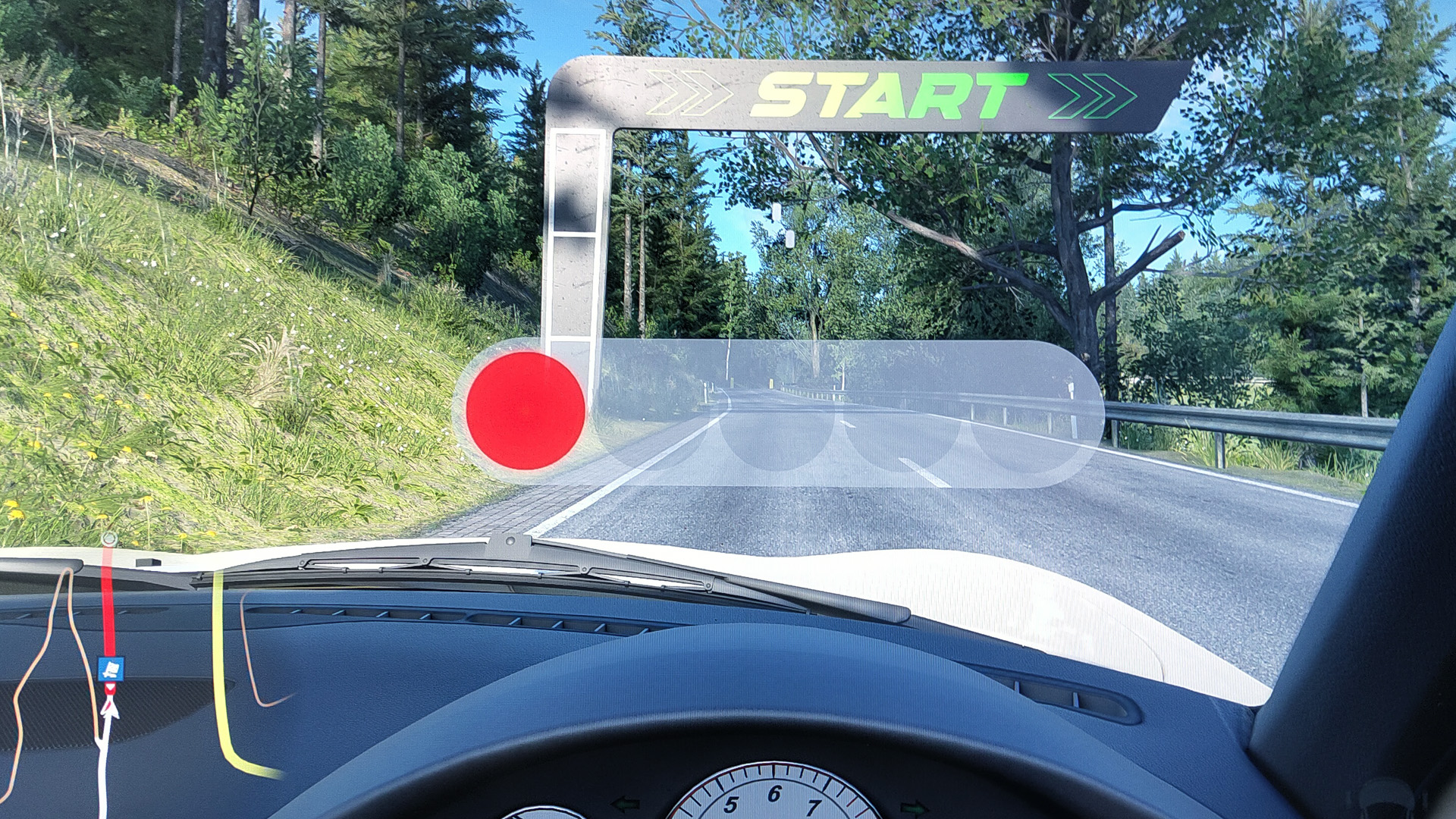
From a standing start, we raced across scenic roads, which have been shut off – no NPC traffic in this particular game mode.
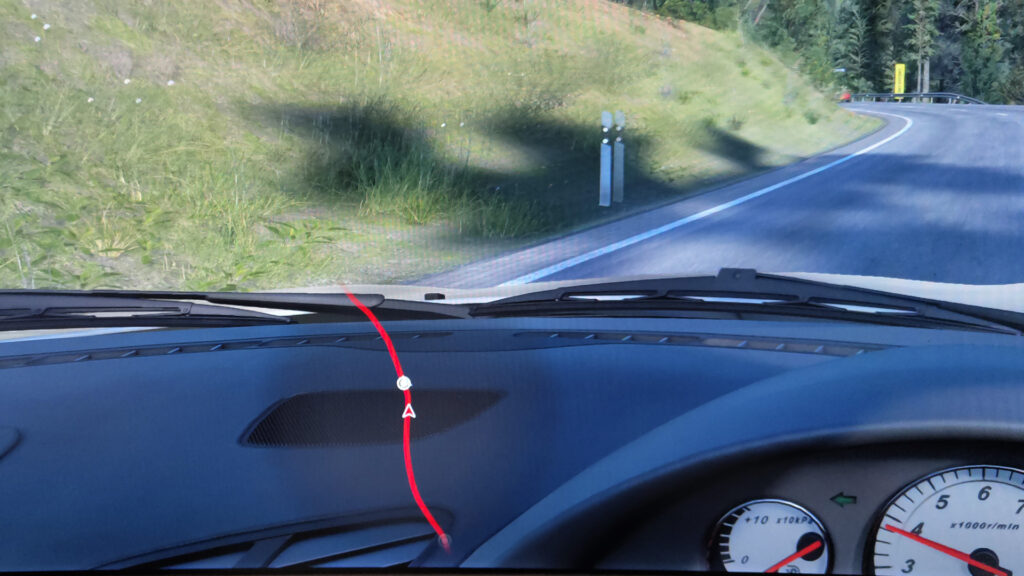
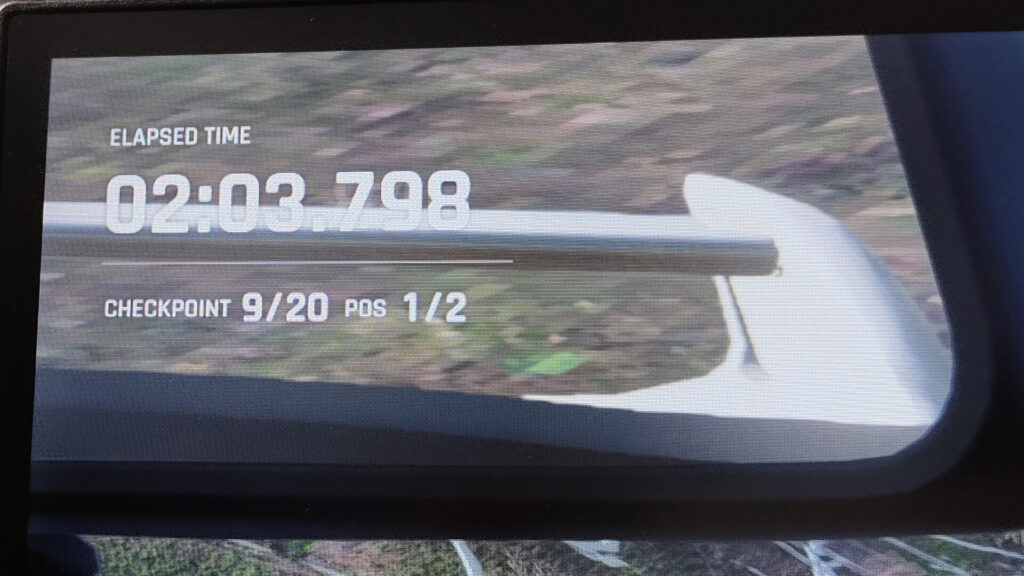
In our testing, the race was surprisingly long. There were 20 checkpoints, with an audible chime (and trackside flag) once each was completed. The HUD shows your current progress, position and crucially, a mini-map.
We found it to be reasonably lengthy, taking just under five minutes to complete. Four Sprint Races could be selected on this particular game build.
This is imperative, as the roads are narrow, bumpy and sinuous. This curated route featured hairpin turns, undulations and also flat-out sections that drive home the sense of speed.
The RX-7s may only have 276bhp, but that feels more than enough on these tight streets, lined with trees and immovable objects (ask us how we know…).
Being a simulation, the setup was with a Fanatec shifter, in H-pattern to match the real-world car, and clutch use forced on. Recover from a sojourn into a field initially perplexing. Discombobulated from a high-speed spin, it resulted in an awkward moment, forgetting to use the third pedal.
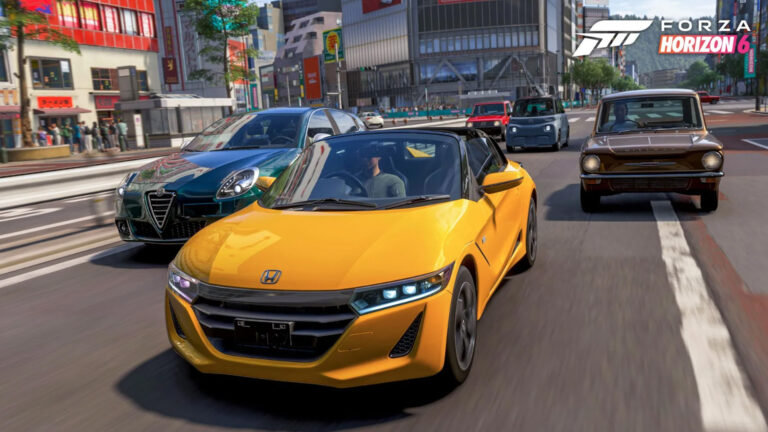
As it should be for something much more serious in focus compared to, say, Forza Horizon 6.
Yet, no less fun. The sight of one of us demolishing some roadside shrubbery, or polevaulting a barrier, was side-splitting, as it’s a shared experience.
Create your own Time Attack routes
Developer Kunos Simulazioni was also keen to stress that this is just the first step.
Further activity types will be added (Time Attack sits alongside Sprint Races for now), details of which are for a later date.
There’s also a plan to add further features for the Time Attack feature specifically.
“The idea for the future is that we want the users to define their own Time Attack courses, with an A-to-B point,” said Kunos Co-founder and Executive Manager, Marco Massarutto to Traxion.
“As you can imagine, they can have infinite combinations and find a way where they can share the same course with others.”

Discussion