NASCAR 26 is iRacing Studios’ second official game attempt, and this time there are enhanced visuals, new tracks, cross-platform multiplayer and a host of smaller, meaningful changes.
From the opening montage of real-world footage to the slick menu design and the dulcet tones of Lynyrd Skynyrd’s Sweet Home Alabama. NASCAR 26 knows its audience.
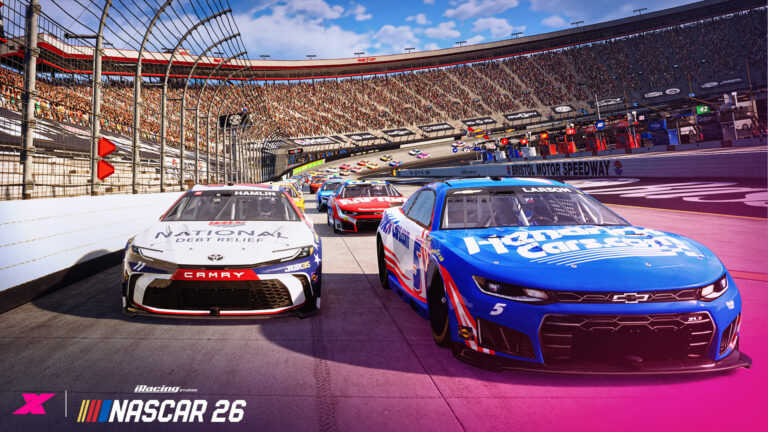
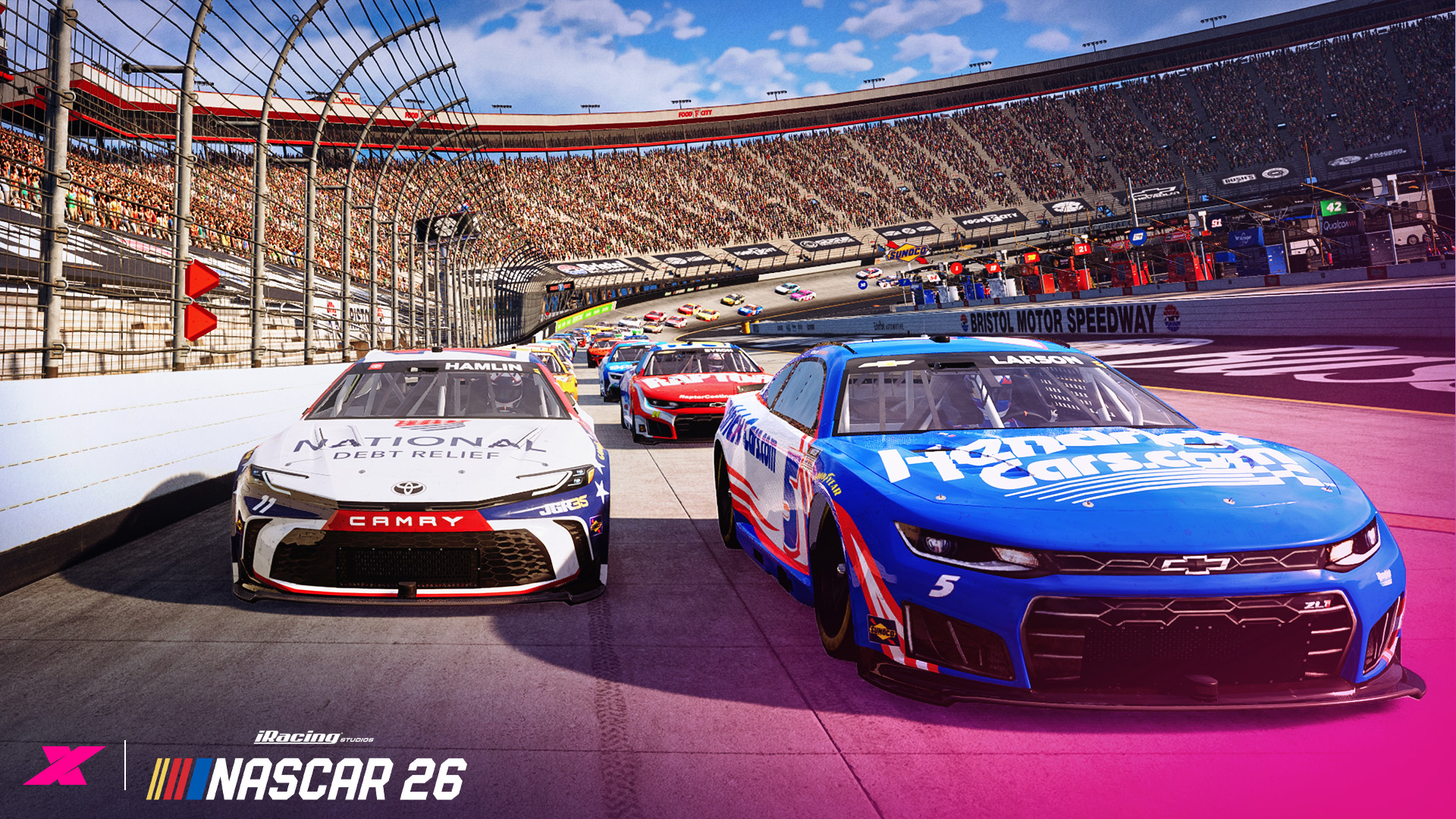
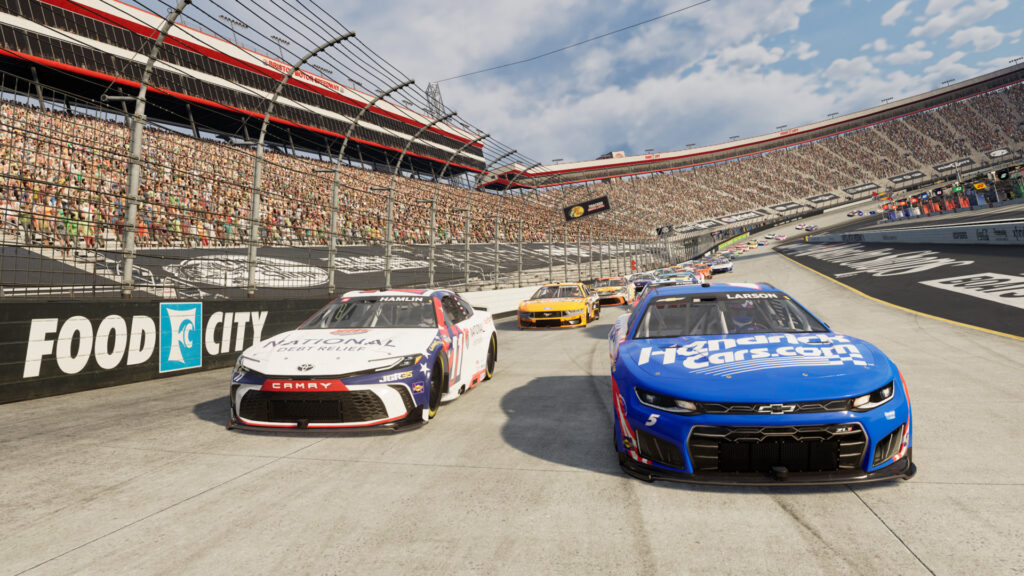
The official game of the American stock car racing ladder is back with a new coat of paint. This season’s tracks, cars, drivers and paint schemes, with laser-scanned venues and enhanced visuals. It’s unquestionably the best NASCAR game in the last decade.
But, is it a great motorsport racing game?
Let’s break down the basics. What you have here is an official yearly release, with iRacing Studios acting as publisher, iRacing Minnesota, née Monster Games, as the developer. It follows on from last year’s instalment, the first from this partnership.
Hitting PC, PlayStation 5 and Xbox Series X|S, players have access to drivers and every track from the leading Cup Series, plus the supporting O’Reilly Auto Parts Series and Craftsman Truck Series. The fourth-tier ARCA Menards Series is also represented, but with some missing circuits.
Using the ubiquitous Unreal Engine for graphics (more about that later…), licensed music for the menus and Kyle Larson as its face, the mix of single-player career mode and cross-platform online multiplayer is complemented by slick presentation.
This isn’t meant to be a hardcore simulation – if you are after that, iRacing will sell you a subscription and NASCAR content – nor an arcade-focused Mario Kart rival. There’s NASCAR Arcade Rush for that. NASCAR 26 sits somewhere in the middle, with authentic elements while not forgetting that it’s meant to be a fun video game, first and foremost.
On the face of it then, this review is quite simple. It’s NASCAR. It looks good. There’s a long career mode. Dale Jr. makes an appearance. It has the iRacing seal of approval. Job done.
Well… to see if that is the case, or not, let’s start with the career mode, which we expect to be the most-played area.
As is the norm, you begin in ARCA and end up in Cup through a rags-to-riches stock car melodrama of sorts.
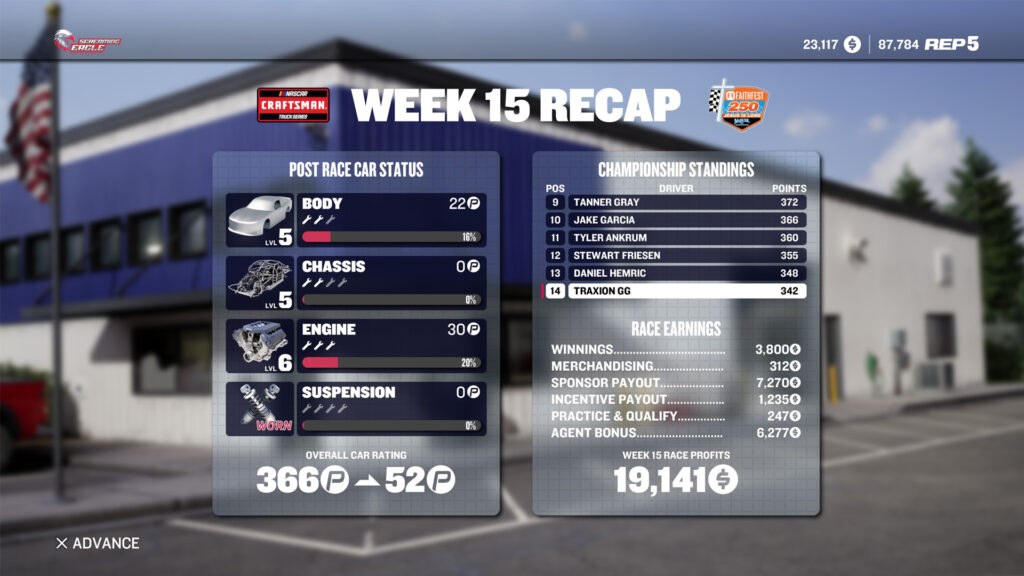
Overseeing your fictional driver and team, and being able to customise your paint scheme in an improved editor system, the format is familiar. After each race, you earn credits to buy parts, work points, which act as crew resources, and reputation, which unlocks subsequent series.
In a typical move, parts wear down after each event across four main areas. Your job is to make sure you earn enough cash to replace these and also purchase upgrades.
There’s a rewarding loop of starting with the slowest car, chipping away at the occasional top 20 result, saving up your cash and trying to improve. With such large fields of closely matched cars, for many real-world drivers, this isn’t all about race wins, but grinding out respectable results.
In this respect, it replicates that hard-fought slog in bite-size form.
Clever rivals
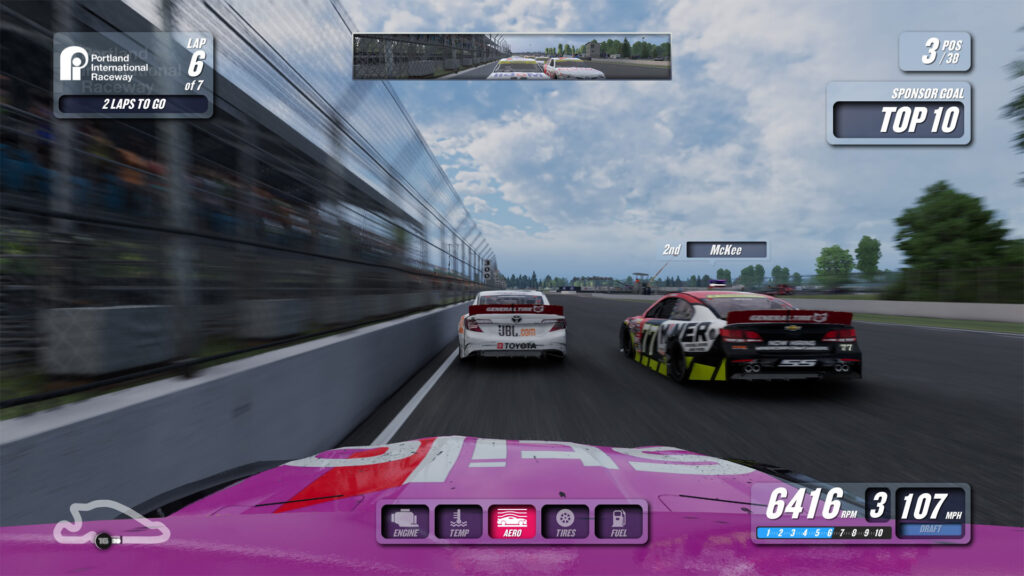
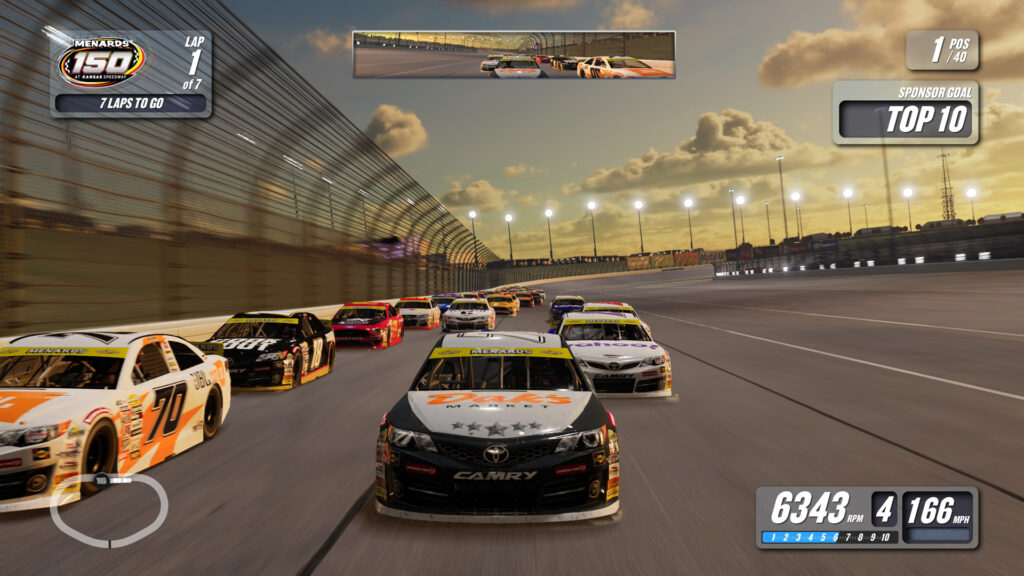
This is thanks, in part, to your computer-controlled on-track rivals. The AI here is notable. Not perfect, but notable. They provide you with confident bump drafts and don’t act like the robotic blobs they actually are. Not afraid of going two or three wide, your opponents utilise multiple grooves that develop across the weekend thanks to the newly added dynamic rubber buildup.
Think you’ve easily made the move on the inside lane? Well, don’t be so confident, as there’s a strong chance the AI is still on your outside working the high line, or ready to cut back onto your left at the turn exit. Your spotter, too, is clear, concise, and while they don’t call everything, can be relied on.
The operating window of difficulty levels is oddly small, but after some experimenting, you will have enjoyably competitive races against the computer. Their racing acumen helps online too, helping fill empty grid slots. Finishing 11th after a white flag pass has never felt so good.
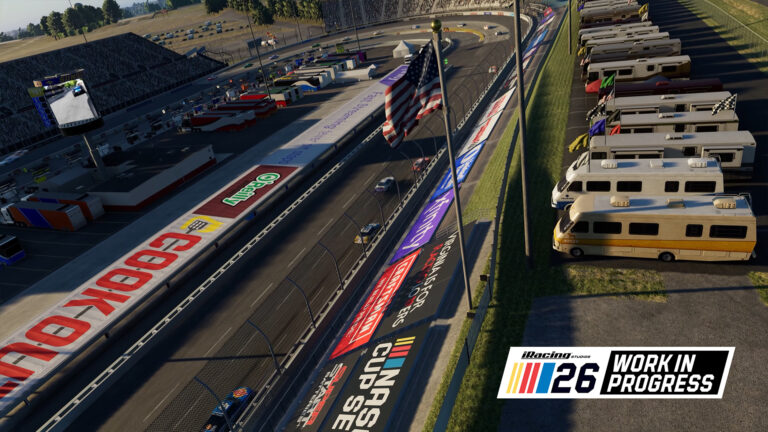
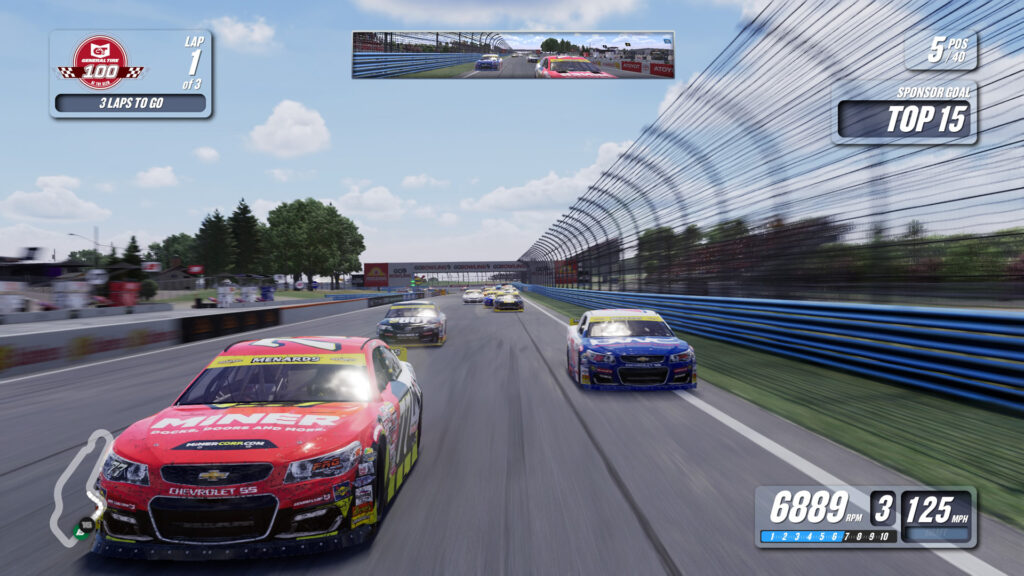
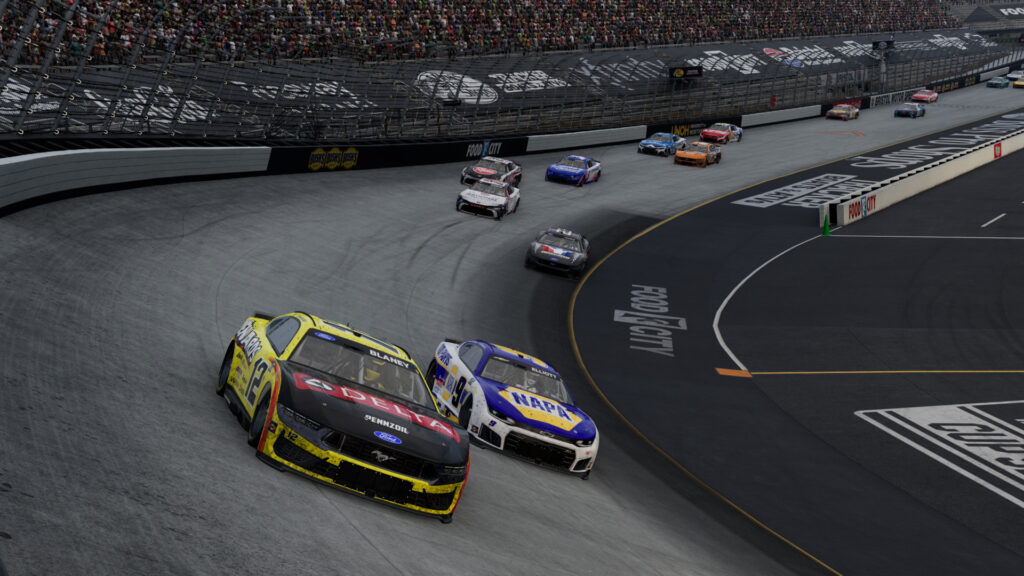
Or looked so shiny. Well, for a NASCAR game, that is. There are noticeable lighting improvements for this season, in particular in low-sun environments. It’s a relatively small change, but one that is a clear step forward over the predecessor.
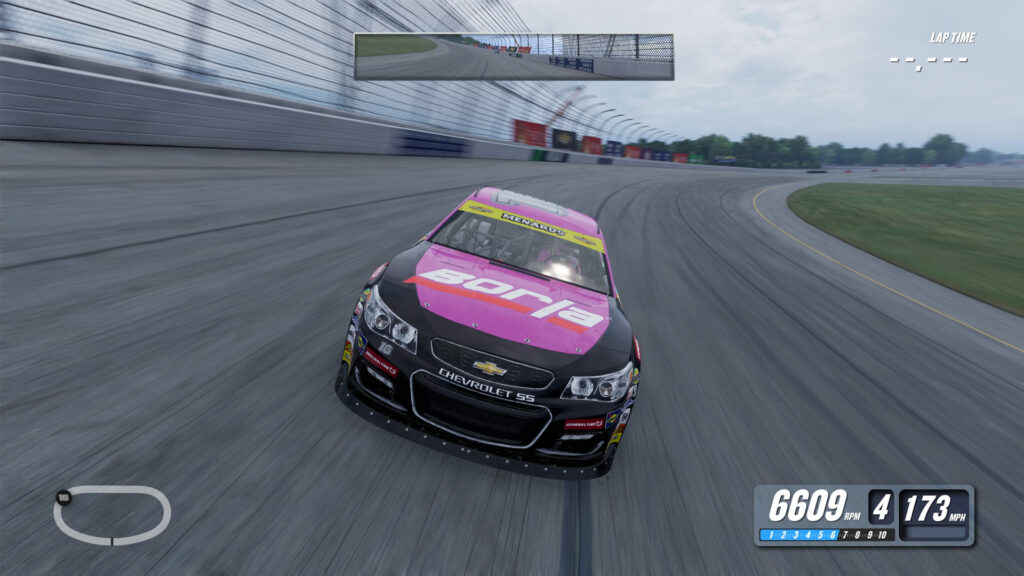
One area that remains similar is the driving experience. There’s talk of a revised tyre model, in particular under braking, making it easier to hear and feel what appears to be a lock-up.
You must ease into the brake input with greater precision than a race fan carrying beers back to their seat, especially when playing with a gamepad. If you’re pushing through the career with shorter races, however, you may realise that mashing the brakes on as hard as you can and then releasing at the right time works well. Simply ignore the screeching sound as the ‘lock-up’ doesn’t really affect your tyre wear in a meaningful way.
For the most part, handling is benign. It’s tight by default, with front-end push the order of the day. You can tune that out with a looser setup, playing more with the rear-end on-throttle, and when you do so, it’s easy to tame when using a controller.
Speaking of that input, on Superspeedways we weren’t able to fully dial out a sensation of skittishness when driving on the banking, sometimes weaving off the ideal line.
With a wheel peripheral, you’re more likely to end up facing the wrong way, or work a lot harder, but at least this adds an extra layer of satisfaction and much-needed smoothness.
No, it’s not iRacing on console. But it’s not meant to be, and using a wheel is, in our opinion, the best way to experience this game.
Especially considering that the tracks remain a strong point. A key area where sharing elements with the main mothership simulation bears fruit, they are accurate and undulating. Iowa Speedway is a particular highlight; you can feel its broken surface and mix of asphalt types, even when with a gamepad and using some of the long, looong, list of assists.
The Naval Base Coronado, meanwhile, undulates satisfyingly, providing a real challenge, even if at first the concrete-lined route looks a little uninspiring. To drive, it’s anything but, thanks to bump accuracy.
So, there’s an in-depth career mode, shinier visuals compared to last year, some new venues, multiplayer that’s device-agnostic, and vehicle dynamics that are approachable if you need them to be, but with enough realism elements to appease wheel owners. So far so good. It’s what many NASCAR gamers are after.
Except…
Great, for NASCAR
Things start to unravel a bit when you look at NASCAR 26 through the lens of a motorsport video game in general.
We’ll go back to the career mode, as that’s where there are several gripes. And to be clear, we enjoy the sense of progression and that it exists in an age where several games and sims either omit this feature or do the bare minimum.
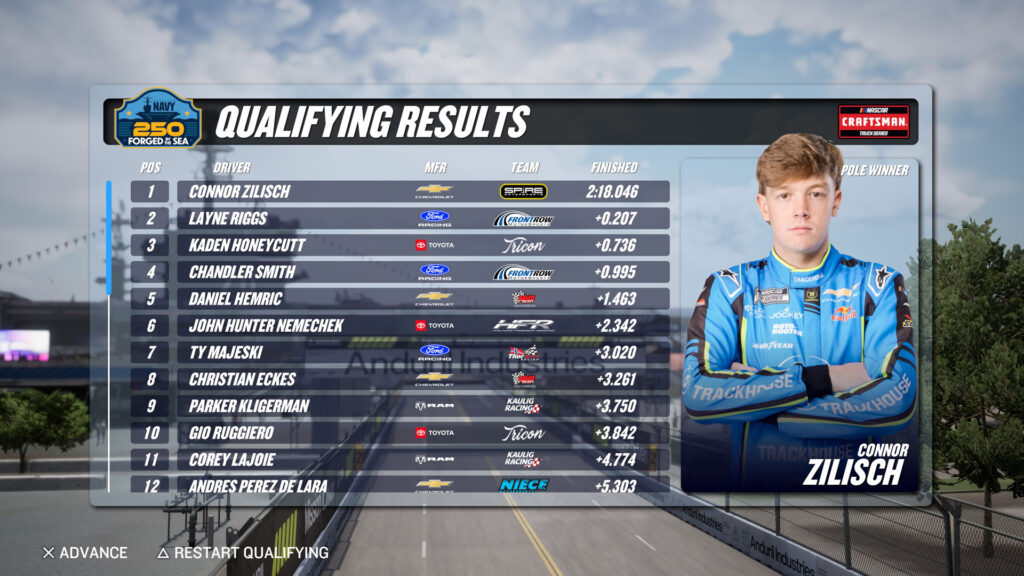
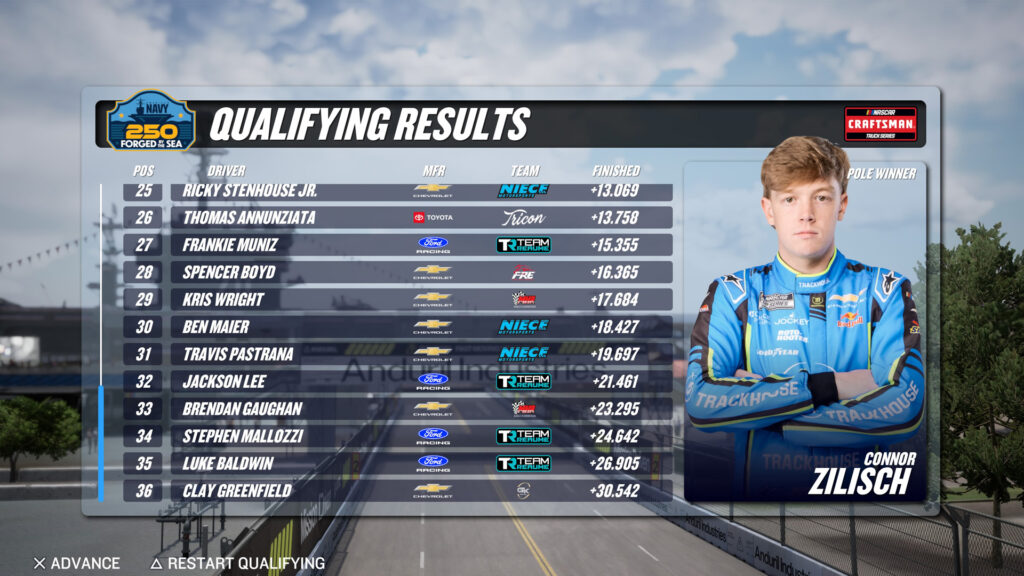
It seems apparent that the lap times set by your AI rivals are… kind of made up. This is particularly prevalent on road courses, and leads to some wildly inaccurate qualifying times. Look at this field spread, for example, where you have sixth place over two seconds per lap back, down to 30 seconds. What a load of nonsense.
On shorter, flatter, courses such as North Wilkesboro Speedway, it looks as if the career competition has 20x times more grip, turning in sharper and on the throttle earlier.
Until you earn some top-level parts, and then you can be winning races at a canter. It’s all fakery, and that’s fine, often video game career modes are that way. We just found that with our settings, the mask would sometimes slip, with further balancing required.
There’s also a lack of nuance to car and team development. If you happen to take one look at the official Formula 1 game’s career modes, you will find a lot more depth. In NASCAR 26, upgraded parts just appear over time, and your only concern is maintenance and cash. You don’t choose a development path, allocate development resources or see your team’s relative performance trend line.
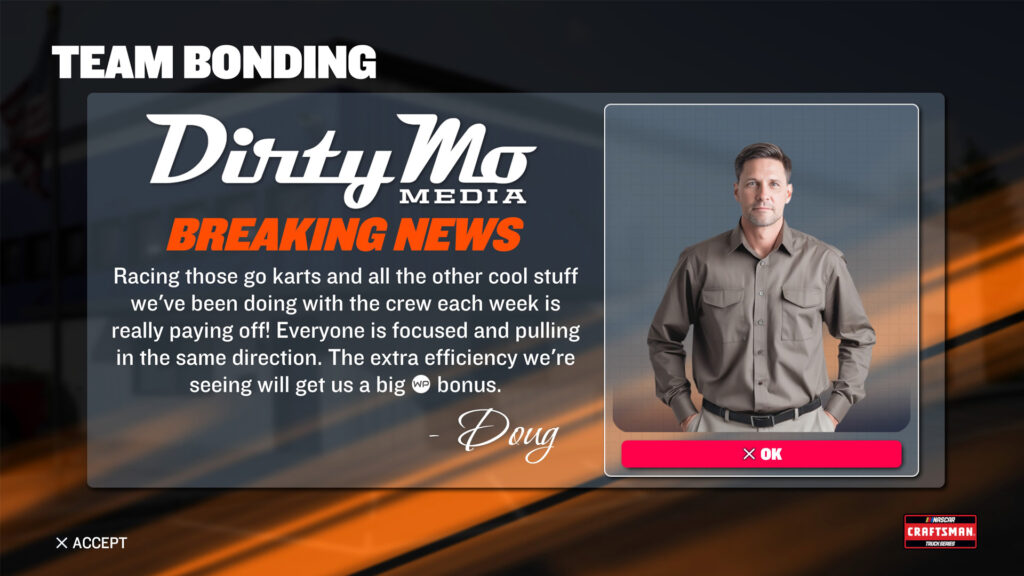
Neither do you have a teammate to battle against for certain privileges; sponsors just occasionally pop up, and there’s a strange PR element that simply boils down to you accepting a reward every so often, as opposed to your media answers feeling in any way meaningful.
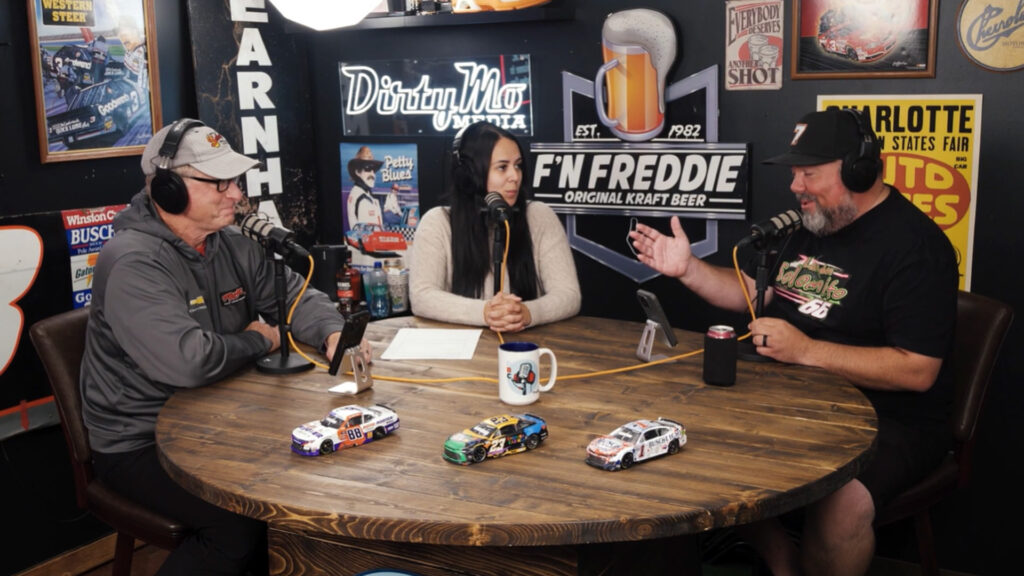
There are mini-podcasts throughout, with real-world presenters, but you soon realise these lack any context, sometimes they repeat and the script is anodyne.
Real-world podcast stars is a cool addition, until you realise the discussion is mediocre.
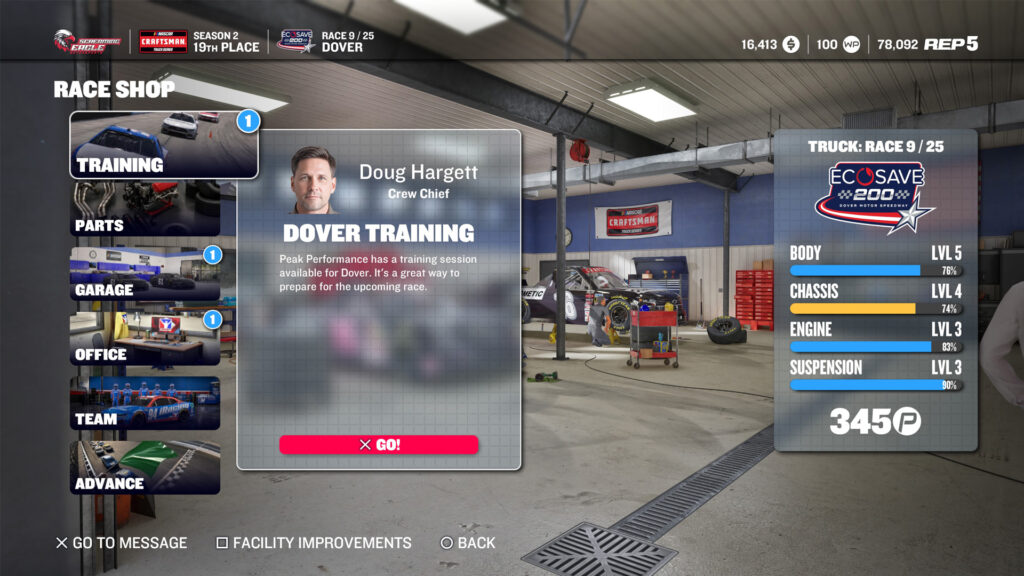
These sit alongside the Peak Performance training challenges, a welcome addition in theory. Yet the audio cues can be counterintuitive (our advice is to ignore them), and it would feel more useful if, say, you received a bump in reputation for completion.
While we’re on this rant, a lack of driver market silly season robs immersion, something the official MotoGP games have realised in recent years before finally implementing one. We understand that there are many factors involved in creating this feature, but whatever it takes, be that the game developers, NASCAR itself, sponsors and teams, it needs to be resolved sooner rather than later.
Simply, there’s a lot to do here. Dig a little deeper, however, and you’re kind of along for the ride as opposed to truly affecting how your team evolves.
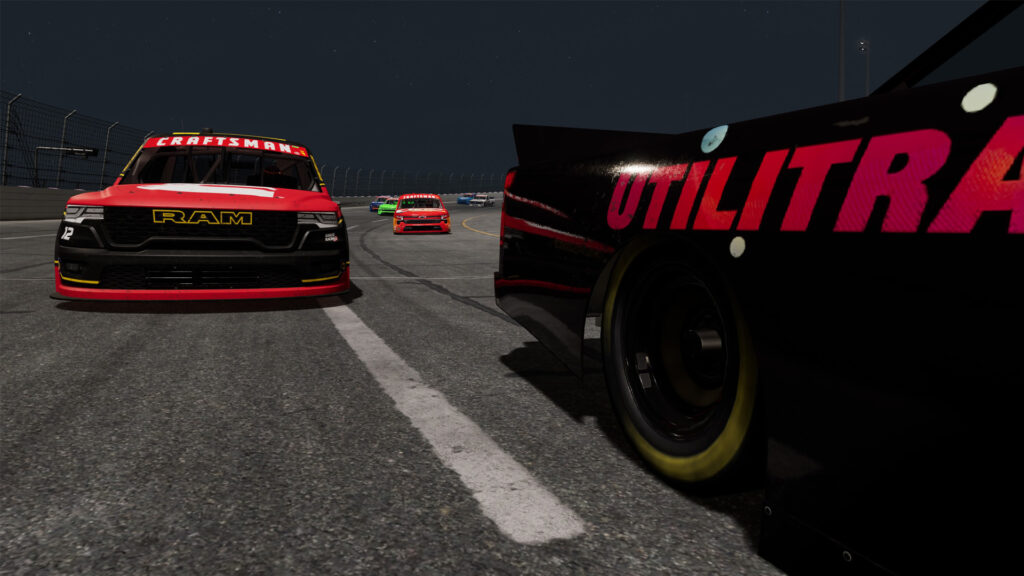
We also need to touch on the visuals. Undoubtedly an improvement, the aforementioned lighting change is welcome. On the flip side, the new smoke effects seem laughably outlandish. Sure, they look suitably billowy during post-race celebrations, but during a race they trigger far too easily. You also know when an AI rival is about to have a moment, as they start smoking before spinning.
And while these have been added, trackside detail around Lime Rock still severely pops in, and at all venues, when you’re solo, you notice shadows appearing just in front of the car. If you look behind, your rivals have a weird Vaseline-like shimmer between the car and road.
There’s a lot of customisation and optimisation that still needs to be done with the graphics engine, something that other Unreal Engine-utilising titles have suffered from previously, but that some have managed to eradicate.
Other small, let’s say, quirks remain too. Replays have a TV-broadcast-style option camera, but switching between aspects sometimes somehow loses that view. Or it changes the weather. Odd.
Strangely, there’s a lack of a photo mode. There’s no local split-screen multiplayer. Why do you need to select ‘Leave Race Weekend’ twice each time? Sometimes, Cross and A are accept; sometimes Triangle and Y. Don’t know why.
Visual damage is improved, but not up to the standards yet, unbefitting of a sport where large wrecks are celebrated. This impacts multiplayer as there isn’t enough of a repercussion for hitting drivers in open lobbies, despite a safety violation system.
We also need to discuss tyre wear, as in longer races, if you pit during a caution and the majority of the field doesn’t, you can go from struggling to be in 20th to lapping the whole field with just nine-lap fresher rubber. It’s out of whack.
It’s as if the AI is programmed to avoid traction loss and can’t handle small slides.
An iterative successor
That all sounds quite damming. In truth, we enjoy this game. NASCAR fans haven’t had it this good in years. In the context of other racing games, however, there are clear and obvious gaps in the career mode alongside a litany of small graphical, AI and tyre wear issues we’d have expected to be eradicated by now.
Simply, we wish that the development team had been given more time before its first release last year, as once that yearly launch treadmill is up and running, it’s hard to make meaningful progress.

Discussion