The Aston Martin Valhalla made a fleeting appearance in No Time to Die, but Bond never gets behind the wheel, disappointingly. At this point, the mid-engine supercar was a prototype concept.
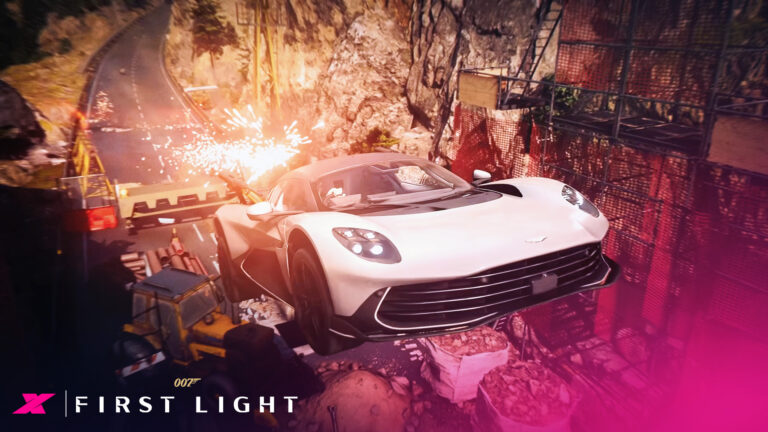
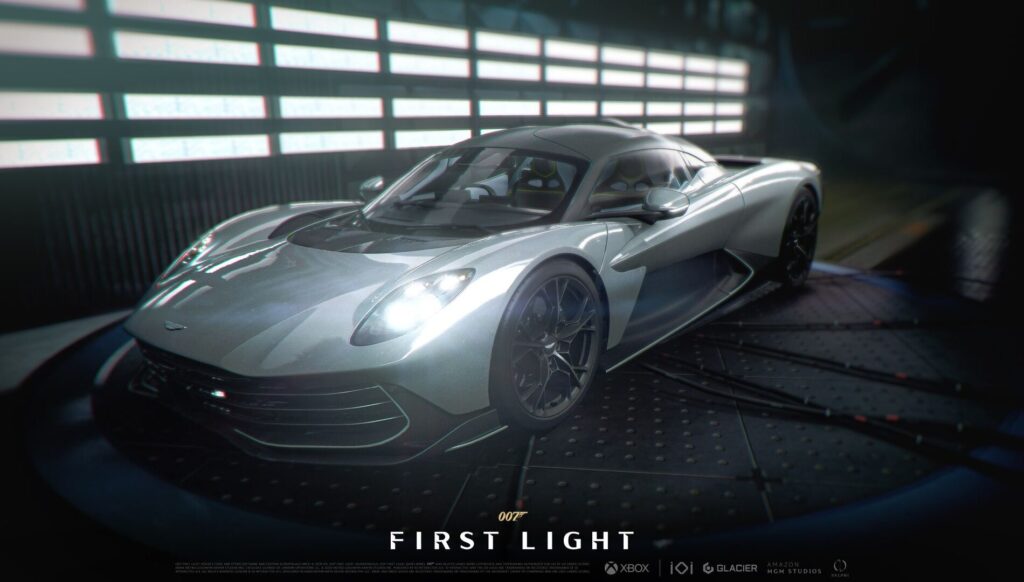
Fast forward five years, and Aston Martin’s hybrid supercar is now in production and one of several drivable licensed cars in 007 First Light, the first licensed Bond game since 2012’s 007 Legends.
Launched in May, it stars a younger Bond in an original origin story as he earns his 007 status. It’s the next best thing to a new film entry in the spy franchise.
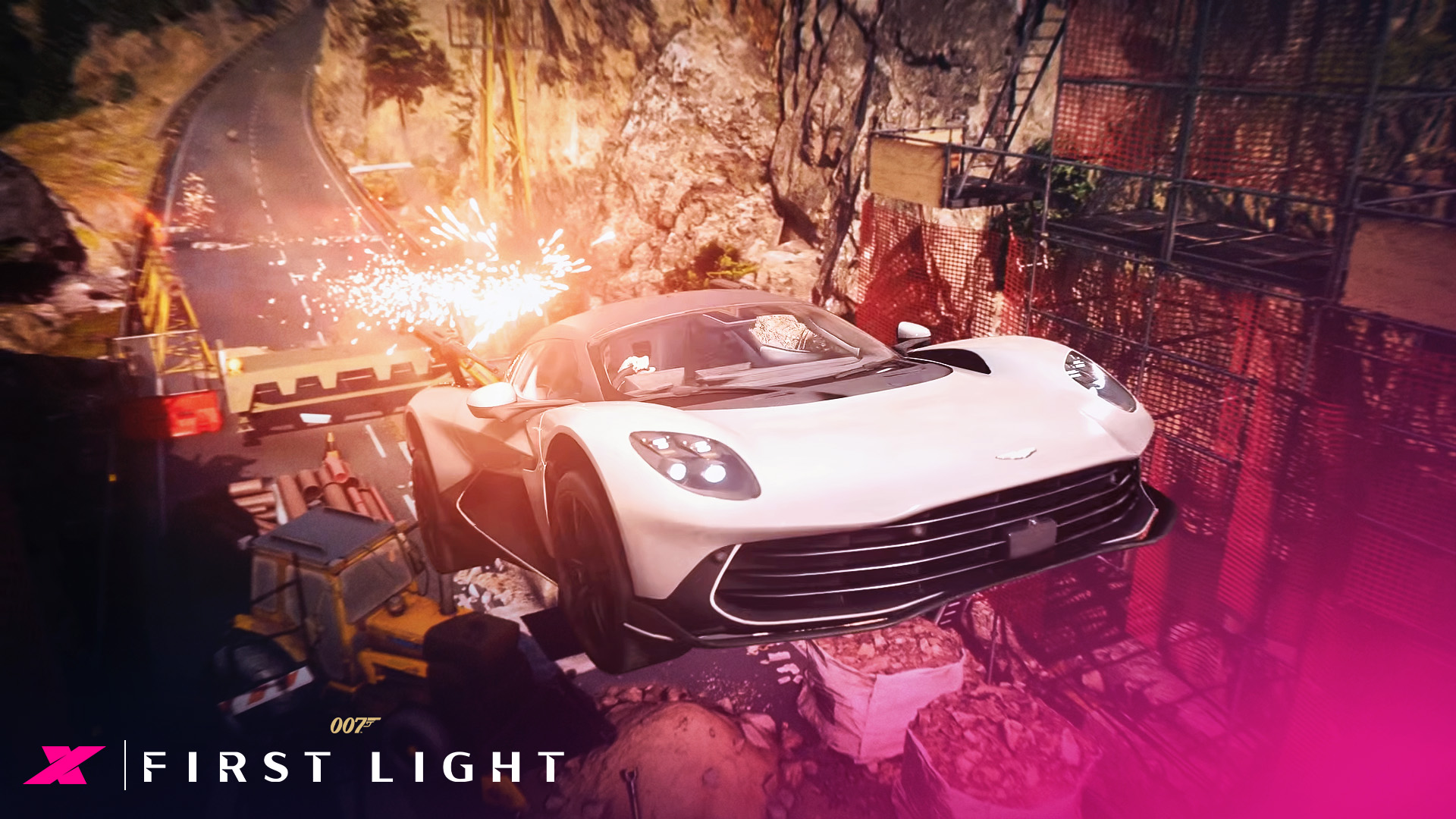
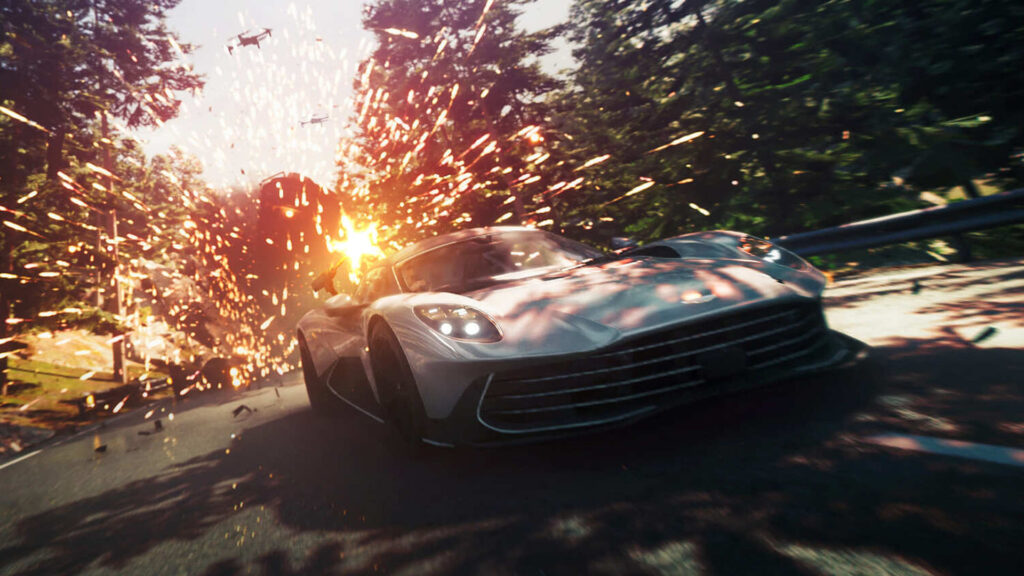
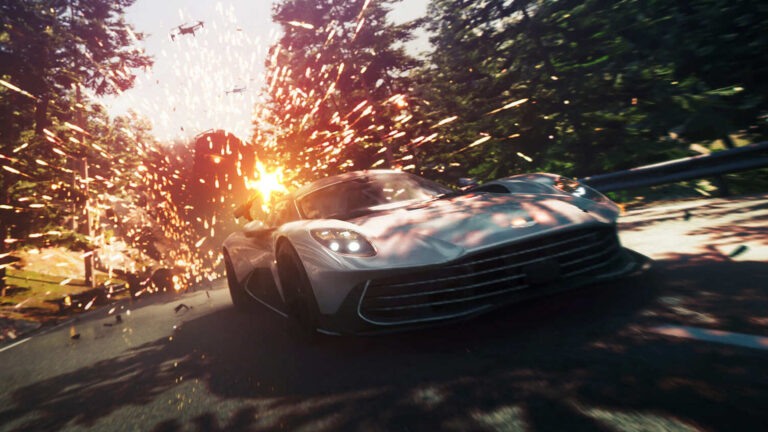
The Valhalla plays a pivotal role towards the end of the game, with Bond using its weaponry to take out hordes of enemies. However, the driving was restricted to a confined area, making the level feel more like a shooting gallery than a driving segment.
“We wanted to leave you wanting more,” Domonic Vega, Game Director on Live content / Missions and Audio Director, told Traxion.
With the launch of the free Extended Operations update, players can finally put the Valhalla through its paces in two action-focused TacSim training missions with a full arsenal of gadgets. These are accompanied by two time trial events with competitive leaderboards, giving players “the chance to open up the Valhalla and have some fun with it.”
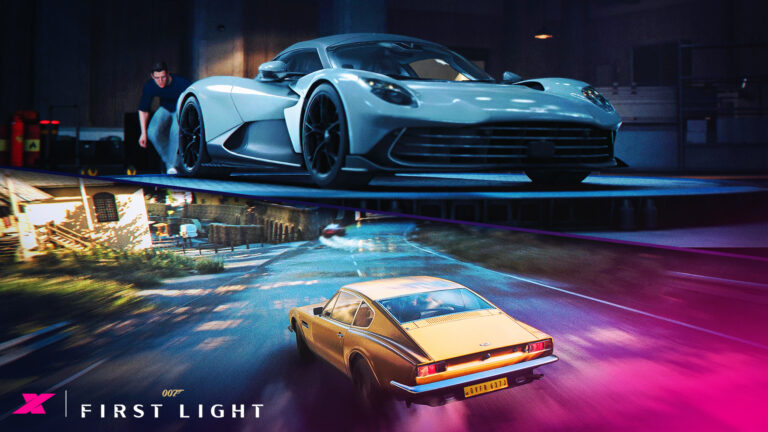
From the outset, developer IO Interactive wanted to feature a classic and contemporary Aston Martin, mirroring the contrast between the 1980s V8 Vantage and Valhalla in No Time to Die.
For Art Director Rasmus Poulsen, working on the Bond franchise and partnering with Aston Martin was a “childhood dream come true.”
“We knew we wanted some legacy and modernity. They [Aston Martin] had this secret project, and that turned out to be the Valhalla.”
007 First Light’s version is based on a highly detailed CAD model provided by the manufacturer, which Poulsen joked had “all the polys in the universe.” Optimising the “ultra-dense model” for the game was a “complicated process.”
“I’m pretty sure the team had some graphics cards overheat,” he recalled.
“It was clear early on that we needed to push weaponry back rather than front”
After modelling the car, the next step was to equip the Valhalla’s gadgets. “We were straddling the forces of credibility and restraint on one side, and the forces of adventure and over-the-top action in the other,” Poulsen explained.
“Bond has to have both, and they have to be balanced. Otherwise it becomes too silly or boring.”
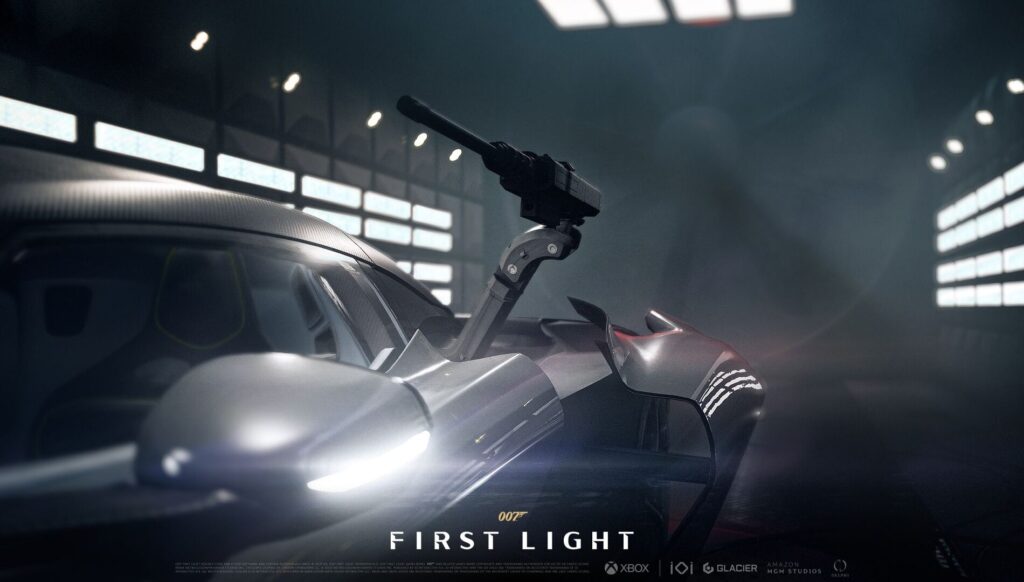
Since the car is primarily viewed from behind in a third-person chase camera when driving, the team prioritised rear-mounted weapons instead of guns popping out of the headlights that aren’t visible.
“It was clear early on that we needed to push weaponry back rather than front,” said Poulsen. “It helps that the car is bigger in the back than the front, unlike a GT car, where it might have made more sense to put the weaponry in the front, as we’ve seen many times before.”
With these restrictions, Poulsen explains that “the next question was ‘how do we make it look good and exciting’?” The solution was to add movable panels revealing a gap where machine guns and missiles can deploy.
“It’s a playful, energetic, engaging transformation that is also mechanically and spatially credible. It feels like the objects can fit inside the vehicle in those spaces. That balance was important to us,” Poulsen continued.
“We had a few iterations where the panels move in different ways, like a beetle’s wings or down from below. We found something that felt not too outlandish, but still engaging to watch.”
Since the design was grounded in reality, getting approval from Aston Martin was “surprisingly easy.”
“We were concerned that they would be like ‘actually, that’s where the turbocharger compression unit is.’ They felt that we straddled that balance between a respect for the brand and a love for the vehicle and Bond, and what that represents in terms of adventure and excitement.”
With only 999 examples produced, the team couldn’t access the Valhalla to record its hybrid, twin-turbo V8. “Getting access to a hypercar like that is near impossible,” said Vega. “Getting a collector to let you redline it up on a track is rare.”
“Because of their aerodynamics and the way that the engine is set up, hypercars are volatile to record. It can be really difficult.
“One of the hardest things in audio is mixing high-octane moments where you’ve got music, vehicles, weapons and dialogue. Bond is talking to Q’s computer assistant while shooting a bunch of guys with a machine gun and shooting off missiles while the theme is playing. So you have to balance the fantasy you are portraying.”
While IO took a more “synthetic” approach in the main campaign, the team “put all the love” into the engine sound in the TacSim missions to elevate the driving experience. “There’s a lot in the music and sound design that is driving the feeling of making it to the finish line, versus trying to simulate a Valhalla.”
Driving sequences were “a big challenge” for IO Interactive
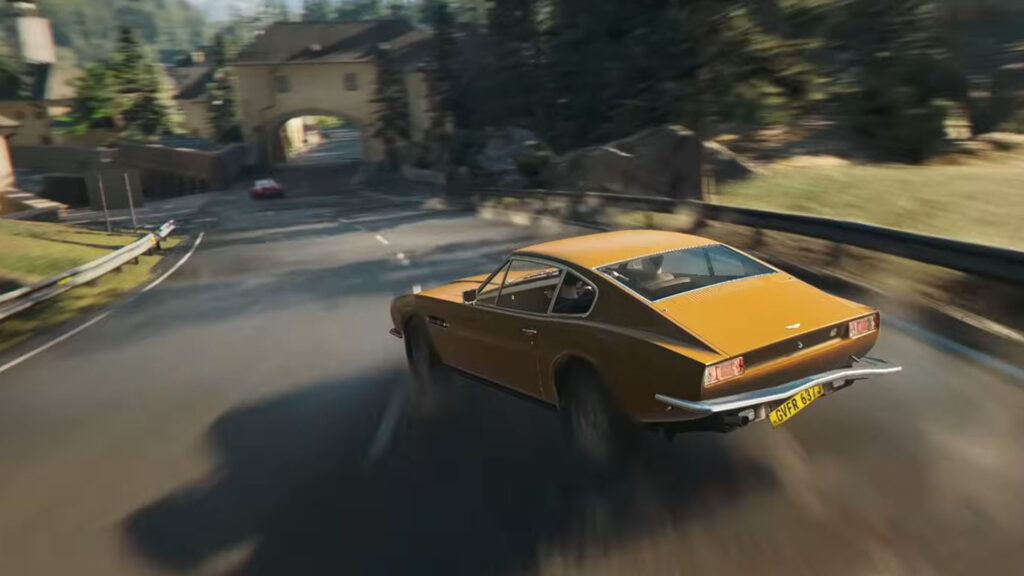
When choosing the other Aston Martin for the game, Bond’s iconic DB5 was too predictable. The V8 Vantage from The Living Daylights and No Time to Die was considered, but IO Interactive instead opted for a vintage 1970s DBS.
“It’s like a gentleman’s GT,” said Poulsen. “That particular model is very classy. The front grille is gorgeous, and so it was the obvious choice.”
While it briefly appears in On Her Majesty’s Secret Service, 007 First Light’s model is inspired by the yellow version Roger Moore drives in The Persuaders “as a nod to vehicular media.”
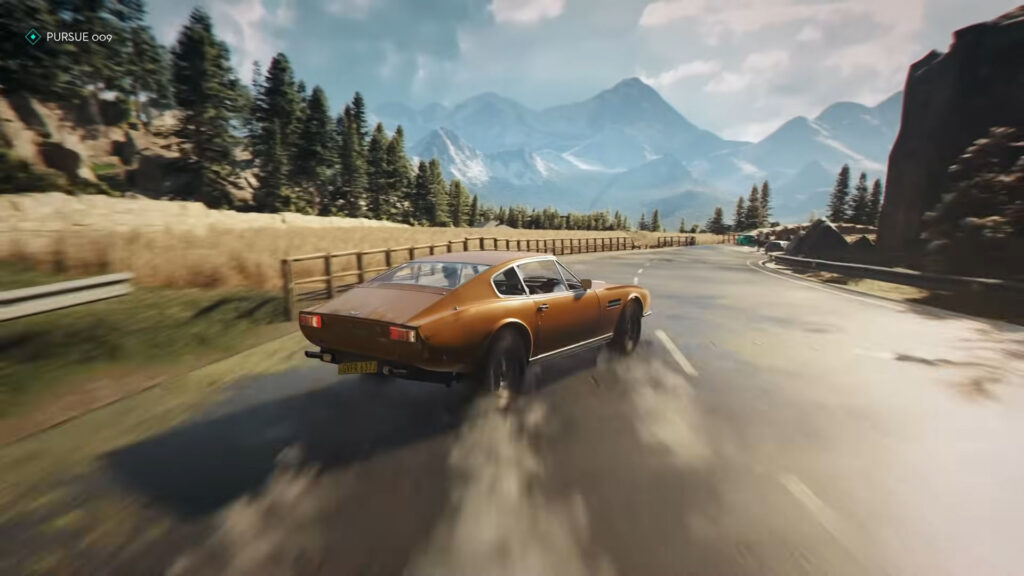
The DBS takes centre stage in the climax of one of the game’s standout missions, with Bond pursuing a rogue agent on mountain roads in Slovakia. Since the developer is best known for the Hitman stealth series, crafting the driving missions was “a big challenge” for IO Interactive.
“Nobody questioned that we were going to add vehicles,” said Vega. “It’s James Bond.”
Driving in 007 First Light feels deliberately loose and accessible, allowing you to easily recover from tail slides. “There’s a wide spectrum between simulation and arcade that gets viewed as this bad word,” said Vega. “We tried to split the difference as much as we could.
“We can’t have supercars spinning out the moment you hold the throttle because that’s how it behaves in real life.”
With the driving missions serving the story and leading to the next objective, you spend surprisingly little time in vehicles. “It’s a balance of giving you enough of the chase that you feel it, but not so much that it outstays its welcome,” Vega explained.
“We want to make sure you can see the goal in front of you. When the enemy takes a hard turn, you can anticipate them and cut them off. That you can see the jump in front of you, that you’re getting funnelled, and you go in and enjoy that visceral moment.
“If you go too [much into] simulation, you’re now focusing on the car and how to handle it. That’s not what we wanted to happen.
“James Bond sets out a plan, but doesn’t spend too long setting it in motion. He executes it, but it doesn’t quite work out.
“He improvises, makes it out and straightens his suit. We wanted to have cars that sang to that spirit. For us going from no cars to this, that was our biggest goal. Every chase should leave you wanting a little bit more.”

Discussion