
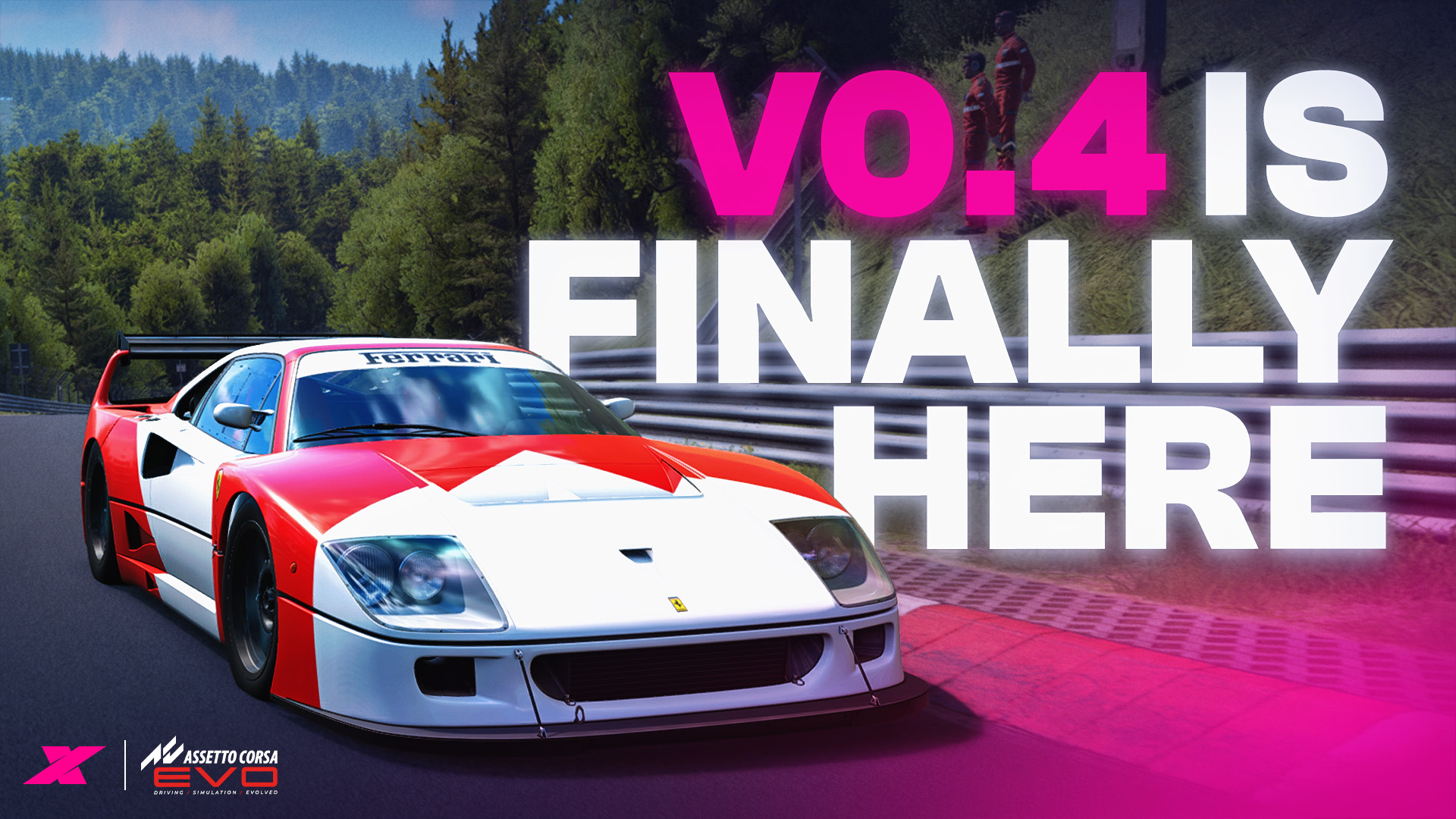
Assetto Corsa EVO’s v0.4 update has finally arrived. Previewed during October’s SimRacing Expo, the latest Early Access build for Kunos Simulazioni’s racing sim was apparently delayed from November so Monza and the Ferrari SF-25 Formula 1 car could be added.
10 cars and five tracks make up the game’s newest build, but there are also some crucial new features and improvements, too, including the implementation of a new hybrid system to suit the incoming F1 car, further tyre model improvements and the introduction of the Daily Racing Portal.
After a largely underwhelming period of Early Access, these are the kind of features AC EVO needs to help turn the tide in its favour, a feat perhaps made easier by the sub-standard v1.0 releases of Rennsport and Project Motor Racing.
New cars
- Ferrari F40 LM
- BMW M3 (E46) CSL
- Porsche Cayman 718 GT4 RS
- Mini John Cooper S and Honda engine swap version
- Ferrari Daytona SP3
- Toyota Supra MKIV and dedicated drift version
- BMW M8 Competition
- Peugeot 205 T16
- Renault 5 GT Turbo
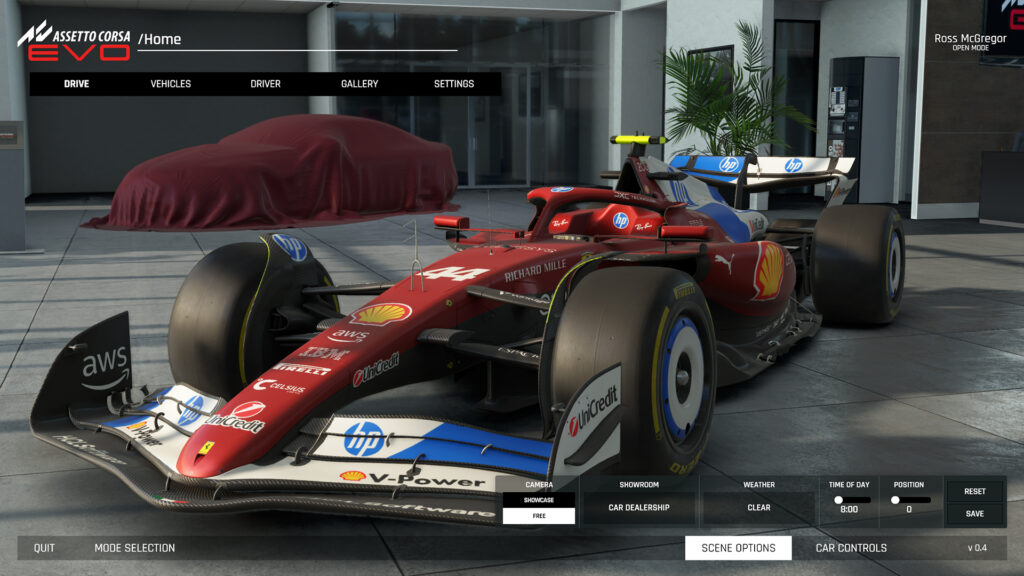
- Ferrari SF-25
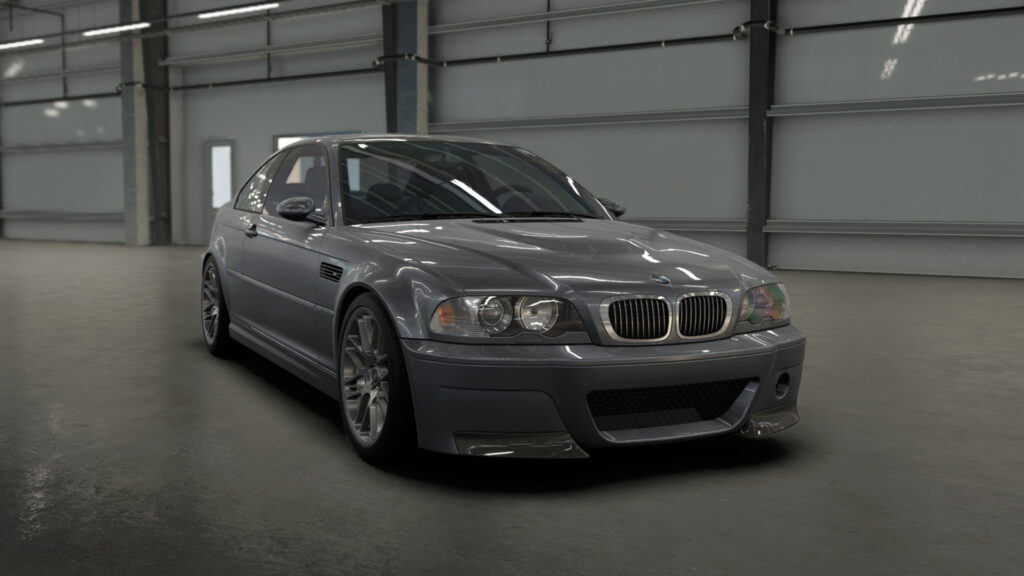
V0.4’s car list, like most of AC EVO’s incumbent vehicle roster, chiefly consists of road cars, but there’s a good mix of modern and classic here.
The 2025 BMW M8 Competition is matched up with the 2003 BMW M3 CSL (E36), for example, while the 2021 Ferrari Daytona SP3 pairs nicely with the Ferrari F40 LM used between 1989 and 1994.
The Peugeot 205 T16 is a rally homologation special for the road, while the Renault GT Turbo shares the same boxy ‘80s aesthetic, albeit with much less power. The MKIV Toyota Supra not only adds a JDM classic to the game, but also a dedicated drift version of the car, introducing a brand new mechanic.
The Porsche Cayman 718 GT4 RS is an uprated version of the Porsche 718 Cayman GT4 Clubsport already in the game, so perhaps lacks the intrigue of V0.4’s other stars, with the comparatively tame Mini John Cooper S boosted by the addition of a Honda engine swap.
However, the headline feature of V0.4 is undoubtedly the Ferrari SF-25, the first 2025 F1 car to appear in a hardcore sim. With it comes the sport’s advanced hybrid ruleset, with the car’s MGU-K and MGU-H modelled alongside brake migration (plus functional DRS).
Best of all, the systems work as intended, with 12 performance mode presets allowing speedy ERS behaviour switches. Players can manipulate the finer details themselves in-cockpit, but there’s really no need given the default driving modes available.
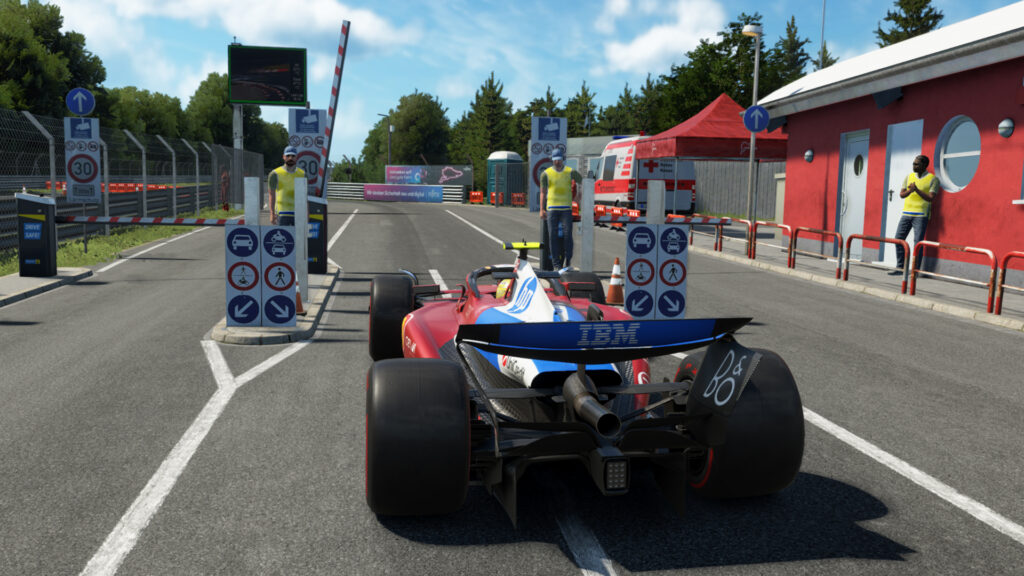
The Ferrari is a bit of a revelation and easily the most important car to appear in AC EVO thus far, both owing to its reliability and driveability. Thrashing it around the Nordschleife is an utter joy, despite some necessary right foot management in fourth and fifth gear traction zones. For a more in-depth guide on how to make the most of the SF-25, check out our companion article (work in progress).
Although the SF-25 sounds like a modern F1 car, some of the other new cars have disappointing exhaust notes. The little Renault, for example, sounds far too digitised, while the M3 CSL lacks aural punch.

New tracks
- Nürburgring Nordschleife (24H and Touristenfarthen layouts)
- Nürburgring Grand Prix
- Oulton Park (International and Foster layouts)
- Road Atlanta
- Monza
AC EVO also receives a tidy bunch of five tracks, all of which are first-class additions to the game. All five also happen to suit the SF-25 perfectly…
Monza is a standard requirement for any sim racing title, as is Nürburgring’s Nordschleife and Grand Prix circuits. Oulton Park is a slightly left-field choice, though, but quite understandable given its cliched ‘mini-Nürburgring’ moniker (and it has already appeared in Kunos’s Assetto Corsa Competizione).
The Cheshire venue provides the biggest challenge of all the new tracks, and appears with its International and Fosters layouts. Thankfully, the tyre stacks at the Fulston and Hislop chicanes are absent, providing more confidence when attacking their kerbs.

Road Atlanta is also a popular addition, with its high-speed corners playing to the aerodynamic strengths of the new Ferrari. As you’d expect, the tracks have been rendered in glorious detail, but sections of Oulton Park and the Nordschleife feel oddly flat, which is perhaps down to some tyre model updates. More on this later.
AC EVO’s inconsistent depth of field effects perhaps don’t show the circuits off in the best of lights, and foliage pop-in at the Nordschleife is quite noticeable too, but the accuracy of the track models is unquestionable.
Speaking of graphics, the game still suffers from optimisation issues on my PC (AMD Ryzen 7 3800X, NVIDIA GeForce RTX 4070, 16 GB RAM), necessitating a drop to medium-high presets, even at just 60 fps. Hopefully this continues to be a priority for the developers.
Tyre model
Tyre physics have been a central focus of v0.4, with a new model improving tyre damping. This is why normally bumpy circuits like Oulton Park and the Nordschleife feel smoother to drive, arguably a little too smooth based on my testing.
Kunos has also worked on the way rear-drive cars break traction, featuring less grip when accelerating and turning at the same time. I found this to work particularly well with the 205, with some soft-hand steering coaxing delightful four-wheel drifts from the baby Group B car.
Naturally, the F1 car is where Kunos flexes its technical muscle by implementing soft, medium and hard compound tyres, all with varying optimal temperature windows. For example, using the softs on a lap of the Nordschleife worked out well on the opening quarter of the lap, but the section from Karussell to Pflanzgarten had temperatures creeping up to nearly 140C – about 30C off their optimum.
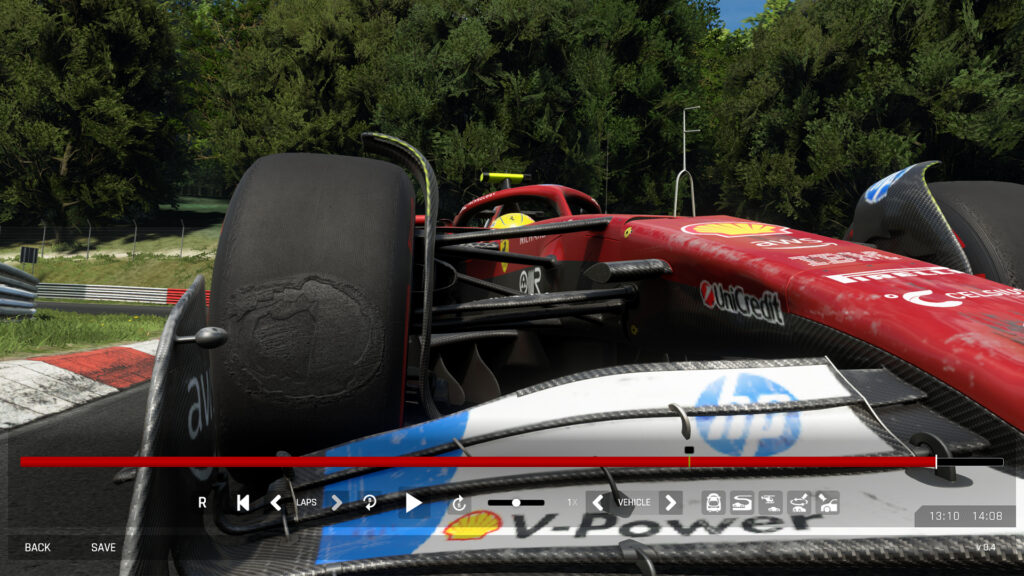
The change in grip was apparent, too, leading to a few hairy moments as the rubber began to chew itself to pieces/
Traction control and anti-lock braking systems now also take much more provocation before they activate, except on higher levels. Optimal tyre pressures have also been adjusted across each of AC EVO’s car classes. These are listed below:
- Road & ECO: 31 PSI
- Supercar: 30 PSI
- Hypercar: 29 PSI
- Slicks: 27 PSI
- SF-25: 25 PSI
(Source: Kunos)
Drifting
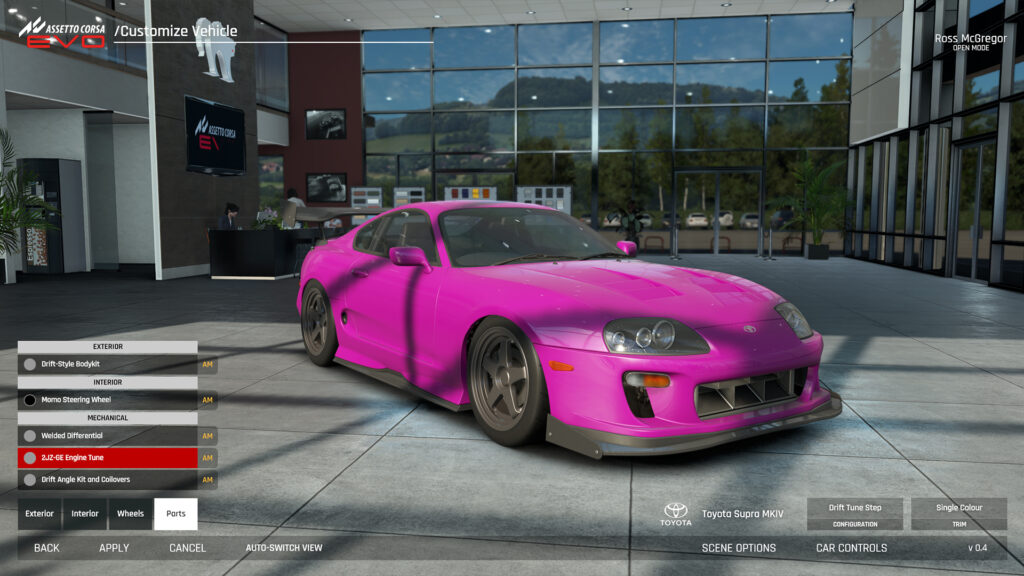
Thanks to the MKIV Supra, drifting formally makes its debut in V0.4. A special drift version of the A80 forms part of v0.4.
Although it feels easier to initiate slides now, it feels too difficult to maintain them, which shouldn’t really be an issue thanks to the Supra’s welded diff and powerful six-cylinder engine.
It almost feels like the car’s tyres are too quick to grip up mid-slide, causing an embarrassing tank-slapper rather than an epic drift.
AI
Those hoping that AC EVO’s AI opponents have gone back to driving school will be sadly disappointed, however.
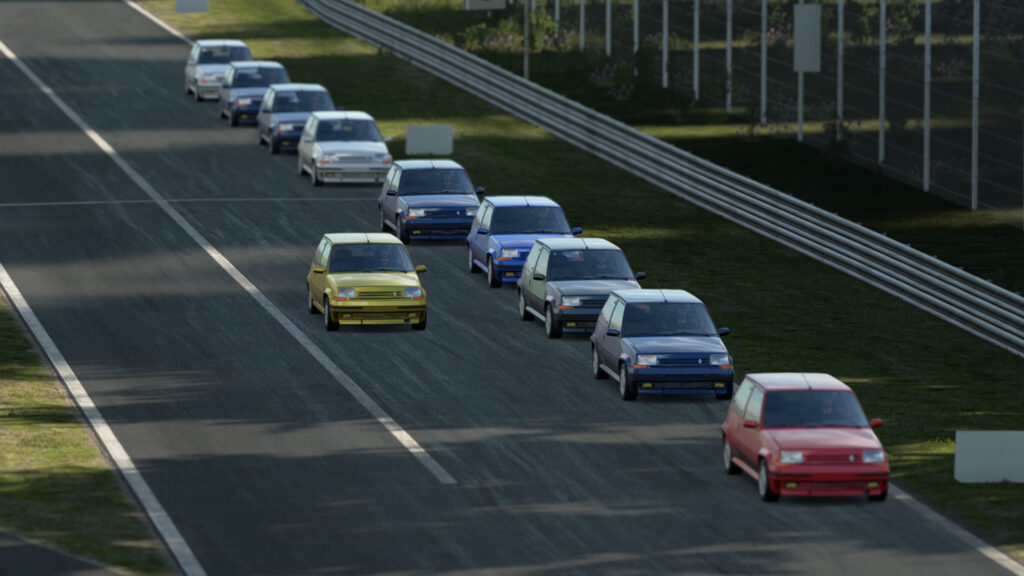
Exhibiting dim-witted behaviour in previous builds, the AI in v0.4 is locked to a ‘safe’ behaviour preset and, as a result, avoids conflict like Neville Chamberlain at a dictator convention.
They’re quite happy to travel line astern for a whole race, jumping out of the way of your car as if it’s made of racing driver kryptonite. It’s a smoother experience than in Rennsport or PMR, but the AI doesn’t offer much in the way of challenge just yet.
Multiplayer
The Daily Racing Portal has now been implemented in AC EVO, allowing players to participate in regular ranked races. The servers come courtesy of the Swiss Innovative Arts and Technologies Institute, with SimGrid helping co-develop the portal itself.
The game’s online stability has been a talking point over the last few months, with its multiplayer matchmaking abilities being key to the game’s success, especially with open-world modes expected to arrive in future updates. Players can access ranked racing directly from in-game and from acevo.gg.
Daily racing builds on the introduction of custom servers last month, with players able to host daily and monthly servers for a fee.
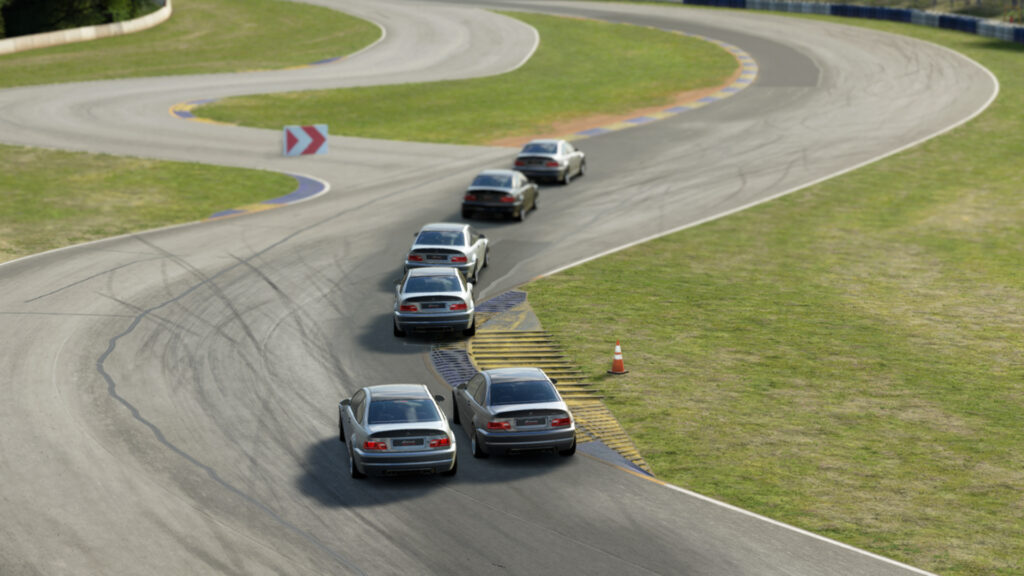
AC EVO’s v0.4 update is a crucial turning point for the sim, where its content is stepped up a notch to include sim racing’s most driven track and a killer vehicle you can’t drive officially in any other sim.
While the Nordschleife and the SF-25 are the headline features of the game’s latest build, the Daily Racing Portal is even more important to the game’s future. How this feature copes in the coming weeks will be telling.
Assetto Corsa EVO v0.4 changelog
NEW CARS:
- BMW M8 Competition Coupe (F92)
- BMW M3 CSL (E46)
- Ferrari Daytona SP3
- Ferrari F40 LM
- Ferrari SF-25
- Peugeot 205 T16
- Renault 5 GT Turbo
- Toyota Supra Turbo RZ (MK IV) + tuned variant
- Mini Cooper S (MK VI) + tuned variant
- Porsche 718 Cayman GT4 RS
NEW TRACKS:
- Nürburgring (5 layouts)
- Oulton Park (2 layouts)
- Road Atlanta
- Monza
MULTIPLAYER
- support for chat widget and server commands
- additions and fixes in MP functions (autorestart, BOP, server list filter)
- fixed servers ending up in zombie state after long-term idling
- large number of fixes and additions to support the Daily Racing portal
GRAPHICS:
- carpaint material revision across the board
- improved post-processing
- fix for dash display texture colour space errors
- fix for certain material types
- reduced menu thumbnails memory footprint
- Mazda MX5 Cup visual updates to properly represent ND1 and ND2 variants
- Porsche GT4 Clubsport MR minor visual updates
- Lamborghini Huracán ST EVO2 minor visual updates
- BMW M3 E30 minor visual updates
- added more OEM accessories for the Honda S2000
- updated dash displays for the Audi RS 3 and RS 6 and Lamborghini Huracán STO
- fixed steering wheel visibility in external driving cams
- improved tyre shading: sheen layer that fades off after a couple of corners, improved tyre wear texture
- added support for flexing and vibrating vehicle parts, such as wings, safety nets – initial implementation on racing cars
- added moving damaged parts on all content
- added visual backfires
- added unique driver assets for F1 cars, for all liveries
AUDIO:
- improved throttle timing and auto cutoff to enhance V-Tec kick effects
- audio: new scraping sounds and raindrop sounds (when the car is stationary)
- improved turbo hiss sound in general
- audio: turbo pitch is now related to boost and rpm
- developed new drivetrain model to improve the feeling of the simulation of the transmission wobbling
- improved management of backfires
- improved generic turbo hiss sounds, removed high pitched sounds
- new transmission soundsets management, depending on the car drivetrain scheme
- Honda NSX: improved V-Tec crossover sound with pure samples
- Honda S2000: improved quality of engine interior sound samples and new engine exterior sounds
PHYSICS:
- developed new tire damping method increasing compliance and drivability in all situations and all cars, but race cars in particular
- adjusted tire inertia to better match each car’s individual tire dimensions helping with more realistic tire lockups and less drastic loss of traction
- improved tire slip ratio calculation leading to more natural behavior particularly on corner exits in locked differential scenarios
- adjusted grip levels for all tires: Higher baseline grip, yet less combined grip leading to more natural, controllable and rewarding car behavior
- adjusted thermal behavior for tires alongside adjusted rolling resistance
- adjusted tyre rolling resistance to achieve more realistic top speeds
- implemented new drive train wobble method respecting non linear stiffness
- adjusted tire wear across all compounds (generally, the more performance oriented a tire is, the faster tire wear will noticably impact laptime)
- sanitized and unified tire and controller library, solving potential inconsistencies in tire model across cars
- improved consistency in available compound range for early-modern cars:
- Removed pseudo-vintage tyres for 90s-00s models, they are now fitted with a range of modern tyres suiting their performance, vintage reserved for crossply tyres
- improved hybrid powertrains
- implemented and unified KERS/ERS behaviour
- improved Dual Clutch Transmission behavior to be more seamless
- implemented electronic brake bias (dubbed as EBB or Brake Migration)
- revision of battery features and data entry specifications
- improved physics model for cars with solid axles
- made several car systems available for in-cockpit adjustment (among others: turbo, dampers, differentials)
- Ferrari 296 GTB: numerous fixes and adjustments to suspension, drivetrain, downforce, airbrake and dedicated performance modes with more realistic ERS deployment
- Recommended driving.
- implemented soft lock feature for steering wheels
- created multiple physics events to allow for more nuanced car audio
- fixed a potential crash scenario caused by collisions
- various steer ratio adjustments on a number of existing car content
- created more true-to-life vintage compound for the Alfa GTA Sprint
- various adjustments to engines, turbos, drag and downforce across cars to better match real life acceleration, top and corner speeds
- various adjustments and fixes to car default setups and differentials
- fixed F2004 rear wing not responding to changes in setup and modified setup limits for the car
- added stiffer springs for the Porsche Cayman GT4 CS MR and Porsche 911 GT3 Cup
- adjusted torque curve for the Porsche Cayman GT4 CS MR
- fixed Audi RS 6 bump stops to prevent tyre hitting and clipping through the bodywork
- fixed Dallara louvers (front fender air vents) downforce impact
- corrected Mazda MX5 Cup weight and differential
- corrected differential of the Caterham Academy
- improved various cars’ rpm limiters to behave more realistically
- corrected gear ratios for the Ferrari 296 GTB
- corrected gear ratios for the Chevrolet Camaro ZL1 and 1LE variant
- corrected Mazda MX5 Cup Sadev sequential gear ratios
- corrected Alpine A110 and VW Golf GTI Clubsport gear ratios
- updated operating aero and ride height ranges on the BMW M4 GT3 Evo and enabled bump stop adjustments
- updated operating aero and ride height ranges on Lamborghini ST EVO II
- updated BMW M2 CS Racing setup limits according to BMW specifications, updated spring ratios
- updated and unified all car names in setup folder
- car colliders can now be angled when necessary to represent built-in rake of cars
- reduced clutch sensitivity
- fixed unwanted vibration on torque vectoring differentials
- sanitized and updated TC & ABS behaviour on all cars
- Fixed engine-crippling behaviour of earlier iterations of traction control, so higher levels might work better on some cars, and lower levels allow for more playful driving. The new Porsche Cayman GT4 RS is a good showcase.
- Likewise ABS is not as efficient as before, more modulation might be required.
- revised electronic brake controllers
- added automatic brake differential to the Porsche Cayman GT4 RS and Alpine A110
- fixed BB adjustments only taking effect after every 5th click
- fixed setup limit units missing from certain items
- improved AWD clutches on Audi RS 3 Sportback in Performance Modes 1 and 2 (Torque Rear)
GAMEPLAY:
- some new implementations and fixes on penalty manager
- moved Imola finish line further back per GTWC sessions
- tweaked logic for automatic grid population -> now adds up to 2+2 car models from below and above the selected car’s PI instead
- large update to replay code, this will probably break compatibility with older replays but files should now take up significantly less space
- fixed electronics states in the replay
- selected tyre compounds now correctly show up in the replay
- AI: fixes to opponents swinging around wildly, potentially removing a few accident types
- AI: better braking-behind cars approximation
- AI cars should no longer get confused by pitlane or offtrack cars
- new autoshifter logic
- academy events rebalanced based on new laptimes
- fix for occasional hang/crash in the car selection menu caused by the thumbnail texture blocking the game thread
- replay now shows optional animation states (e.g. sunroofs)
- halo visibility toggle added in view settings
- added DRS zones on F1 tracks
- fixed forced pitstop not applying if you teleport before the pit exit line after a race start
- fixed reset position for various physics functions (lap estimates, ERS limits etc) on a number of tracks
- fixed a potential crash caused by out of bounds tyre compound indices
- updated AI data for the Alfa GTA, Mini and Abarth
- reworked track limit safezones
- AI cars no longer get warnings and penalties
- changing Audio FFB effects now takes effect inside the session
- new autogear logic (both player shift assist and AI upshift triggers)
- inputs for adjusting mirror pitch and yaw now functional
- race cars will now have both front and rear compounds changing at the same time via setup
UI:
- implementation of general HUD notifications
- reviewed input filtering for UI widget manipulation
- serverlist – relocated server count, added player count
- reworked client-side leaderboard
- pitlane leaderboard now displays car model name
- new car selection flow for Multiplayer
- Now the player can directly click on eligible cars and join without having to visit the car selection menu.
- The list is flat and includes all relevant “owned”/”favourite” cars on the top marked with a star.
- Beyond a certain (large) number of server-defined cars, the old car selection page is used for ease of browsing.
- updated localization
- added missing car localization strings
- implemented track maps on the HUD and pitlane page
- chat widget implementation in Multiplayer
- implemented setup, UI and MFD items to support the new electronics systems
- reworked HUD gear widget to support new electronics systems
- expanded car controls MFD to support new electronics systems, such as ERS, EBB, differentials, dampers
- explicit indication of performance modes on the HUD gear widget with more friendly names
- odometer values for owned cars added in the model selection and SP hub
- added reset button in the manual grid mixer
- all previous cars’ VR mirror offsets revised with the new default cockpit camera positions
- unified setup units for all cars
- fixed certain setup units being defined in groups instead of per item


Chat with the Community
Sign Up To CommentIt's completely Free